Upper-Room UV-C: A Proven Engineering Solution for Indoor Air Quality
Upper-room ultraviolet germicidal irradiation offers a proven, cost-effective answer for dealing with pathogens and aerosolized mold
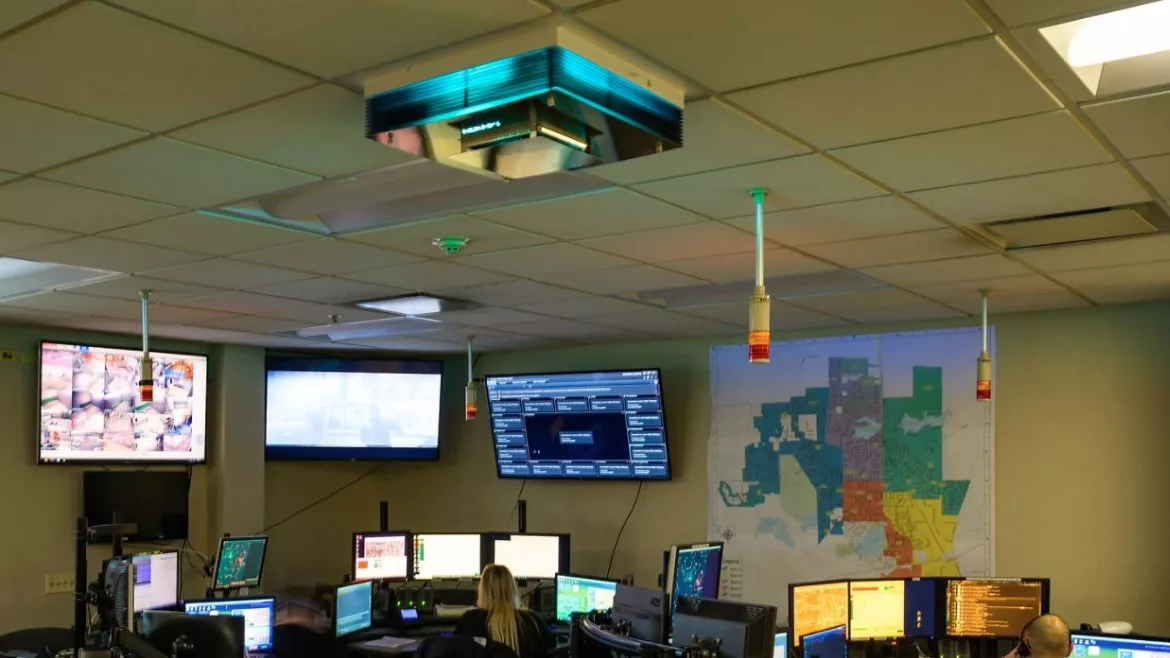
FIGURE 1: Upper-room UV-C fixtures help mitigate the spread of infectious diseases in high-traffic, communal areas, such as this municipal 911 call center.
How do you protect building occupants from airborne pathogens and aerosolized mold without breaking the budget or requiring major infrastructure overhauls?
For facility managers and consulting engineers designing HVAC systems for schools, healthcare facilities, and other high-occupancy spaces, upper-room ultraviolet germicidal irradiation, also known as upper-room UV-C, upper-air UV, GUV, or UVGI, offers a proven, cost-effective answer.
While UV-C technology has been around for nearly a century, many engineers remain unfamiliar with its applications beyond HVAC coil cleaning.
Yet properly designed upper-room UV-C systems can generate an additional 10-16 equivalent air changes per hour (eACH) to existing ventilation systems, comparable to adding fresh air at a fraction of the cost.

FIGURE 2: HVAC air-stream disinfection fixtures inactivate microorganisms and disinfect moving airstreams "on-the-fly." (Courtesy of Aerapy UV Disinfection Technology)
The Science Behind the Solution
UV-C operates in the germicidal wavelength range near 253.7 nm, where its photons break molecular bonds in the DNA and RNA of viruses, bacteria, and mold spores, preventing replication without introducing chemicals, VOCs, or other reactive byproducts. In contrast to particle-charging approaches used in some ionization technologies which primarily modify particle behavior rather than inactivate microbes, UV-C provides direct, quantifiable disinfection by rendering microorganisms non-viable.
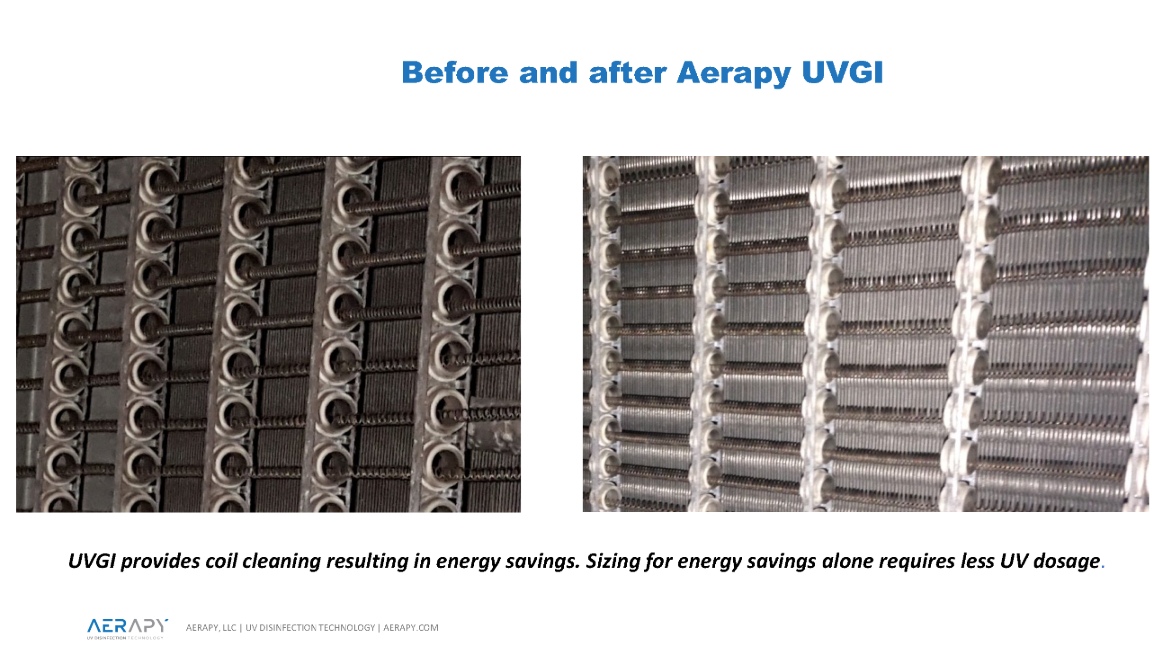
FIGURE 3: Before and after UV-C treatment of an HVAC coil. UV-C coil/surface systems neutralize bacteria, viruses, and mold on coils, filters, and ducts. (Courtesy of Aerapy UV Disinfection Technology)
There are three primary UV-C applications in building systems:
- HVAC coil and surface irradiation prevents biofilm and mold buildup on cooling coils, filters, and drain pans, maintaining heat transfer efficiency and extending equipment life. (See figure 1)
- HVAC air-stream disinfection inactivates microorganisms in moving airstreams within air handling units or ductwork, achieving up to 99% pathogen inactivation in a single pass. Fixtures near cooling coils provide both air disinfection and coil protection. (See figure 2)
- Upper-room UV-C systems create a germicidal disinfection zone near the ceiling while protecting occupants below. (See figures 3 and 4)
Of these approaches, upper-room UV-C provides a unique advantage: it intercepts airborne pathogens from infected occupants as well as mold spores from environmental sources, eliminating these threats before they can spread to other occupants or reach the mechanical system. (See figure 5)

FIGURE 4:Because people can be infectious before they are symptomatic, a significant value of UV-C technology is the ability to limit the spread of contagious diseases and bacteria 24/7/365. (Courtesy CDC/NIOSH)
Real-World Performance Data
The technology's track record speaks for itself. In 1937, epidemiologist William F. Wells installed upper-room UV lamps in suburban Philadelphia schools to combat measles. Schools with the equipment had an infection rate of 13.3%, compared to 53.6% in the general population. More recently, a rigorous three-year field study published in the Journal of the American Veterinary Medical Association documented an 87.1% reduction in upper respiratory infections following installation of fan-integrated upper-room UV-C systems in a high-density animal care facility.
According to ASHRAE's Position Document on Infectious Aerosols, UV-C is one of three proven methods for infection control of airborne diseases, alongside ventilation and particle filtration. The CDC and NIOSH specifically recommend upper-room UVGI for improved control of highly contagious airborne diseases such as tuberculosis, measles, and emerging respiratory pathogens.
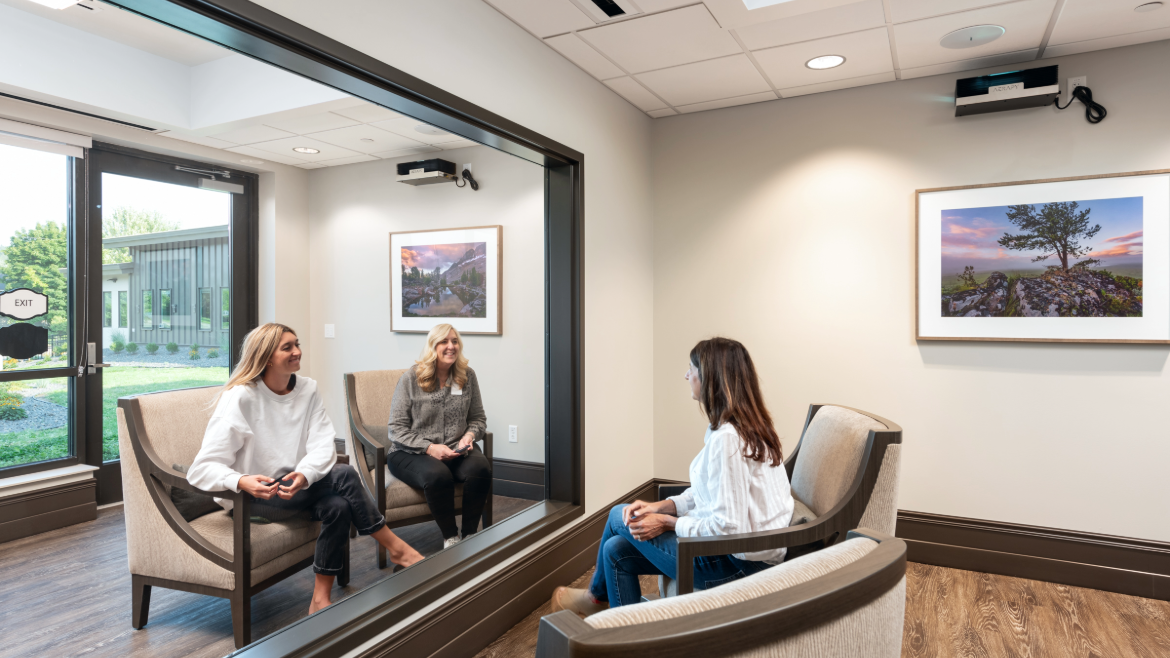
FIGURE 5: Upper-room UV-C fixtures provide continuous air disinfection in an Idaho veterans care facility, protecting residents and staff from airborne pathogens. Architect: Orcutt Winslow. Owner: Idaho Department of Veterans Services. (Courtesy of Aerapy UV Disinfection Technology)
Effective upper-room GUV systems continuously inactivate airborne pathogens as room air circulates through the UV field. NIOSH recommends an average fluence rate of 30–50 µW/cm² throughout the upper-room zone for effective pathogen control, with cumulative reductions increasing through repeated air circulation.
A comprehensive 2025 study published in Building and Environment analyzed strategies for meeting ASHRAE Standard 241 infectious aerosol control targets across multiple building types and climates. The research found that upper-room UV-C systems met disinfection targets 89–100% of the time for offices and classrooms while demonstrating among the lowest energy consumption per unit of clean air delivered among all tested strategies. In the author's experience commissioning similar installations, fan-integrated systems consistently achieve 12–16 eACH in spaces ranging from classrooms to emergency dispatch centers.
The Persistent Threat
Understanding why air disinfection matters requires recognizing how airborne pathogens behave. While large droplets settle quickly, microscopic droplet nuclei from coughs or sneezes remain suspended and infectious for hours. Studies show that SARS-CoV-2 survives in the air for up to 3 hours, influenza for several hours, and measles for up to 2 hours. A single cough releases hundreds of thousands of droplets, with thousands remaining airborne as respirable aerosols.
This persistence means that infectious particles linger well after the infected individual departs, making air disinfection essential in spaces where people congregate, such as healthcare facilities, schools, correctional institutions, homeless shelters, restaurants, and transit hubs.
Understanding True Upper-Room UV-C Systems
Not all ceiling-mounted UV fixtures are upper-room systems. This critical distinction affects both performance and application. Enclosed air cleaners are ceiling-mounted devices that draw room air through an internal chamber containing UV lamps, then discharge treated air back into the space. These units contain UV energy entirely within the device and provide single-pass disinfection of the air that flows through them, but cannot create a continuous disinfection zone in the room.
True upper-room UV-C systems use ceiling-, wall-mounted, or suspended fixtures with louvered or shielded optics that establish a defined irradiation zone in the upper portion of the room. These systems can provide both passive and active air disinfection depending on how air is brought into the UV field.
- Passive disinfection relies on natural convection warm air rises, entering the UV field, and microorganisms are inactivated as they pass through. This mechanism operates continuously whenever the lamps are on, independent of HVAC cycling. However, convection-driven airflow can vary widely based on room geometry, heat loads, and occupant activity. This results in inconsistent air exchange through the UV zone.
- Active (fan-assisted) disinfection addresses this variability through mechanical air movement. The effectiveness of fan assistance depends on the airflow path: external fans mounted above or around fixtures may alter room airflow but do not necessarily move air through the region of highest UV intensity. Purpose-designed, fan-integrated upper-room systems where air is intentionally drawn into and through the high-fluence UV field create a controlled and repeatable airstream. This approach stabilizes exposure time, improves mixing, and provides more predictable inactivation performance.
Together, these mechanisms enable a robust, continuous disinfection process. The upper-room UV zone acts as a persistent treatment layer as respiratory aerosols rise through normal thermal plumes, HVAC circulation, or directed airflow. They enter the irradiation field where infectious microorganisms are rapidly inactivated. Fan-integrated systems enhance this effect by ensuring consistent delivery of room air through the high-fluence zone, protecting the breathing zone, and supporting reliable performance across varying conditions.
Modern upper-air UV systems accommodate diverse applications through flexible mounting options. Depending on system design, ceiling height, and room geometry, coverage can range from individual rooms to large open spaces exceeding 1,000 square feet.

(Courtesy of Aerapy UV Disinfection Technology)
Integration with HVAC Systems
Upper-room UV-C complements rather than replaces mechanical ventilation. While ASHRAE 62.1 establishes minimum ventilation rates for acceptable indoor air quality (IAQ), upper-room GUV augments these requirements by adding equivalent air changes through pathogen inactivation rather than mere dilution.
Dilution alone cannot eliminate infection risk; increasing airflow without disinfection merely spreads infectious particles more widely, like stirring smoke through a larger room rather than removing it. Upper-room UV-C eliminates the threat by destroying pathogens where they're generated, in the occupied space.
This proves especially valuable in existing buildings where increasing ventilation rates may require costly ductwork modifications or exceed HVAC system capacity.
Design Considerations for Engineers
Upper-room UV-C systems should meet CDC/NIOSH guidelines and demonstrate equivalent clean airflow delivery for the intended space, as required by ASHRAE 241.
When evaluating systems, verify that safety certifications and coverage area claims are based on testing in equivalent room sizes for each application. UV-C intensity follows the inverse square law, so a system tested in one room size may produce unsafe exposure levels in smaller spaces or inadequate germicidal intensity in larger spaces. Total lamp wattage, optical design, and certified coverage area should align with manufacturer claims.
Controlled energy distribution ensures UV-C remains confined to the upper room while maintaining sufficient germicidal intensity across the disinfection zone. This requires careful fixture selection and placement based on ceiling height, room geometry, and occupancy patterns.
Air mixing represents perhaps the most critical and often overlooked design element. While natural convection alone can move contaminated air into the upper-room UV zone, integrated fans that actively draw air through the UV field provide more predictable and consistent pathogen exposure. Upper-room fixtures with built-in fans create measurable airflow through the treatment zone with known dose and dwell time, enabling reliable performance across varying conditions.
Specification Best Practices
Engineers specifying upper-room UV-C systems should require comprehensive documentation. Look for products that meet CDC/NIOSH guidelines and have documented equivalent clean airflow delivery for the intended space size.
Demand independent third-party validation beyond vendor claims. Products with proper third-party certification provide documented proof of safe occupant-zone exposure (below 0.2 µW/cm²) and adequate upper-zone germicidal energy. On-site commissioning should focus on confirming proper installation, operation, and maintenance protocols.
UL-2998 certification verifies ozone levels remain below 0.005 ppm, significantly lower than federal requirements. Products should also meet applicable UL/CUL and CSA safety standards.
For consulting engineers and facility managers evaluating infection control options, the question isn't whether upper-room UV-C works; the science is settled. The question is whether your current projects incorporate this proven indoor air quality technology to protect building occupants while optimizing life-cycle costs.
Key Specifications Checklist
When evaluating upper-room UV-C systems, engineers should verify:
- CDC/NIOSH compliance: Documented equivalent clean airflow for intended space size
- Measured output: Third-party validation of upper-zone irradiance (30–50 µW/cm² minimum)
- Safety verification: Occupant-zone exposure below 0.2 µW/cm²
- System type: True upper-room UVGI fixtures with open irradiation zones vs. enclosed ceiling-mounted air cleaners
- Integrated airflow: Built-in fan with quantified CFM and adjustable settings
- Coverage capacity: Documented square footage based on ceiling height
- Certifications: UL-2998 (ozone-free), UL/CUL, CSA 22.2 No. 187-15
- Commissioning support: Proper installation verification and maintenance protocols
Looking for a reprint of this article?
From high-res PDFs to custom plaques, order your copy today!