Carrier Field-Testing Battery-Enabled HVAC Platform
With 30 million residential units in the field, Carrier sees a path to turn HVAC systems into distributed energy resources for utilities
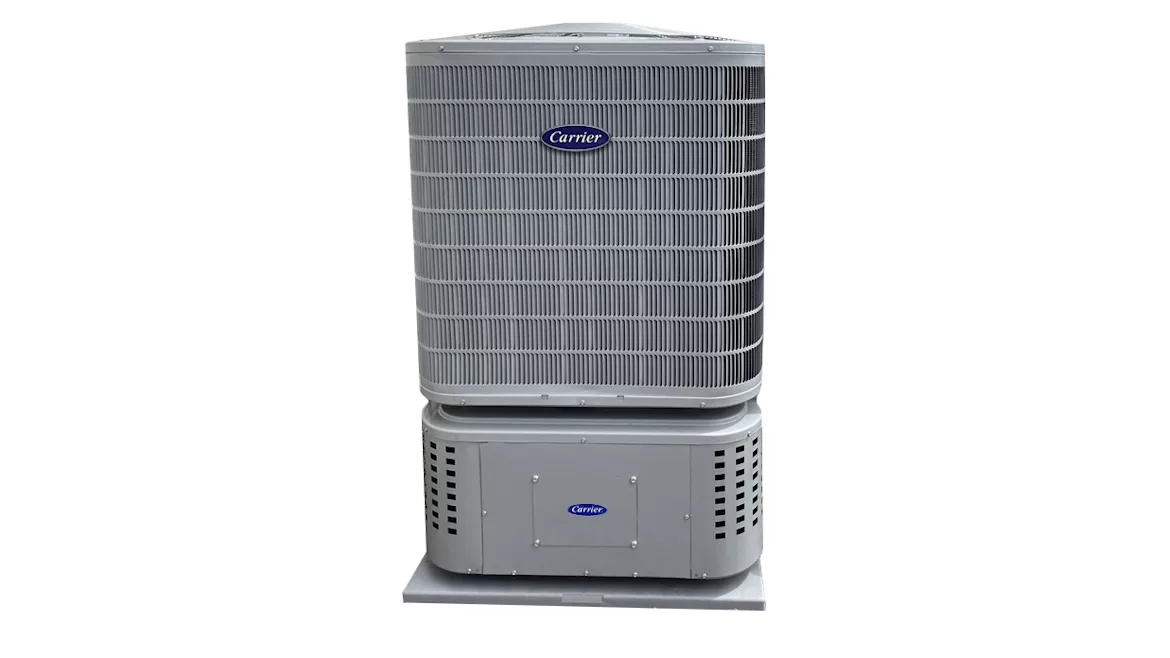
FIRST LOOK: Carrier’s field trials are exploring how residential heat pumps with battery storage can ease grid constraints while keeping installs familiar for techs.
As the power grid is facing additional strains from the combined weight of data centers, electrification, and rising heating and cooling demand, Carrier is testing whether a home’s HVAC system could double as a mini power plant of sorts. The HVAC manufacturing giant has started field trials of a battery-enabled, variable-speed heat pump platform designed to store energy when prices are low and to be less reliant on the grid when it’s under stress.
Carrier Energy, the company's new energy management solutions business, is working with utilities and EPRI to assess the role of homes as flexible Distributed Energy Resources (DERs), shifting HVAC demand off the grid during peak hours. Currently, HVAC systems can account for anywhere between 20-70% of grid demand.
“Through these trials, Carrier is assessing how its next-generation HVAC system — pairing more efficient variable-speed heat pumps with battery storage — can help reduce peak demand by shifting energy use from on-peak to off-peak periods, providing greater grid flexibility and resilience,” the company said.
With an estimated 30 million Carrier HVAC units installed in North American homes — representing more than 100 GW of potential flexible demand — the opportunity is significant. At scale, these systems could offer utilities a powerful tool to manage electricity demand.
"This trial is a clear demonstration of how Carrier can help contribute to a more resilient, intelligent grid," said Hakan Yilmaz, chief technology and sustainability officer and leader of Carrier Energy. "With data to be delivered by EPRI, we're showing that smart home energy solutions are not a future concept — they're happening now."
For contractors and technicians, Yilmaz said the installation and commissioning of the new battery-enabled systems will only require modest upskilling beyond a standard variable-speed heat pump.
“Because Carrier has embedded the battery component directly into familiar HVAC platforms, battery safety and UL requirements are included. Contractors won’t need additional specialized certifications or proprietary tools,” Yilmaz told ACHR NEWS. “Training on the installation of the UL-certified battery will be a part of our channel network rollout. The installation and commissioning process aligns closely with current HVAC best practices.”
Carrier’s battery-enabled HVAC solution is primarily designed to enhance grid flexibility and provide benefits for utilities, but it can also deliver benefits to homeowners.
Unlike traditional demand response programs that temporarily limit cooling or heating, Carrier’s system draws from stored battery energy during peak events, providing continuous comfort and reliability.
“As utilities increasingly adopt time-of-use (TOU) pricing, the system can shift HVAC usage from peak to off-peak hours, when electricity rates are typically lower, helping utility customers create a more reliable grid,” Yilmaz said. “The solution is embedded into new HVAC systems that homeowners already plan to replace every 10 to 15 years, backed by Carrier’s trusted brand and service network.”
As for possibly retrofitting the battery capability into existing Carrier variable-speed systems, Yilmaz said, at this stage, the battery-enabled HVAC system featured in Carrier’s field trials is available as part of a new generation of variable-speed heat pump outdoor units that are designed specifically for battery compatibility.
“It is not currently compatible with other existing HVAC systems,” Yilmaz said.
Rebates, bill credits, and tax incentives for Carrier’s battery-enabled HVAC systems will vary by market and utility program, and Yilmaz added that details are still being finalized.
Additional installations will be completed over the coming months as part of the field trials, with performance data collected and reported through next year to inform broader deployment plans.
Looking for a reprint of this article?
From high-res PDFs to custom plaques, order your copy today!