Reframing Building Management Systems Where Edge and Cloud Act in Unison
Edge and cloud working together for smarter, faster, more resilient buildings
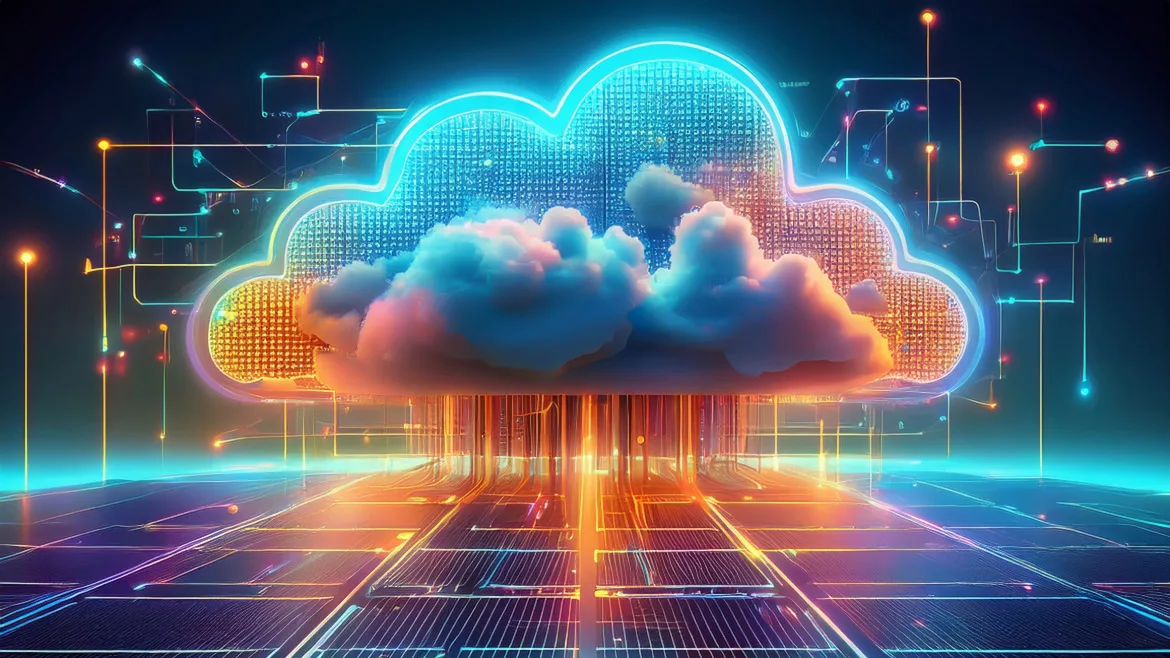
EDGE WITH CLOUD: Edge computing and data centers closer to where users are can pair well with cloud resources. (Courtesy of Firefly Image 3 / Adobe)
We are expecting the global building automation system market to grow considerably in the next several years, largely driven by directives to reduce energy consumption and bring more control to building operations. As commercial buildings become increasingly digitized, there’s potential to transform them into high-performing, responsive, and autonomous 21st-century marvels.
This desired end state of connected spaces requires a reimagined understanding of how and where data within buildings is generated and processed. Familiar concepts such as edge-to-cloud have long dictated that whatever systems need to be on-site happen within the edge, and, where possible, the cloud is used for larger computing power. While this concept is still generally true, it unintentionally creates a perception for facility teams that they must use and manage two independently layered systems.
In reality, we’re seeing edge-to-cloud evolving to edge with cloud. The demanding need for buildings to become more dynamic and the growing focus on immediate ROI have spurred the evolution of a more powerful framework: “edge WITH cloud.” While the nuance is subtle, the shift challenges the idea that buildings must run on one or the other; buildings depend on both edge and cloud to perform at their best.
Considering these two systems as a harmonious whole — where edge and cloud act in unison—creates an adaptive building where data processing always occurs in the right place at the right time. At the edge, tasks like control sequences, lighting analytics, and fault detection are handled locally, ensuring rapid response and real-time performance within the space. Meanwhile, more sophisticated analytics, which require greater processing power, are conducted in the cloud. This distribution of processing not only optimizes performance but also enables a more resilient system: core functions can continue running at the edge even if connectivity is lost, with advanced processing resuming in the cloud as soon as the connection is re-established.
Additionally, machine learning models can be trained and updated in the cloud, then deployed to the edge for real-time execution. This future state allows models to be continuously refined in the cloud, with updates pushed back to the edge for improved performance over time. This balanced approach helps facility managers, system integrators, and those responsible for energy cost management and resource optimization to better manage building operations, ensuring both reliability and scalability.
Powerful computer processing capabilities at both the edge devices and in the cloud are revolutionizing how buildings can autonomously manage energy efficiency, become more resistant to environmental damage, and enhance occupant well-being and productivity.
In conjunction with the changes in building automation, there is also a significant transformation of facilities management processes. Traditionally a labor-intensive field that consistently lacked actionable and accessible data, facilities management is now reaping the advancements offered by edge aligned with cloud computing. Bringing processing power closer to the data source changes how professionals manage and optimize built spaces. By harnessing the capabilities of edge devices in tandem with cloud processing, facilities managers can gain real-time insights, improve operational efficiency, and enhance resource efficiency.
An Edge with Cloud framework provides many benefits, including:
Real-time and Actionable Data Insights:
- Edge devices can collect data from various sources within a facility, including temperature, humidity, energy consumption, and occupancy levels. By processing this data locally, facilities managers can gain real-time insights into the performance of their systems and have actionable takeaways to resolve inconsistencies before they escalate.
Hardware Updates without Truck Rolls:
- When everything is connected to the cloud, security patches and programming are updated directly via cloud solutions. Hardware with embedded software can be continuously maintained and updated with the latest security features.
More Secure End-Point Management:
- Edge with cloud goes beyond managing device applications and improves cybersecurity: anything with IoT can be connected to the network, whether phones, printers, HVAC equipment, or security cameras. While these devices can be vulnerable, comprehensive end-point management allows for continuous monitoring and updates.
Improved Resilience:
- Edge with cloud can enhance facilities' resilience by fostering local decision-making and automated emergency responses. For example, in the event of a network outage, edge devices can maintain critical systems and facilitate a smooth recovery.
Overall, the building management industry is still in the early stages of technology adoption. Advances in AI, a dense sensor environment, and more powerful cloud and device processing capabilities have the potential to bring substantial efficiencies across building systems. Facilities teams and IT will have new opportunities to collaborate as building functionality streamlines.
Edge with cloud is a game-changer for facilities management, offering significantly tailored control, efficiency, sustainability, and resilience. As edge with cloud continues to evolve, we expect to see even more innovative applications that will further transform the industry as the edge with cloud system brings hardware and software together. By embracing this approach, facilities managers can create smarter, more responsive, and environmentally friendly spaces.
Looking for a reprint of this article?
From high-res PDFs to custom plaques, order your copy today!