How Partial Decarbonization can Drive Commercial Building Sustainability
Flexible design provides an opportunity to scale strategies as part of a long-term sustainability road map
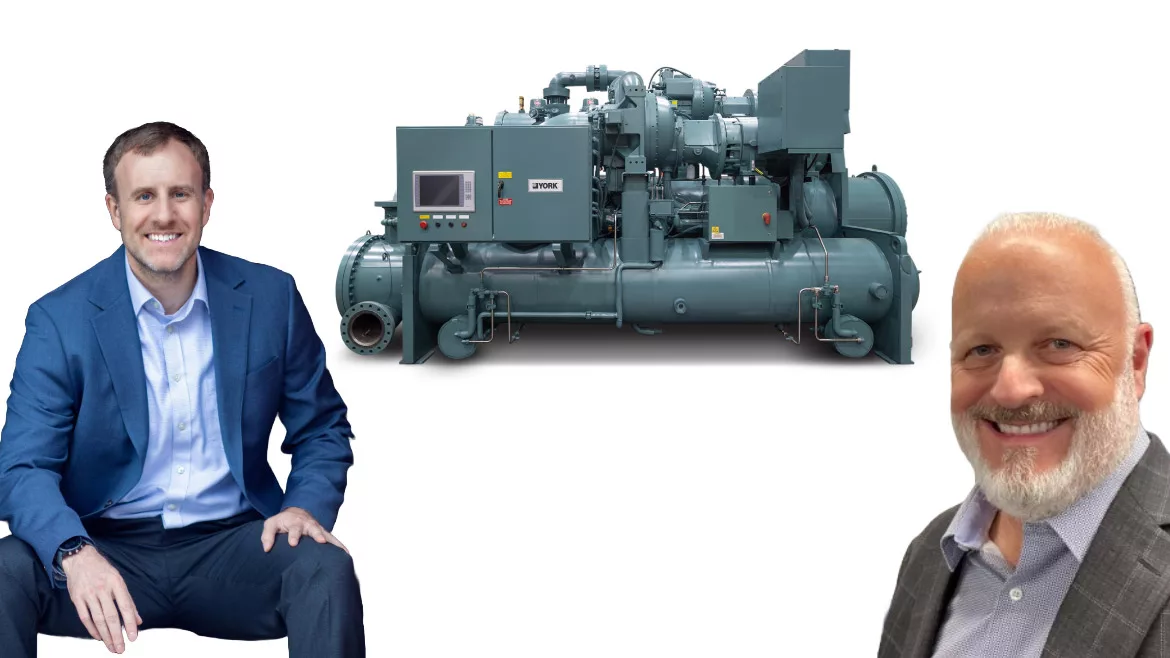
PARTIAL TO PARTIAL: Partial decarbonization improves efficiency while lowering operation expenses. (Courtesy of Johnson Controls)
By Rob Tanner, Marketing Director, Applied Equipment, Johnson Controls, and Jonathan McCrea, Area General Manager, HVAC Equipment, Johnson Controls
Building decarbonization remains a top priority for the commercial building sector. However, the U.S. Energy Information Administration (EIA) reported only a 4% decrease in CO2 emissions was achieved in 2023[i] – a step in the right direction but still short of meeting projected 2030 net zero targets. With approximately 40% of existing buildings built prior to 1980[ii], aging infrastructure has compounded what can already be a cost-intensive challenge, leave many building owners and operators feeling stuck.
But for facilities requiring simultaneous heating and cooling, such as hospitals and universities, partial decarbonization can create a path forward by improving heating and cooling efficiency while lowering operational expenses (OpEx).
Decarbonizing simultaneous heating and cooling demands
Traditionally, applications that required simultaneous heating and cooling year-round have relied on boilers and chillers that function independently. As the chiller extracts heat from the chilled water loop, it is rejected to a cooling tower where it is often wasted. At the same time, boilers are burning fossil fuel to generate hot water or steam to satisfy heating requirements. A water-to-water (WTW) heat pump with dual heating and cooling functionality draws on the existing heat within the facility and the ambient environment and moves that heat based on building demands to enhance energy efficiency, reduce fossil fuel consumption and conserve water.
Leveraging simultaneous heating and cooling using a WTW heat pump creates an opportunity to achieve partial decarbonization that can provide a funding source for future sustainability projects. On average, the transition from a legacy boiler and chiller system to a WTW heat pump can net an equipment payback in just two to five years and reduce the cost of each heating MBH produced by as much as 50%.
However, within many existing building applications, even the cost-savings projected from a heat pump conversion is not enough to offset the expenses incurred from updating an existing 160-180 °F hot water flow infrastructure to a design that would be compatible with the average 140 °F temperatures required by many heat pumps. But advancements in WTW heat pump efficiency and capacities are changing that by enabling compatibility with the high-heat, high-head infrastructures commonplace in many buildings.
Heat pump innovations designed for retrofitting
Water-to-water heat pump innovations such as dual electric motor-driven centrifugal compressors can now deliver the high-head performance necessary to retrofit older buildings for decarbonization. For example, the YORK® CYK Water-to-Water Compound Centrifugal Heat Pump achieves simultaneous hot water up to 170 °F and chilled water at 42 °F. Using independently adaptable compressors, the YORK® CYK heat pump can be optimized to match specific application requirements and operating conditions.
Even for buildings using centralized steam heating systems, small footprint compound centrifugal heat pumps and variable-speed screw heat pumps offer a decentralized approach. Heat pumps can be installed in parallel with existing steam-to-hot water heat exchangers at each building to extract low-grade heat from the return chilled water loop, reducing the cooling load the main central plant needs to provide.
In both scenarios, the flexible design of these innovative heat pumps provides an opportunity to scale strategies as part of a long-term sustainability road map. Heat pump implementation can be applied to a single building, to a defined zone or throughout the enterprise.
Decarbonizing now with an eye to the future
With 2030 net zero goals quickly approaching, the time to decarbonize is now. Building decarbonization strategies must include a plan to retrofit existing building without exorbitant costs. For facilities with simultaneous heating and cooling demands, partial decarbonization using advanced WTW heat pumps designed for high-head applications provides an opportunity to quickly begin reducing emissions while realizing significant cost-savings. New equipment investments can be paid back in just three to five years, and the subsequent reduction in operational expenses can be invested in long-term sustainability strategies to drive full decarbonization.
[i] U.S. Energy Information Administration, “U.S. energy-related carbon-dioxide emissions, 2023” (April 2024) https://www.eia.gov/environment/emissions/carbon/
[ii] International Energy Agency, “Renovation of near 20% of existing building stock to zero-carbon-ready by 2030 is ambitious but necessary” (September 2022) https://www.iea.org/reports/renovation-of-near-20-of-existing-building-stock-to-zero-carbon-ready-by-2030-is-ambitious-but-necessary
Looking for a reprint of this article?
From high-res PDFs to custom plaques, order your copy today!


