Maximizing the Heat Reclaim Potential of CO2 Refrigeration
Make effective use of waste heat to decarbonize facility space and water heating

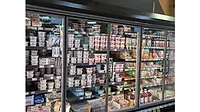
(Photo by kupicoo | Getty Images)
In commercial refrigeration systems, the practice of heat reclaim and/or recovery is a proven — albeit under-used — strategy for reducing energy consumption in food retail facilities. Today, with decarbonization efforts driving the increased adoption of CO2 refrigeration, more food retailers are re-examining the significant opportunities for heat reclaim.
Because CO2 (or R-744) produces higher discharge temperatures than its hydrofluorocarbon (HFC) predecessors, CO2 refrigeration technologies can be leveraged to address food retailers’ top two decarbonization priorities. First, with a global warming potential (GWP) of 1, switching to CO2 can lower retailers’ direct greenhouse gas (GHG) emissions. Second, by making effective use of available heat, retailers can improve efficiencies in connected heating systems, which can also reduce indirect GHG emissions.
Simply put, by leveraging CO2’s climate-friendly properties and harnessing its heat reclaim potential in commercial refrigeration, retailers can achieve a significant decarbonization boost.
What is heat reclaim in a CO2 context?
Heat reclaim is the practice of making effective use of the heat generated by a refrigeration system (i.e., heat which is produced by compression cycles). Instead of rejecting and/or wasting heat to the outdoors, it is captured and used for a variety of purposes throughout a facility, such as: hot water, dehumidification, slab heating, preheating a refrigeration process and even space heating.
Although some of these strategies have been previously employed with traditional HFC refrigeration, CO2 has more advantageous thermophysical properties that make heat reclaim potentially much more effective. Most importantly, R-744 has a significantly higher discharge temperature range (i.e., quality) than HFCs — from 20 to 40 °F higher — while providing a similar volume (i.e., quantity) of heat.
Today, R-744 is primarily used in centralized CO2 booster systems, where its GWP of 1 and zero ozone depletion potential (ODP) have made it a leading choice in many retailers’ refrigerant transitions. In CO2 booster systems, both low- (LT) and medium-temperature (MT) refrigeration circuits provide discrete sources for heat recovery.
130 to 150 °F on LT
200 to 250 °F on MT
In general, LT compressor discharge temperatures are ideal for supplying the lower-grade heat requirements, such as warming up glycol used in a refrigeration process or preventing a walk-in freezer slab from freezing/refreezing (which can cause structural damage due to floor heaving). Higher-grade heat recovered from MT compressors can be used for a facility’s more heat-intensive purposes, such as hot water, car washes, and even supplying heat for HVAC air-handling systems and/or heat pumps. Higher-quality heat is also available when CO2 booster systems enter supercritical mode in warm ambient climates; and it can be achieved artificially by raising system head pressures.
In a space-heating scenario, a CO2 refrigeration rack can essentially be used in a direct-air reclaim configuration, producing heat as it generates its refrigeration cooling loads. There, discharge gas is redirected and blown through a rooftop coil, where air is heated and sent through a store’s hot air supply.
In best-case scenarios, this configuration enables the CO2 booster system to act as a single source for refrigeration and heating (see Figure 1).
 Figure 1: Direct-air heat reclaim enables a CO2 booster system to supply warm air for space heating.
Design variables and condition-specific considerations
As is the case with CO2 booster system design, no one-size-fits-all heat reclaim configuration will simply account for all conditions and/or installation scenarios. It’s important to consider some of the key variables that could impact the heat reclaim potential in an installation:
- Refrigeration architecture (i.e., centralized or distributed)
- Retail store size/footprint
- Climate zone characteristics (i.e., annual average temperatures and humidity)
- Natural resource costs and availability
- Local energy rates
From an application feasibility standpoint, it’s important to determine the degree to which a heat reclaim strategy can meet its intended requirements. For example, during the lowest anticipated ambient temperature of a given installation, system designers must determine what percentage of the space heating can be provided. In these instances, an auxiliary and/or supplemental heat source, such as electric resistance heat, may still be needed.
From a decarbonization perspective, a heat reclaim strategy should not be implemented without first examining its energy and decarbonization impacts, as it could potentially negate the intended gains. If the goal is to achieve the lowest possible carbon footprint, it’s essential to ensure that the energy produced by the refrigeration system — and the relative carbon intensity of the state/local electricity source — can achieve the retailer’s decarbonization objectives.
Often, this requires calculating the efficiency and/or sustainability impacts of available strategies, such as artificially increasing head pressures or augmenting the system with another heat source.
All these variables and considerations could result in a variety of potential solution configurations. Thus, a heat reclaim strategy that’s designed for a hot, arid region may not necessarily be the best option for a cool, humid climate — or in installation locations that have unique heat quantity or quality requirements.
Exploring the impacts of evolving CO2 architectures
The evolution of CO2 architectures is also an important consideration in a heat reclaim strategy. Modern CO2 booster systems can be scaled from large, centralized plants to smaller, distributed CO2 booster systems. Distributed CO2 condensing units are available for use in Europe and have recently been introduced in the U.S.
The increased scalability of smaller and/or distributed CO2 systems will offer even more opportunities for effective heat recovery. For example, multiple distributed CO2 systems can be strategically located in proximity to where heat is needed most throughout a facility (i.e., next to air-handling units throughout a store). With proper planning, the inherent flexibility of distributed architectures could be leveraged strategically for heat reclaim opportunities.
Reduce, reclaim and decarbonize
Maximizing the potential for heat reclaim is an important consideration when adopting CO2 refrigeration — especially if reducing the carbon footprint of HVACR systems is high on a retailer’s priority list. By leveraging CO2’s higher discharge temperatures — either as they occur naturally or are artificially controlled by raising head pressures — retailers can reduce their dependency on fossil-fuel burning HVAC and boiler systems. As the trend toward electrification continues over the next decade, CO2 refrigeration can also complement emerging air- and water-sourced heat pump strategies.
With our expertise in CO2 refrigeration and full-system, integrated approach to compression, refrigeration rack and case controls, and high-pressure control valves, Copeland is helping retailers to employ effective CO2 heat reclaim strategies. Our recent research — in partnership with Henderson Engineers — provided much-needed, objective industry data on best practices when combining CO2 systems with heat pumps in a variety of application scenarios.
To explore Copeland’s CO2 resources, research and holistic approach to system design, please visit our resource hub.
A natural progression: Leveraging CO2 heat reclamation in heat pump applications
As more states and municipalities propose future target dates for banning gas heat, the potential for combining CO2 heat reclaim and air- or water-sourced heat pumps will provide new opportunities for retailers to coordinate these systems for the maximum sustainability benefit.
Even without regulatory pressures, decarbonizing HVAC systems is becoming a much higher priority for food retailers. As a result, many are exploring ways to lower their carbon footprints in refrigeration, heating and cooling systems — especially factoring heat pumps into their long-term decarbonization strategies.
Copeland is helping to quantify the potential of these opportunities in a newly commissioned research initiative. Its goal is to compare the efficacy of CO2 booster systems with traditional HFC systems in combination with air- and water-sourced heat pumps — including the option of leveraging a CO2 booster system as a direct-air reclaim configuration.
This important research provides quantitative data about the impacts of heat reclaim — in terms of energy savings and application effectiveness — on heat pump implementation.
Looking for a reprint of this article?
From high-res PDFs to custom plaques, order your copy today!