Wide Reaching Efforts Needed for Continued Heat Pump Expansion
OEM manufacturing capacity has a large hill to climb, complicated by a temporary sales slip of 3% in 2023
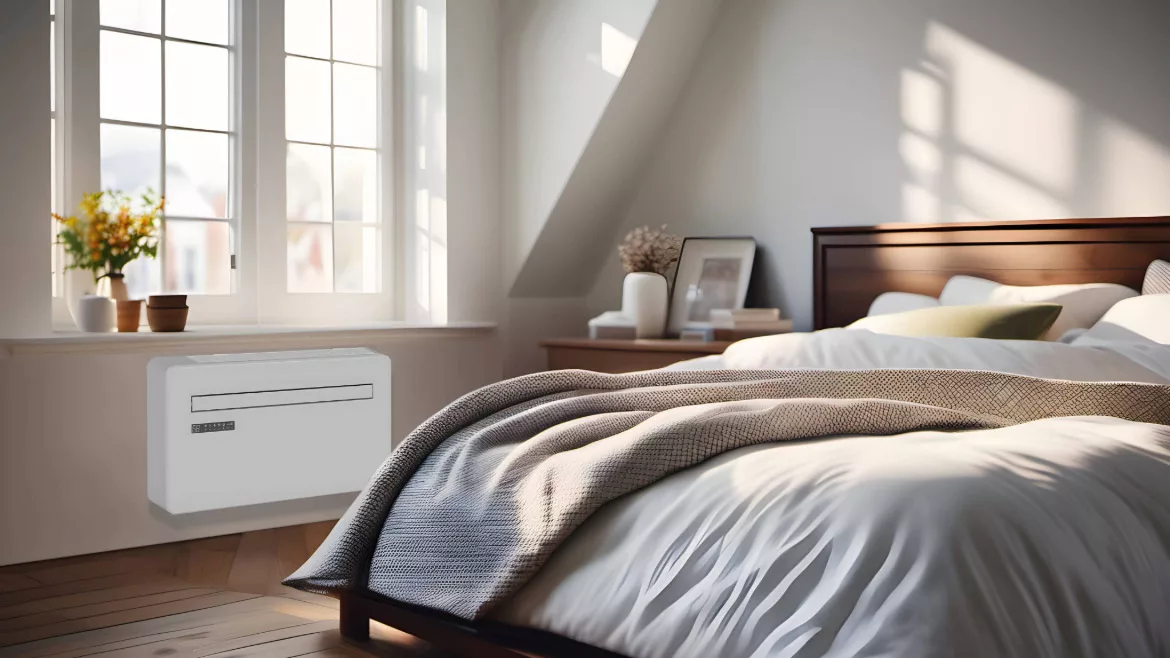
DEMAND: Heat pumps like the wall mounted iCool XC are experiencing heightened demand compared to five years ago. (Courtesy of Ice Air)
The growth of heat pumps has been discussed repeatedly over the past several years, with continually expanding goals for adoption around the world. But over the past year, the path toward those goals has become a bit less consistent.
While the direction of the industry continues to point toward wider adoption, the path forward will be driven by several key factors.
Uneven Expansion of Heat Pumps in 2023
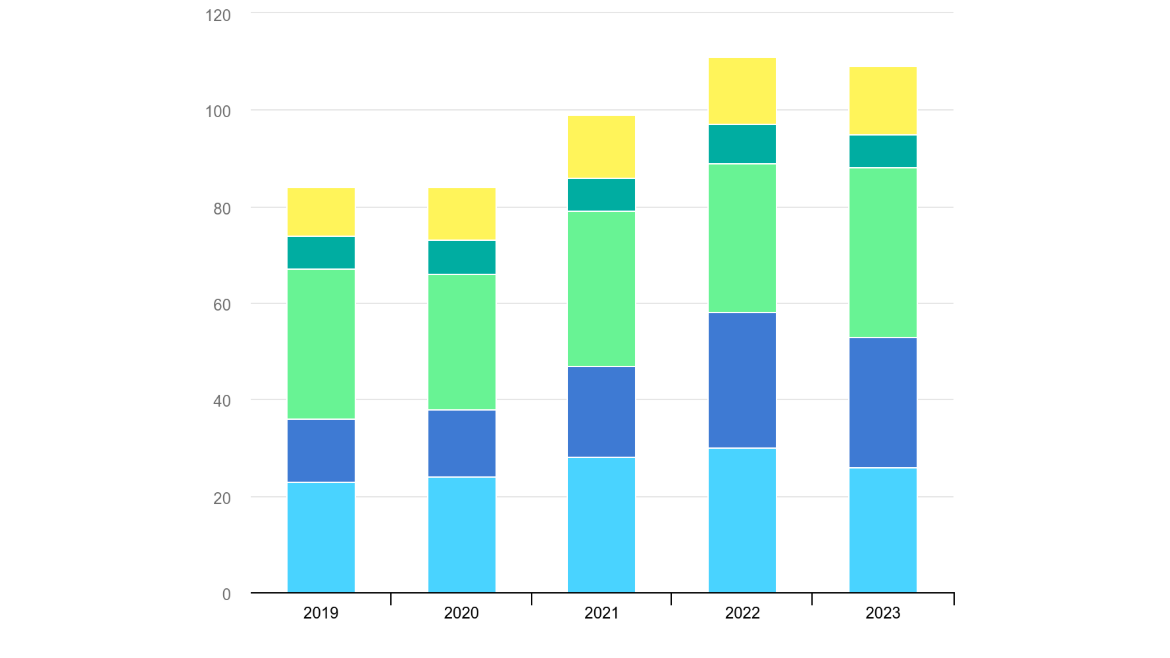
From 2019 to 2022, heat pump sales globally expanded 32 percent, including a 30 percent increase in the United States.
But following two years of double-digit expansion, sales dipped 3 percent in 2023 due to the impact of inflation, higher interest rates, as well as a dip in natural gas prices – which served as major motivator for heat pumps in Europe following Russia’s invasion of Ukraine. High inventories compared to installation capacity has also played a role in the short-term slip.
Even with the dip in 2023, the clear trend is that heat pumps are growing share compared to other home heating options. To keep perspective, even 2023 sales represented a more than 30 percent increase compared to pre-pandemic levels.
 CAPACITY: Heat pump manufacturing capacity by projects in the Net Zero Scenario, 2022-2030.
 Sustainability and Global Warming Drive Demand
Heat pump adoption is being strongly promoted through numerous initiatives to mitigate global warming. Unlike traditional boiler systems, heat pumps eliminate the need for burning oil or natural gas to heat buildings. The International Energy Agency (IEA) projects that heat pumps could reduce global carbon dioxide (CO2) emissions by up to 500 million tons by 2030, equivalent to the annual emissions from all cars in Europe.
Similar to other HVAC systems, heat pumps work by manipulating refrigerant pressure to change its state from liquid to gas. Unlike traditional air conditioners, however, heat pumps are bi-directional. They can compress refrigerant outside, allowing it to absorb heat from an external source and transfer it inside to warm air or a hot water tank through the hydronic loop.
After releasing heat, the refrigerant passes through an expansion valve, where the pressure and temperature decrease, enabling it to absorb more heat and continue the cycle.
Additionally, heat pumps can reverse this process using a reversing valve, compressing refrigerant inside to cool the air and expel heat outside during warmer months. The efficiency of heat pumps is measured by their Coefficient of Performance (COP), the ratio of heat output to energy input (electricity).
Unlike natural gas condensing boilers, which generally can’t exceed a COP of 1.1 (110%), modern heat pumps can achieve COPs of 4 or 4.5, meaning they can generate over four times the energy they consume. In essence, moving heat via a compressor is more energy-efficient than generating heat through combustion.
Future Pledges Grow, but Goals Remain High Bars
With the overriding approach that heat pumps are more environmentally friendly than other building heating solutions, there have been waves of proposals and initiatives launched worldwide. ADDITION: Heat pump capacity additions by country or region, 2019-2023.
Many countries have announced their own heat pump deployment goals, setting ambitions targets for the next several years. For example, after 2025, new homes built in the UK will be required to use low-carbon heating systems. There are also tax subsidies for a variety of sustainable technologies in countries around the world, including the United States, Ireland, Belgium, and a variety of other nations.
Many countries are also adjusting tax rates to increase reliance on electricity and lessen demand for fossil fuels. Germany allows for special metered electricity rates for electric heating systems, while the Netherlands has announced plans to increase natural gas tax rates by more than 40 percent by 2026.
More than a dozen countries have also announced future bans on fossil fuel technology installation, and many local governments across the U.S. have included similar requirements for their own zoning and building codes.
Despite all of those efforts, the path to reaching the goals laid out remains long. To meet the benchmarks of the Net Zero Emissions by 2050 (NZE) Scenario, the amount of heat pumps deployed worldwide by 2030 would need to almost triple.
The manufacturing capacity of OEMs which would be needed to meet this demand has an even larger hill to climb. Based on manufacturing outputs in 2022-2023, the amount of capacity would need to be quadrupled by 2030. A gap of more than 60 percent remains even after accounting for expansion plans announced by major manufacturers.
That level of potential demand will put an incredible strain on OEM supply chains around the world.
It also remains to be seen if there will be enough installers available to manage this incoming flux of activity, leading many OEMs to develop their own training programs.
Continued Adoption and Innovations Needed
Innovation will be a driving force in pushing forward heat pumps and other sustainable technologies in the coming years.
Many newer heat pump designs have been engineered for better performance in cold climates – countering one of the historic perceptions about the technology. Others have focused around designs for multi-family or larger industrial models. There is also a continued emphasis on technologies to create easier access to geothermal and other heat sources, such as deviated wells.
Each of these innovations and efforts will continue to push forward heat pump adoption in different segments around the world. But it is clear that the path over the next few decades will be uneven, and OEMs and other partners in the HVAC ecosystem should continue to focus on the end goal.
Looking for a reprint of this article?
From high-res PDFs to custom plaques, order your copy today!