Hybrid Supercapacitors: Redefining Mission Critical Power Backup
An attractive alternative to battery solutions
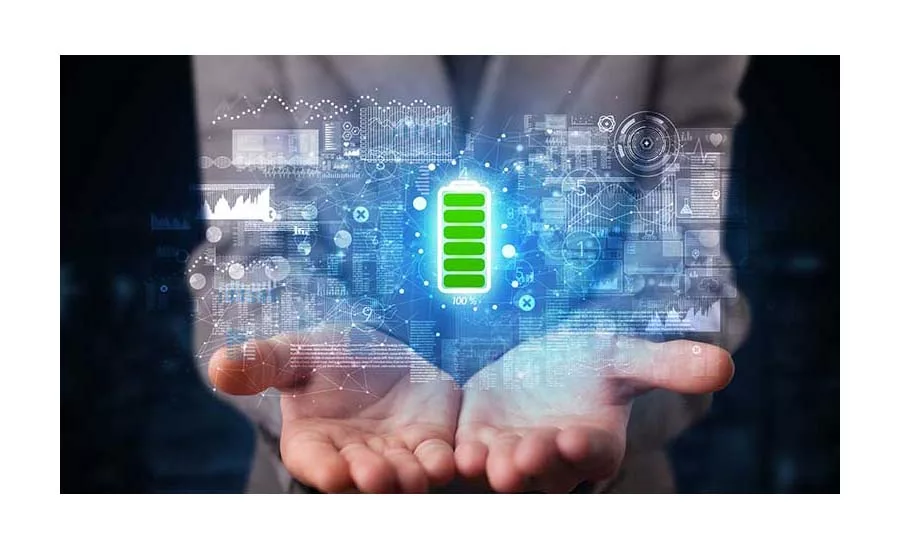
The need for extended battery backup time during the transition to on-site generators in data centers has undergone a fundamental transformation. Since the ability to swiftly transition to generators during a power disruption is now defined in seconds rather than minutes, the energy storage paradigm that required large-scale battery installations supporting several minutes of backup time has become a costly relic of a bygone era.
With the advent of new critical power architectures for redundancy and reliability, the need for energy storage in UPSs has changed. Thirty years ago, UPSs were used as backup power to provide time for an orderly “systematic shutdown” of computing systems whenever there was a utility power disturbance. The time required for the UPS to continue to provide power (after an outage) was based on how long it took to stop all processes without negatively impacting data integrity or losing any data. Even with on-site generators, the old paralleling schemes and technology generators took minutes to gain enough speed and voltage to synchronize before carrying the load, requiring minutes of bridging time from the UPS.
In today’s global internet economy, businesses cannot afford downtime. Any downtime — seconds to minutes — not only results in a company losing revenues but also allows its competition to gain an advantage. A consumer or a business will immediately look for alternatives upon any sign of inability to complete a transaction. This failure to complete a transaction can occur because a site is down — be it credit card processing, e-commerce, retail, or financial service providers.
Traditional backup configurations
To reduce downtime, most data centers and other mission-critical operations employ on-site power systems with N+1, 2N, 2N+1 redundancy, or one of the many reserve power configurations. Such systems usually consist of generators, UPSs, and static switches. Figures 1, 2, and 3 show traditional configurations.

FIGURE 1: The N configuration is the most vulnerable configuration that is not fault tolerant. (Image by Musashi Energy Solutions)

FIGURE 2: With an N+1 configuration, an additional UPS provides minimal redundancy. (Image by Musashi Energy Solutions)

FIGURE 3: In a 2N configuration, an additional N system provides more redundancy than N+1 but is costly to deploy and probably the least energy efficient. (Image by Musashi Energy Solutions)
In the past, sizeable data center designs called for large banks of generators connected to the generator bus. Sometimes, as many as 12 generators had to be initiated and synchronized with the first generator online before they could be linked to the generator bus. This configuration meant that while the first generator would be online in 10 to 15 seconds, each additional generator would take another 10 to 15 seconds to start, synchronize, and close its breaker to the generator bus. All generators would have to be on the bus before critical loads would start to be reconnected to the backup power system. This required the UPS to have a requirement for longer autonomy as well.
Today, many data centers with distributed redundant designs do not require the generators to be paralleled before connecting to the bus. Each generator serves a single UPS or a group of UPSs and can be online within 10 to 15 seconds of a utility outage.

FIGURE 4: A shared reserve backup configuration. (Image by Musashi Energy Solutions)
A reserve UPS can be used to support a single client or multiple clients. Figure 4 shows a shared reserve configuration utilizing a reserve UPS that can support multiple clients (load X represents multiple clients).
While modern power systems reduce the risk of downtime, the need for energy storage still exists. Energy storage is used for those times when bridge time is needed — to bridge the power between utility failure and the 10 to 15 seconds it takes for emergency power to become available, usually with on-site generators.
With these new reliability and reserve power configurations, minutes of battery autonomy (run time) are no longer necessary. In fact, essential electrical systems, as defined in NFPA 99 (Health Care Facilities Code), “shall be classified as Type 10, Class X, Level 1 generator sets per NFPA 110.” The Type 10 designation in NFPA 110 defines the maximum time in seconds that the emergency power supply systems (EPSS) will permit the load terminals of the transfer switch to be without electrical power.” In the case of Type 10, the maximum time is 10 seconds.
Out with the old and in with the new
Evolution in supercapacitor technology presents an attractive alternative to battery solutions. A great example of these advancements is hybrid supercapacitors (HSC), which have recently come to market for the bridging needs of the modern EPSS.
The technology in HSCs combines the best aspects of electric, dual-layer capacitors (EDLCs) with the high power density and high energy density of lithium-ion batteries while avoiding thermal runaway issues.
The old method of using valve-regulated lead-acid (VRLA) batteries in multiple cabinets, taking up valuable floor space, and providing 15-plus minutes of backup power is no longer needed. New methods in technology and power system methodology (reliability and redundancy) have paved the way for more cost-effective energy storage solutions that include longer life and higher cycle life without the risk of thermal runaway or any disposal issues.
This article was originally posted on www.missioncriticalmagazine.com.
Looking for a reprint of this article?
From high-res PDFs to custom plaques, order your copy today!