search
Ask ACHR NEWS AI
cart
facebook twitter instagram linkedin youtube
  • Sign In
  • Subscribe
  • Sign Out
  • My Account
  • NEWS
  • TECHNOLOGY
    • Heating & Boilers
    • Cooling & Chillers
    • Pumps & Flow Controls
  • SECTORS
    • Commercial
    • Health Care
    • Data Center
    • Educational Facilities
  • DESIGN | CONSTRUCTION
  • OTHER TOPICS
    • High-Performance Buildings & Automation
    • Ventilation and IAQ
    • Commissioning
    • HVAC Retrofits
  • TODAY’S BOILER
    • Today’s Boiler Archives
    • Today’s Boiler Digital Edition
  • MORE
    • Case Studies
    • Podcasts
    • Videos
    • Directory
    • Webinars
    • ES NEWS Store
    • White Papers
  • SIGN UP
  • Back to The NEWS
Engineered Systems NEWSHVAC Engineering SectorsCommercial HVAC

Structurally sound HVAC

What are you designing for ... or against?
By Amy Al-Katib
EarthQuake

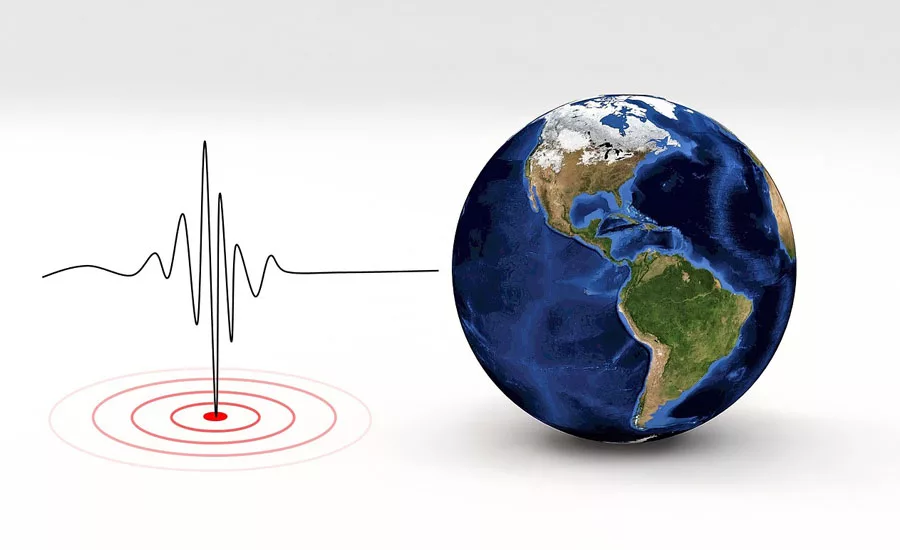
In case you left planet Earth last month and haven’t heard, New York City, all of its buildings, and the millions of people it houses experienced a 4.8 magnitude earthquake on April 5.
Image by Tumisu from Pixabay

April 30, 2024

In the past, whenever I heard someone say “California,” I’d think of beaches, vegan food, and earthquakes. When someone said “New York,” I’d think of busy streets, good food, and … not earthquakes. But, that was then, and this is now. 

In case you left planet Earth last month and haven’t heard, New York City, all of its buildings, and the millions of people it houses experienced a 4.8 magnitude earthquake on April 5. Yes, the Empire State Building is fine — it said so itself on X. 

But, is it fine? 

Earthquakes aren’t typical in New York. According to the Northeast States Emergency Consortium (NESEC), there have only been 550 recorded earthquakes in New York between the years of 1737 and 2016. Meanwhile, the U.S. Geological Survey (USGS) estimates there are 500,000 detectable earthquakes in the world each year — 100,000 of which can be felt, and 100 that cause damage.

Now, I wasn't surprised at all when my sister moved to Los Angeles last year and told me she felt an earthquake. But, for someone who didn’t grow up in New York and hasn’t been alive since the 18th century, the thought of an earthquake didn’t even cross my mind when I moved to New York. 

One of the most appealing aspects to me about the city is that it’s the one that “never sleeps.” And, that’s because, although I’m human and require sleep, I don’t do it often or on a regular schedule. I didn’t sleep the night before the quake because I was working on some school projects. I went to bed at 6:30 on the morning of April 5. So, imagine my surprise when it woke me up at 10:30 a.m. 

My first thought was that a ghost was violently shaking my bed. And, yes, I know that’s a strange thought, but keep in mind I was barely awake. Once I heard all the dishes rattling and realized it was more than just my bed shaking, my second thought was that someone blew up a building. It wasn’t until it stopped, and I heard someone outside ask, “What was that?” that I finally wondered if that could have been an earthquake. Approximately 15 seconds later, the internet was flooded with hilarious memes to assure me it was. Now, I know there's no scientific proof that links earthquakes with the climate. But, as the climate continues to change, there are coincidentally more earthquakes. So that got me thinking ...

It's believed that the resulting fires of the 1906 San Francisco earthquake caused just as much, if not more, damage than the quake itself. So, I can't help but wonder what would happen to a place like New York, where earthquakes haven't historically happened, and the mechanical systems aren't built to withstand anything beyond a 5 on the Richter scale, if that were to occur. 

And furthermore, shouldn't we be making other design considerations in terms of the climate change that is (debatably) happening? Because, I mean, what happens to system efficiencies when there's a blizzard in Texas or a 100° temperature differential in Michigan from one day to the next?

If we're designing for changes in conditions, like occupancy, use, public safety, etc., are we also accounting for the possible changes in temperature, weather patterns, and natural disasters — not the historical or average but the undocumented, yet to come?

Share This Story

Looking for a reprint of this article?
From high-res PDFs to custom plaques, order your copy today!


Amy al katib 200

Amy Al-Katib, CDCDP, is a freelance journalist and former editor-in-chief of Mission Critical and Engineered Systems magazines. She is a member of 7x24 Exchange Intl., ASIS Intl., and the International Society of Philosophical Enquiry. She holds a bachelor’s degree in journalism from Michigan State University and a certificate in STEM/computer science from New York University. She is currently a student pilot and is also enrolled in the Masters of Science Cybersecurity program at NYU. Reach her at al-katiba@bnpmedia.com.

Recommended Content

JOIN TODAY
To unlock your recommendations.

Already have an account? Sign In

  • HVAC-enrollment

    The Trades Are Back: HVACR Programs See Nearly 30% Enrollment Spike

    A new wave of future technicians is entering the pipeline.  
    Training and Education
    By: Matt Jachman
  • 2025 Top 40 Under 40

    2025 Top 40 Under 40 HVACR Professionals List

    The 11th annual Top 40 Under 40 list highlights those...
    HVAC Residential Market
    By: Hannah Belloli-Oster
  • LG Ductless Mini-Split Systems

    The 9 Types of Heat Pumps

    As the U.S. moves toward electrification, heat pumps are...
    Ground Source Heat Pumps
    By: Joanna R. Turpin

More Videos

Today's Boiler

Spring 2026 Issue

Today's Boiler - Spring 2026 Cover

Read More from Today's Boiler

Case in Point Logo

Smarter Hydronic Design for Data Centers - Free Webinar - January 22, 2026

Related Articles

  • MM-Amy-WebImage.jpg

    Designing the journey of an HVAC engineer

    See More
  • Mechanical Moments

    Learn from HVAC engineers who do things differently than you

    See More
  • Mechanical Moments

    This can’t be efficient HVAC

    See More

Related Products

See More Products
  • Sound and Vibration.gif

    HVAC Systems Sound and Vibration Procedural Guide

  • Top 100 HVAC/R Tips

  • HVAC Customer Service Handbook, 4th Edition

See More Products

Events

View AllSubmit An Event
  • September 9, 2025

    How Maintenance Plays into the HVAC Decarbonization Trend

    On Demand This webinar will explore maintenance strategies for advanced HVAC systems, including VAVs and demand-controlled ventilation.
  • September 30, 2025

    HVAC Pumping Systems for Commercial Building Applications

    On Demand Join us for an exclusive webinar on the latest advancements in parallel commercial HVAC pumping solutions designed to simplify installation and improve system efficiency.
View AllSubmit An Event

Related Directories

  • Aero Dyne Sound Control Co.

    Aero-Dyne is the High Efficiency Profile "H-E-P" Turning Vane and Rail system. No other product provides comparable quality, structural integrity, and performance.
×

Sign Up. Stay Informed.

The #1 trusted source for the HVACR industry since 1926

SUBSCRIBE
  • RESOURCES
    • Advertise
    • Contact Us
    • Advisory Board
    • Classifieds
    • Submit a Letter
    • Directories
    • Store
  • ACCOUNT CENTER
    • Create an Account
    • Start a Subscription
    • Manage My Account
    • Sign Up for Newsletters
    • Visit Customer Service
    • Update Preferences
  • SERVICES
    • Marketing Services
    • Reprints
    • Market Research
    • List Rental
    • Survey/Respondent Access
  • STAY CONNECTED
    • LinkedIn
    • Facebook
    • Instagram
    • YouTube
    • X (Twitter)
  • PRIVACY
    • PRIVACY POLICY
    • TERMS & CONDITIONS
    • DO NOT SELL MY PERSONAL INFORMATION
    • PRIVACY REQUEST
    • ACCESSIBILITY

Copyright ©2026. All Rights Reserved BNP Media, Inc. and BNP Media II, LLC.

Design, CMS, Hosting & Web Development :: ePublishing