Harnessing VFD inputs and outputs for smarter water systems
The inputs and outputs (I/O) of VFDs are seemingly modest terminals and may initially appear intimidating. However, mastering their application unlocks a whole new world of possibilities for your pumping system.
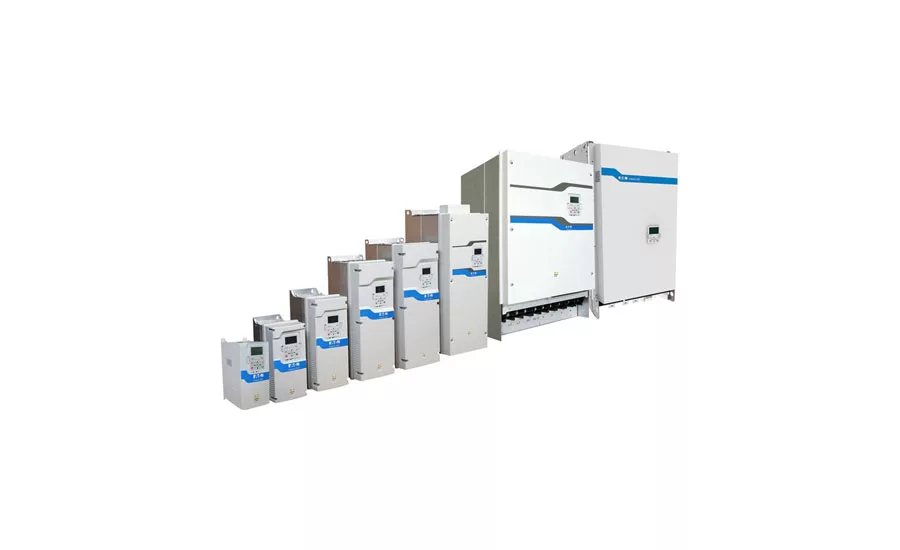
Image courtesy of Eaton
It's no secret that variable frequency drives (VFDs) are transforming the landscape of modern water systems. Popular for their ability to provide precise motor control and heightened electrical efficiency, VFDs are not just enhancing pump performance — they’re redefining it. Yet, the true potential of these devices lies beyond the obvious. The inputs and outputs (I/O) of VFDs are seemingly modest terminals and may initially appear intimidating. However, mastering their application unlocks a whole new world of possibilities for your pumping system.
Small yet powerful terminals
In the world of water systems, the unassuming I/O of VFDs play a pivotal role. Devices like pressure sensors (also known as pressure transducers) and flow sensors serve as the unsung heroes of water system control. By converting analog signals — such as pounds per square inch (psi) or gallons per minute (GPM) — into digital data, these sensors relay critical information about the system’s real-time performance directly to the VFD.
Picture this: As water flows through pipes, a pressure sensor detects variations in the pressure and communicates them to the VFD. Armed with this data, the VFD dynamically adjusts the pump’s motor speed to align with the desired setpoint. Connecting the sensors to the VFD’s analog input terminals is straightforward, especially if the VFD boasts an onboard power supply, and programming them is rather simple as well. Begin by identifying the drive’s control location (sensor input terminals), then specify the reference value (setpoint). Finally, program the signal scaling according to the device’s specifications. And, Voilà! Your pumping system now operates automatically, optimizing efficiency and performance.
Another commonly used input device is the level control. Level sensors come in several different types: ultrasonic, capacitive, and float switches. These controls are analog, similar to pressure and flow sensors; they convert the distance to the liquid or height of the liquid into a digital signal that the VFD can understand. By introducing a level control to your water system, you have another method of operating your pumping system automatically.
Let’s take the float switch into consideration for a moment. When placing a float switch into a tank, its designation as either “Normally Open” or “Normally Closed” determines its functionality.
- Normally open (NO) switch: If the goal is to prevent water overflow from the tank, an NO switch is useful. It remains de-energized at rest and activates when the liquid level rises.
- Normally closed (NC) switch: Conversely, if the objective is to fill the tank, an NC switch is ideal. It remains energized at rest and deactivates when the liquid level rises.
Level sensors also serve as safety tools for the pumping system. The float switch, in a pump-control scenario, also prevents the pump from running dry which could harm the pump’s internal components. Further, the float switch could be used with logic in a PLC program to activate an alarm or emergency stop the drive if a set of conditions were met.
Here’s an example: a pump is filling a tank and runs longer than it should, indicating the tank is overflowing. The float switch is in the closed position for too long in this scenario and the PLC recognizes this, activating an alarm. It’s even possible to utilize multiple level sensors for control and safety purposes, such as one for control and one set at a higher water level to determine overflow. In short, level sensors not only enhance system operation but also play a crucial role in safety. Whether preventing pump damage or triggering alarms, they’ll ensure efficient and secure operations.
Indicator lights offer a creative and efficient way to leverage I/O by providing quick visual cues for essential information about the drive’s status. Good or bad, how the devices are programmed will tell a lot just by looking at them. Imagine the following scenarios where indicator lights are key:
- Pump Running Indicator: Imagine a pumping system tucked away in a remote area. Programming an output light to turn on when the pump is running will eliminate the need for constant physical checks by giving you that information from a distance.
- Pump Stopped or Faulted: What if your pump stops unexpectedly or encounters a fault? Program another light output to activate in either scenario. You’ll instantly know if action is required, even from a distance.
- Dual Lights for Clarity: For more nuanced insights, consider using dual lights. Perhaps you want a green light when the pump is running smoothly and a red light when it encounters a fault. This color-coded system is clear and simplifies troubleshooting.
The only limitation here is how many output terminals are available on the drive. Remember that these lights serve as more than just indicators; they’re your system’s silent communicators. By strategically programming them, you will find yourself with smooth operation and enhanced safety.
Similarly, audio devices are another type of output device, providing audio cues to convey essential information about the drive’s status. When appropriate programmed, these alarms and buzzers play a large role in system management and safety. Imagine working in a pump house with ambient motor noise – the daily hum of machinery in motion. Amidst this background, an alarm stands out – an immediate call to action. By promptly alerting operators to faults, the alarm minimizes downtime and prevents potential damage. Paired with lights, situational awareness is greatly improved, allowing for swift responses when needed. These outputs are strategic communicators.
Circling back to inputs, leak detectors and temperature sensors play pivotal roles in optimizing pumping systems. Leak detectors find their niche in wastewater and irrigation applications where fluid containment is critical. Continuously monitoring for leaks, they allow for prompt intervention when needed. Temperature sensors are ideal for swimming pool and industrial processes applications. Preventing overheating is their key role, adding value to system control. While there may not be many applications that simultaneous use both analog inputs, each offers a pumping system the benefit of enhanced drive control.
The strengths of I/O culminate into a final device that offers the best of both worlds – the communication module. Powerful as both remote control inputs and remote monitoring outputs, using your preferred communication protocol with a VFD truly makes your pumping system smart. Some VFDs come standard with various protocols available, whether Modbus, Ethernet, Profinet or otherwise.
Further, many VFD offer communications modules that can be added on as desired. If what you like isn’t readily available, check with your manufacturer. Paired with PLC, communications become even stronger as their functionality can be applied in a multitude of new ways. The only limiting factor here is your creativity. Thinking outside of the box to apply communications to other I/O devices is highly encouraged!
Pumping systems are no longer just a pump, switch, tank, and destination. Variable frequency drives have upped the water systems game with not only their ability to control and monitor systems, but also by expanding them via I/O functionality. Pressure, level, flow, leak, and temperature sensing inputs customize pump control like never before; lights and audio outputs are right there with them. Smart water systems enhance system efficiency, decrease potential downtime, and keep users informed thanks to VFDs and their seemingly limitless inputs and outputs.
Looking for a reprint of this article?
From high-res PDFs to custom plaques, order your copy today!