Advancements in chiller designs save space and increase efficiency
Chiller performance and size no longer need to be at odds
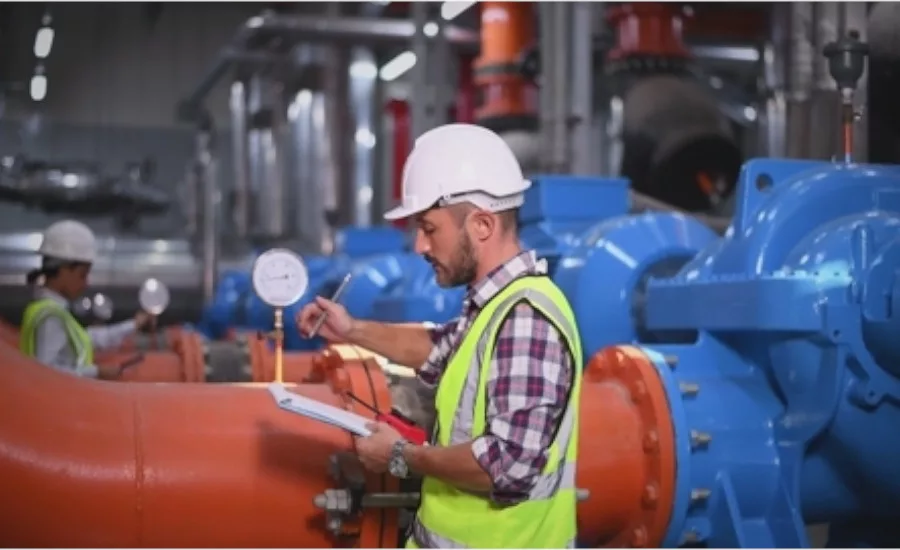
[DSCimage]/[Creatas Video+ / Getty Images Plus] via Getty Images
Size is often a critical factor in chiller selection. Footprint can impact system placement, installation, and scalability. Historically, enhancing chiller efficiency has required an increase in overall system size. In air-cooled chillers, this was typically driven by increases made to the heat exchanger surface area. Similarly, in water-cooled chillers, compressor and condenser size was often increased to deliver efficiency gains. Because of this, mechanical and facilities engineers who considered compact units were often met with capacity limitations, leaving them conflicted between system goals and building constraints.
Today, advanced chiller technology has significantly improved system performance and efficiency while also enabling a more compact design. Manufacturers are reimagining both air- and water-cooled chillers to meet stringent energy efficiency and low-global warming potential (low-GWP) refrigerant requirements. As these next-generation chillers are engineered, recent innovations provide an opportunity to enhance sustainability and decarbonization throughout the entire life cycle of the chiller, including energy efficiency, embodied carbon, and emissions. These technological advancements can also enable a reduction in the overall chiller package size and weight. In some instances, this can be as much as a 30% reduction depending on chiller type. This provides an opportunity to customize system designs to meet individual application requirements and building performance goals. It’s important to understand the innovations driving small-footprint chiller advancements leveraged in this “tailored and tuned” approach.
Air-cooled advancements
The heat exchanger is the heart of an air-cooled chiller. Recent advancements in high-efficiency heat exchanger development have provided an opportunity to reduce the heat-transfer surface area and save space within the system. Additionally, continuous improvements have been made to electrically powered components, such as fan aerodynamics and motor efficiency. For example, some of the latest air-cooled, variable-speed drive screw chiller designs replace the traditional evaporator with an innovative, hybrid falling film heat exchanger. Paired with microchannel air-cooled condensers, these systems can provide efficiency gains while also benefiting from a reduced overall package weight. In these models, this results in a 30% equipment size reduction compared to similar legacy systems. Additionally, the technologies used to decrease system footprint also play a role in enabling a reduced refrigerant charge.
In air-cooled chillers, reducing size and weight means fewer structural demands on the building and a streamlined installation process. This is especially important for systems installed on the rooftop or applications where system redundancy is required. Spatial consideration is a critical key when designing an air-cooled chiller configuration. Failing to reserve adequate space between the units can result in the recirculation of transferred hot air that can negatively impact performance.
Water-cooled technologies
Similar to air-cooled designs, water-cooled chillers are being engineered for increased efficiency while also approaching product design with footprint in mind. This has significantly impacted what large-capacity water-cooled chillers can achieve within a confined amount of space. As a result, high chiller capacity no longer requires a large amount of floor space to operate effectively.
For example, some dual-centrifugal chiller designs have a capacity range of 1,500 to 6,000 tons. This capacity range is achieved using a single condenser and evaporator and a single refrigerant circuit with two compressors piped in parallel on top of the shells. This configuration results in a shorter and narrower footprint that is designed to free up mechanical room space.
Similarly, there are also some magnetic bearing centrifugal chiller designs that maximize capacity in less space. This chiller combines two refrigerant circuits into two shells with dual compressors and variable-speed drives (VSDs) on top of the unit. The configuration enables the chiller to effectively operate the same as two chillers in series counterflow (SCF), using only a single unit. Typically, SCF units are aligned end to end and require significant plant floor space. With this design, the same capacity and efficiency benefits of SCF can be matched while operating at a single point of control, requiring much less floor space.


Smaller-footprint water-cooled chillers can save valuable floor space within commercial or district cooling applications and central utility plants. The compact size can also help to make system redundancy feasible when spatial limitations are present, further enhancing energy efficiency by enabling chillers to cycle off based on the building load.
Optimizing for application
Small-footprint chillers widen the application range and increase installation flexibility. This can be especially beneficial when working within tight building environments, such as retrofits and high-rise structures, or in mission critical applications, such as data centers, that often require extensive system redundancy within limited square footage. For example, designing an HVAC system for a data center using multiple small-footprint chillers in a constrained space can increase stability in cooling performance by reducing hot air recirculation. This can help to reduce spikes in energy demands and reduce risks of downtime.
Small-footprint air- and water-cooled chillers can provide a facility with additional benefits. Because air-cooled chillers are typically installed on the building rooftop, weight is a crucial consideration. Compact designs are not only smaller overall, but they also require less material to achieve performance, in turn, reducing package weight. The reduced weight enables more units to be placed on the roof, often without added structural engineering. The smaller footprint is ideal for designing a configuration that is compliant with building codes and maintains serviceability best practices.
Compact water-cooled chillers with size-optimized components free up floor space while also offering additional building performance benefits. Reduced compressor sizes can help to limit operational noise and vibration. Quieter operation not only supports occupant well-being, it can also reduce acoustical engineering requirements within the mechanical room. Additionally, these compact designs often have lower input power, which can help to reduce wiring and electrical component requirements throughout the building.
Conclusion
Chiller performance and size no longer need to be at odds. The same advancements driving energy efficiency are also enabling reduced chiller footprints in both air- and water-cooled equipment. This provides a pathway for manufacturers to decrease chiller size and weight as part of the overall sustainability picture.
When specifying a small-footprint chiller, it’s important to work with a manufacturing partner who can customize the system to meet individual building requirements and performance goals. This enables engineers to fine-tune mechanical components and compressor and evaporator options based on the desired outcomes. It’s also important for the chiller to be designed and installed with serviceability in mind. This includes providing adequate clearance around the chiller and including multiple access points throughout the unit with critical components located near these inlets. Through customization and intentional design, chiller size and weight can be reduced without sacrificing performance, efficiency, or serviceability.
Looking for a reprint of this article?
From high-res PDFs to custom plaques, order your copy today!

.webp?height=96&t=1767079637&width=96)