Advantages of using single-room solutions in K-12 schools
Containing illnesses is key to providing an excellent learning experience.
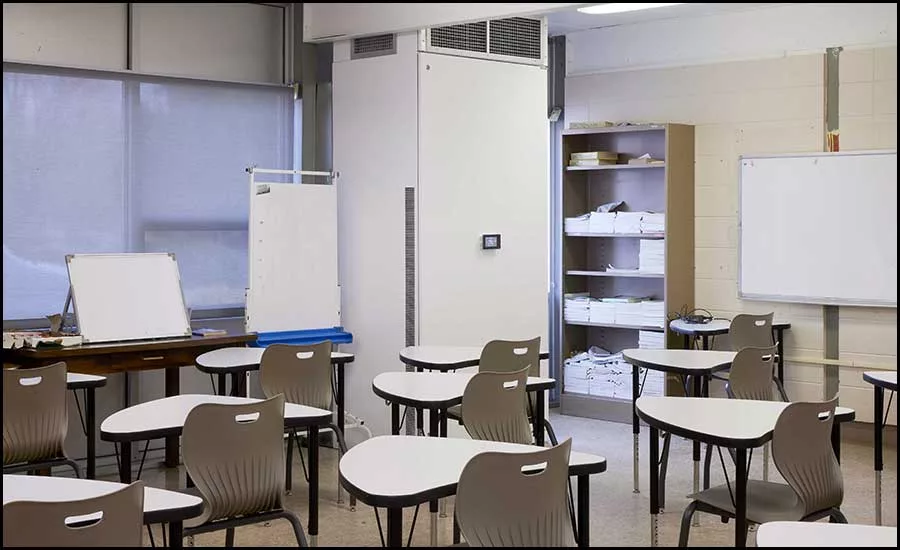
The main image is courtesy of Modine Mfg. Co.
When it comes to K-12 schools, it’s vital to have an HVAC solution that provides clean and comfortable air. One important aspect of that is preventing airborne illnesses from spreading throughout the school, which has been difficult for some with the continued rise of the flu and COVID-19 cases.
Keeping illnesses contained will be key to providing an excellent learning experience for students. There have been several schools that missed learning opportunities due to closures near the beginning of the school year. According to NBC News, attendance in the Lee County School District in Kentucky dropped to 81% just nine days after the first day of school this year due to illness.
In addition to preventing the spread of illness, it’s also paramount to keep temperatures within a classroom comfortable for students. Whether it’s heat in the winter or air conditioning in the spring and summer months, having a solution in place that can provide the proper needs for a classroom can be the difference between a student succeeding or being distracted by an uncomfortable environment.
While rooftop or whole-facility alternatives may seem like a "one size fits all" solution, single-room units provide advantages that satisfy the unique needs of K-12 facilities.
Containing illnesses
When comparing rooftop units (RTUs) to single-room solutions, one of the biggest differences is the ability to eliminate cross-contamination. With rooftop or whole-facility units, the air is being treated throughout the entire building, which leaves an opportunity for containments to spread from area to area. With single-room solutions, as their name states, the return air is only circulated within a single room. Any pathogen that enters the space would likely be contained in that individual area and not circulated throughout the whole building. In addition, facility managers can determine the specific filtration and ventilation needs for the room to better optimize the unit and minimize airborne pathogens.
Temperature zone control
Another advantage that single-room solutions have over their rooftop counterparts is temperature zone control. No classroom is built the same, and each one is positioned differently within a facility. Temperatures vary from room to room, so it’s important to have individual room control to ensure students are comfortable during all times. Single-room solutions provide this feature. In addition, facility managers can also adjust relative humidity levels and the ventilation rate to make sure the room is conditioned properly.

Other benefits of single-room solutions
While much of the discussion has been focused on providing clean, comfortable air, there are many more benefits to utilizing single-room solutions. One of the more unique aspects of single-room solutions, especially single-packaged vertical units (SPVUs), is their noise level. Students need to concentrate when they are inside the classroom, so it’s important for noise to be minimized. While SPVUs are already quiet, even when a compressor is installed, facility managers can also install upgrades to assist in noise reduction to create the optimal classroom experience.
Other benefits of single-room solutions include:
- Retrofit capabilities.
- Ease to service.
- The relatively low install cost.
- Redundancy in the system related to maintenance.
- Air distribution options (can be ducted).
- Minimal space needed for installation.
- Mold and mildew mitigation.
Better efficiency results in better IAQ
Creating an optimal classroom environment is important for K-12 schools, and single-room solutions offer the opportunity for school leaders to meet that need. With flu season upon us, single-room units can eliminate cross-contamination while also offering solutions to set proper humidity levels and ventilation rates. With the ability to minimize noise, these units won’t distract students from their work or teachers from delivering the lesson of the day. While other HVAC options are available, single-room solutions present facility managers with the ability to control the experience in individual rooms, thus making for a better experience for students and staff alike.
Looking for a reprint of this article?
From high-res PDFs to custom plaques, order your copy today!