Electrode boilers are ideal for quickly, efficiently supplying auxiliary steam and hot water to meet surges in demand
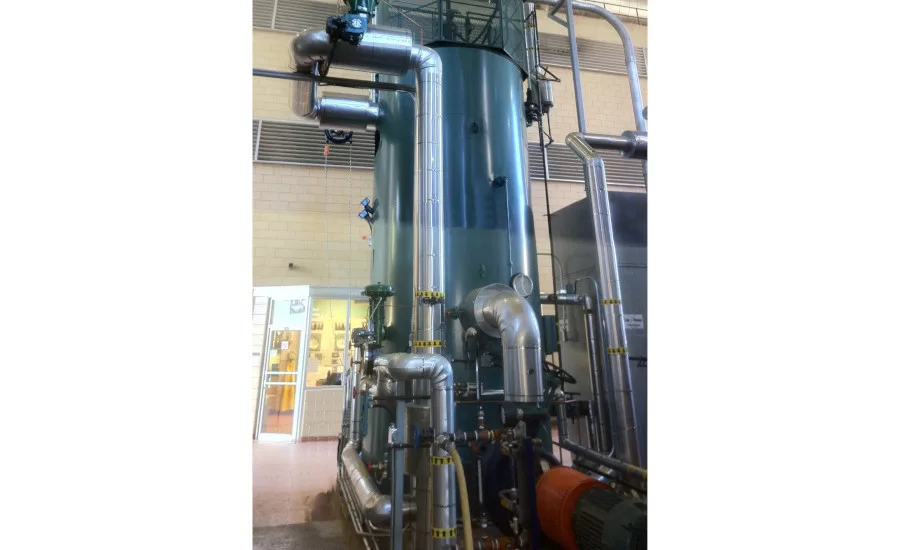
FIGURE 1. Using electrode boilers as an auxiliary system minimizes the number of gas-burning boilers on standby, provides greater operational flexibility, and reduces operating and maintenance costs. Images courtesy of Acme Engineering
In industry, fossil fuel-fired boilers are commonly used to produce steam or hot water for space and process heating. However, traditional boilers may not be flexible enough to respond quickly to demand surges during peak periods.
To compensate, processors and manufacturers often keep more than the required number of boilers running — usually at less than full capacity. When more steam or heat is required, the units are already in operation and so require less time to increase output. Even if burning at 75%, fossil fuel boilers take time to heat up internally.

“If you want to use a gas-fired boiler as an auxiliary, you’d better know in advance when you will need it since it takes time for the heat to rise and disperse before reaching the target output [of steam or hot water],” said Robert Presser, vice president, Acme Engineering, a manufacturer of industrial and commercial boilers with operations in the U.S., Canada, and Europe. “If you have gas-fired boilers run at 75% capacity and there is an increase in demand, you cannot quickly reach 100% capacity.”
Today, a much more efficient and cost-effective approach is available: auxiliary electrode boilers. These modern electrode boilers can almost immediately provide supplemental steam or hot water as required. The approach minimizes the number of gas-burning boilers on standby, provides greater operational flexibility, and reduces operating and maintenance costs.
The components of these auxiliary high-voltage electrical systems — boilers, superheaters, secondary pressure vessels, and associated control systems — are readily available from experienced suppliers and can be customized to specific industrial needs.

“A gas-fired boiler cannot go from zero to 100% capacity in less than two minutes but an electrode boiler can,” said Presser.
He points out that modern electrode boilers are designed so temperature, pressure, and output can quickly rise or fall as needed with no “flywheel effect.”
Electrode boilers have existed in various forms for many decades. However, recent design improvements have closed the output gap while surpassing conventional units not only in terms of efficiency and simplicity but also responsiveness and safety.
Modern electrode boilers utilize the conductive and resistive properties of water to carry electric current and generate steam. In a jet boiler, water jets flow from a central column to electrodes of each phase, using chemicals in the water to create resistance and generate heat and steam as the water passes from ground to phase. More steam is produced as the water flows from the electrode to the counter electrode placed below the electrode box, before the water returns to the reservoir at the bottom of the vessel.
“The more current [amps] that flows, the more heat [Btus] is generated and the more steam produced,” said Presser. “Nearly 100% of the electrical energy is converted into heat with no exhaust stack or heat transfer losses.”

As an example, in the CEJS High Voltage Jet Type Steam Boiler from Acme Engineering, the electrodes are vertically mounted around the inside of the pressure vessel, which enables the unit to produce maximum amounts of steam in a minimum amount of floor space.
The electrode boilers operate at existing distribution voltages, 4.16-25 KV with exceptional efficiency — up to 99.9% efficient at converting energy into heat. The boilers can produce steam in capacities up to 270,000 pounds per hour, with pressure ratings from 75-500 psig. All CEJS boilers are designed to ASME code or EU Pressure Vessels Directive and are certified, registered pressure vessels. Electrical standards meet CSA, UL, or CE requirements.
The advanced steam boilers have a 100% turndown ratio, the ratio between a boiler’s maximum and minimum output.
“The turndown means you can leave the boiler in standby at low pressure and, when needed, bring it to full capacity in about 90 seconds,” said Presser. “With the electric boilers, the energy input and adjustment are very precise and virtually immediate.”
The ability to rapidly increase or decrease boiler capacity “on demand” can save industrial processors and manufacturers a substantial amount in operational and maintenance costs.
“Instead of running five gas-fired boilers on moderate capacity, you can run three or four boilers at full capacity, which maximizes their efficiency, and have an electrode boiler on standby,” said Presser. “The electrode boiler can be used in short bursts only when you need peak performance. This is less expensive than running more gas-fired boilers.”
The economics of using auxiliary electrode boilers further improve when utilizing discounted off-peak electricity at night when demand is low.
Electrode boilers also lower the costs of installation, operation, and maintenance. Gas-fired boilers require fuel lines, storage and handling equipment, economizers, and emission control equipment. Advanced jet-type electrode boilers have a minimal number of components and electrical controls with fewer parts. Under normal operation, the absence of excessive temperatures and electrode burnout assures long operating life.
The units further lower operating costs with automatic controls that reduce the need for operating personnel.
Presser points out that the most advanced types of these boilers, such as Acme’s CEJS, also operate more safely than traditional fuel-burning models.
“With the jet-type electrode boilers, there are no combustion hazards because there are no flames, fumes, fuel lines, storage tanks, or hazardous emissions. There are no problems with heat buildup or electrode burnout, even if scaling should occur, and thermal shock is eliminated. There is also no ‘low water’ danger since the current cannot flow without water,” said Presser.
With all the advantages of high-output auxiliary electrode boilers, industrial processors and manufacturers that utilize them will have a competitive advantage over rivals relying on gas-fired boilers alone.
The flexibility, precision, and responsiveness of electrode boilers will allow cost-effective “on-demand” steam and process heating, eliminating the need for extra traditional units to be continually kept online at low capacity, ready to be “fired up” during peak periods. This approach will minimize operating costs including energy, labor, and maintenance.
Looking for a reprint of this article?
From high-res PDFs to custom plaques, order your copy today!