New Climate Change Report Heightens Need for Urgent Preparation and Response
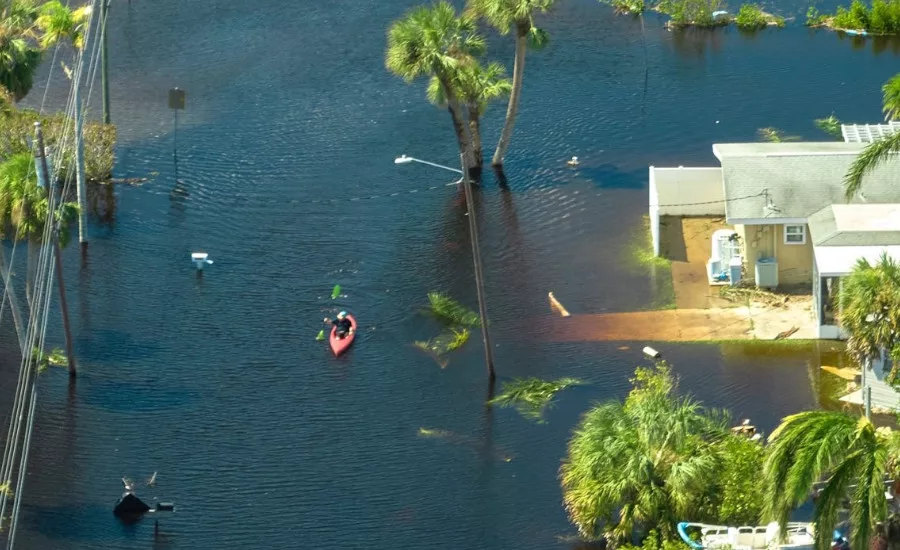
FIGURE 1. Even if global emissions are significantly curbed, current one-in-100-year extreme sea level events are projected to occur at least annually in more than half of all tide gauge. Images courtesy of WSP USA
For climate change experts, the question isn’t whether there will be consequences when it comes to climate change but how to prepare today for the range of potential consequences emerging from the climate crisis.
The urgent need to ramp up this preparatory work has been heightened in a newly released report by the Intergovernmental Panel on Climate Change (IPCC).
The recent “AR6 Synthesis Report: Climate Change 2023” provides an in-depth view of the observed and projected changes in our climate system, impacts to sectors and communities across the world, and an outlook on strategies for governments and corporations to combat emissions and bolster their resilience to extreme weather events and chronic stressors, such as prolonged heat waves and water shortages. This synthesis report summarizes the findings of the IPCC’s Sixth Assessment Report, which were previously released in three installments.
In this synthesis report, the IPCC — the preeminent body of international experts on climate change — underscore the urgent need for the immediate and unprecedented dedication of resources and investments to curb emissions and invest in resilience strategies.
Maya Buchanan, Ph. D., a climate scientist and adaptation expert at WSP USA and an IPCC author, said the findings of the research “clearly demonstrate the need for interdisciplinary perspectives to embed climate risk considerations into everyday operations, planning and investment decisions.”
Buchanan’s contributions were showcased in the IPCC Sixth Assessment Report Summary for Policymakers, which demonstrates the magnitude by which risks to coastal geographies increase with sea level rise and resource constraints.
“The report provides robust evidence of observed warming and documents how every increment of warming rapidly escalates hazards,” Buchanan said. “For example, due to sea level rise, current one-in-100-year extreme sea level events are projected to occur at least annually in more than half of all tide gauge [a mechanical device for recording water level] locations this century, even if global emissions are significantly curbed.
“The release of this report will likely further mobilize growing voluntary and regulatory interest in mitigating warming and mainstreaming climate considerations into business operations, strategy, and investment,” she added.
Dangers and Risks of Climate Change
The new IPCC synthesis report emphasizes both the value and urgency of adopting a low-carbon climate-resilient transition strategy for states, communities, and companies in the U.S. and around the world.
This is due to the diverse risks associated with the increasing effects of climate change, many of which are now observable through increasingly frequent, severe weather events. Direct physical risks from climate change can be chronic, such as rising temperatures, sea level rise, and drought. They may also be acute, including extreme weather events, such as unpredictable rainfall and flooding.
According to Darius Nassiry, director of climate finance at WSP USA, this crisis affects corporations and governments through both present-day and future impacts from adverse weather events as well as through changes in policy, technology, and consumer preferences. The former are considered physical risks, while the latter are categorized as transition risks.
“These risk factors will unfold over time and reshape how companies and governments make decisions around investment priorities,” Nassiry said. “They will also reshape how decisions are made in terms of governance, risk management, and transition plans toward lower-emissions, climate resilient models of corporate activity as well as government planning and budgeting.”
As an example, during the week of March 20 — the same week the IPCC report was released — the White House Council of Economic Advisers released a white paper on the implications of climate change on long-term budget planning in the U.S., which stated the following:
“The changing climate, and the rapid transformation of energy systems — including electricity generation as well as energy used in buildings, transportation, and industrial uses — required to mitigate climate change, will have widespread and long-lasting economic effects. These present risks and opportunities for the U.S. economy, financial system, and fiscal position, particularly if these effects are unexpected and not integrated into institutional planning.”

Corporate and Government Responses to Climate Change
According to Nassiry, government agencies, and corporate leadership are already taking steps to respond to the climate emergency and putting plans in place to track potential impacts on assets and operations.
These steps can involve adjusting organizational strategies to the long-term impacts of climate change, including physical and transition risks, changing risk management practices, reforming decision-making processes as needed, and allocating sufficient capital for budgeting to ensure that risks and opportunities can be addressed in line with a climate-resilient future.
“An effective response to the climate emergency requires corporations and governments to manage their impact on the climate, as well as climate change impacts on their organizations and people,” Nassiry said.
But will rapid decarbonization be enough to avoid the most significant impacts of climate change?
In addition to the goal of reducing carbon emissions to near zero by mid-century, limiting warming to 1.5°C requires neutralizing hard-to-abate emissions and removing additional carbon from the atmosphere through carbon removals, according to Bridget Venne, assistant vice president for sustainability, energy and climate change at WSP.
Also known as negative emission technologies, carbon removals include nature-based solutions, such as reforestation and increasing soil carbon, or technology-based solutions, such as direct air capture or mineralization.
“Corporations can support the development of carbon removal projects through the purchase of carbon removal offsets — attributes that represent a real and additional carbon removal outside of a company’s value chain — or by investing directly in carbon removal projects,” Venne said. “Meanwhile, government agencies can promote the development of nature-based carbon removals on public lands and support the development of new carbon removal technologies.”

WSP’s Future Ready Services
With its broad base of climate risk, adaptation, engineering, and climate finance expertise, WSP works with clients to reduce their impact on the climate by managing their use of energy and water and reducing their waste and carbon footprint. These actions help organizations set targets across their value chain and practical, detailed plans for target achievement.
For example, WSP’s Future Ready® program is a global initiative that presents a new approach to viewing the world and our role in it, with focuses on influencing policy, implementing projects, and showing others how we can fight climate change, improve equity in our communities, and how to future proof our cities and infrastructure.
“The program presents a framework for approaching problems from an integrated and holistic perspective that prepare our communities and projects for future changes,” said Jay Aber, Future Ready program director at WSP. “Climate change is a central component of this framework as it is driving many of our current changes and future risks.
“We bring quantitative digital tools, comprehensive and thoughtful planning, and an equity focus to these projects through the program,” Aber continued.
The IPCC synthesis report underscores the need for unprecedented dedication of resources and investments to curb emissions and invest in resilience strategies.
Looking for a reprint of this article?
From high-res PDFs to custom plaques, order your copy today!


