TODAY'S BOILER | APRIL 2023
Inspection Requirements for Watertube Power Boilers, Part 1
The NBIC provides detailed inspection requirements and guidelines to determine corrosion, deterioration, and possible prevention of failures for power boilers.
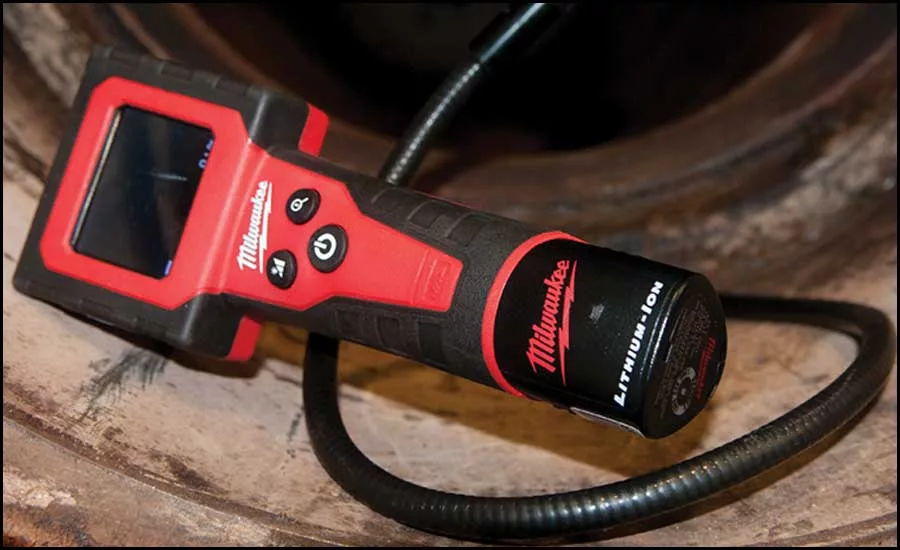
FIGURE 1. A borescope is among the items typically used during a boiler inspection. Images courtesy of NBBI
Despite the fact that most people have never seen a power boiler, they still rely on the electricity boilers help produce. Last year marked the 75th anniversary of the National Board Inspection Code (NBIC), but boiler inspection requirements were developed decades before 1945. The U.S. Navy first commissioned a steam-powered ship in 1815. Since then, the Navy has used both firetube and watertube boilers for ship propulsion, with watertube boilers being preferred until the mid-1990s, when conventional boilers were replaced with more efficient means. Many of the boiler inspection requirements contained in the NBIC come from those developed for the Navy.
Boiler inspections continue to be an important part of any maintenance and reliability program, allowing power boilers to operate safely and efficiently in the background. They are also required in many jurisdictions as part of a boiler statute.
This two-part article is based on the requirements in Part 2 of the NBIC for inspecting watertube power boilers, but some of the requirements in this article are applicable to firetube and other types of boilers.
The NBIC provides detailed inspection requirements and guidelines to determine corrosion, deterioration, and possible prevention of failures for power boilers. Included here are the first sections of key inspection requirements for watertube power boilers.

Service Conditions and Pre-Inspection Activities
Because service conditions vary, the temperature and pressure at which boilers operate should be considered in establishing inspection criteria. The condition of the complete installation, including maintenance and operation records, often reveal the level of care given to the boiler. Surface irregularities, whether external or internal, should be suitably prepared so that they will not be confused with or mask any defects, such as when performing a nondestructive examination. Material conditioning, such as cleaning, buffing, wire brushing, or grinding, may be necessary to facilitate the inspection and insulation, or component parts may need to be removed for access.
Boiler maintenance and operating records should be kept for reference not only for the inspection but to determine the type and extent of any repair and/or alteration that may become necessary. Items that should be maintained include:

- A copy of the last inspection report;
- The certificate of operation, if applicable;
- Code of construction stamping/nameplates, such as the American Society of Mechanical Engineers (ASME);
- National Board and/or jurisdiction registration number, as applicable; and
Repair and/or alteration records.
Condition of Boiler Room or Boiler Location

The general condition of the boiler room serves as the first impression for any inspector. Areas around the boiler should be well lit, have adequate ventilation for habitability and combustion, and be kept clean.
The following conditions should be verified in preparation for the inspection:

- Associated valves and electrical components shall be locked out, blanked off, and decontaminated. Confined space entry permits obtained before internal inspections are conducted;
- Satisfactory access shall be available to all areas of the boiler;
- All circuits shall be dry and cool with adequate ventilation provided;
- Adequate lighting shall be provided;
- A safety watch shall stand by outside the boiler access during an internal inspection;
- Proper personal protective equipment (PPE) shall be worn, including suitable hearing protection around areas with extremely loud noise levels; and
- Inspectors and examiners shall receive a safety briefing per company requirements.

Items required for the inspection:
- Applicable boiler technical manual, inspection forms, and tube map/renewal sheet;
- Flashlight;
- Mirror, scriber, small hand wire brush, pen, knife, and 6-inch steel machinist scale;
- Vernier calipers in 0-1 and 1-2 micrometers (flat), and 0-1 micrometer (pointed);
- Envelopes for deposits;
- Gloves, dust mask, small notebook, pencil, or pen; and
- Digital camera, phone, or borescope (see Figure 1).
External Inspection
The purpose of the external inspection is to determine if the exterior surfaces and appurtenances are in a condition for continued safe operation. Some considerations include:
- Are the boiler fittings, valves, and piping in compliance with ASME code or other equivalent requirements? Particular attention should be paid to pressure relief devices and other safety controls.
- Are the firing equipment controls in working order and selected for the proper ranges?
- Is the boiler casing free of cracks, combustion gas or fluid leaks, excessive corrosion, or other degradation that could interfere with proper operation?
- Are the soot blowers, valves, and actuating mechanisms in good working condition, including actuator motors, handwheels, and chains?
- Is there evidence of leakage or deterioration around the gaskets on observation doors, access doors, drums, or handhole and manhole covers and caps?
- Is the water gage glass clean and free of deposits to determine the water level?
- Is the outer insulation in good condition? Is it wet or discolored, indicative of other adverse conditions?
Internal Inspection
In preparation for the internal inspection, the water shall not be withdrawn until the setting has been sufficiently cooled at a rate to avoid damage to the boiler. The boiler shall be locked out/tagged out (LOTO) of service, and its drain and vent valves shall be locked and tagged open. The inspector and owner shall review all personnel safety requirements outlined in the safety plan. NBIC Part 2, paragraph 1.4, is a good reference for these requirements.
Any part of the boiler that shows evidence of leakage, deterioration, or defects shall be accessed through an inspection opening to determine the cause and extent. It may be necessary to remove insulation, masonry, or fixed parts of the boiler. In addition, it’s recommended a pressure test be performed to determine the pressure integrity of the affected area.
Where two boilers are connected to a common header, an inspector should verify the external piping system includes two stop valves and an ample free-blow drain arrangement to safeguard personnel while inside the boiler. This is commonly referred to as a double block and bleed configuration (see Figure 2).
Corrosion and Waterside Deposits
Corrosion causes deterioration of metal surfaces, affecting large areas or localized in the form of pitting (see Figure 3). Isolated, shallow pitting is not considered serious if not active. The most common cause of corrosion is the presence of free oxygen and dissolved salts in the feedwater. When active corrosion is found, the effectiveness of the feedwater treatment system should be evaluated. If a feedwater treatment system is not installed, it is recommended to seek competent technical advice about the benefits of installing one. It’s also good practice to have the water treatment company representative present during the internal inspection.

Severe corrosion over large areas should be analyzed to determine if the boiler can be safely operated at its designed working pressure. The remaining sound metal thickness should be determined by ultrasonic examination or drilling, and the pressure design may need to be recalculated depending upon the results of the examination.
Grooving is a form of metal deterioration caused by localized corrosion and may be accelerated by stress concentration (Figure 4). Grooving is usually progressive, and when it is detected, its effect should be evaluated and corrective action taken. Free oil or oil in sludge deposits resulting from carry over could contaminate the superheater.
All flanged surfaces (see Figure 5) should be inspected, particularly the flanges of unstayed heads. Grooving in the knuckles of such heads is common since there is slight movement in heads of this design, which causes a stress concentration. Some types of boilers have ogee or reversed-flanged construction, which is prone to grooving and may not be readily accessible for examination. The inspector should insert a mirror through an inspection opening to examine as much area as possible. Other means of examination, such as the ultrasonic method, may be used.
All accessible surfaces of the exposed metal on the waterside of the boiler should be inspected for deposits caused by water treatment, scale, oil, or other substances. Oil or scale in the tubes of watertube boilers is particularly detrimental, since this can cause an insulating effect resulting in overheating, weakening, possible metal fatigue, bulging, or rupture.
Conclusion
Inspections of watertube power boilers are important for their continued safe operation and to ensure the best possible fuel efficiency. These two factors save both time and money and help prevent injury and costly boiler repairs. Inspections are an integral part of any plant maintenance and reliability program.
Part two of the series will review the remaining sections, including fireside components and surfaces, boiler external piping and other connections, and controls.
Looking for a reprint of this article?
From high-res PDFs to custom plaques, order your copy today!