TODAY’S BOILER | APRIL 2023
Best Practices For Removing Boiler Tubes
Despite the challenging nature of removal, here are a few tips that can help make this tough job a little bit easier.
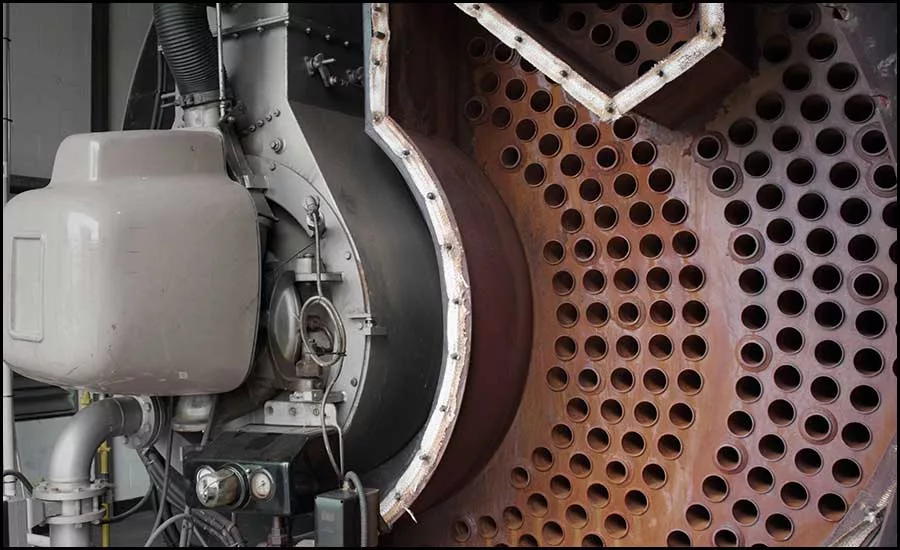
FIGURE 1. A firetube boiler. Images courtesy of Elliott Tool Technologies
Boiler tube removal can be an extremely difficult process, and the method used will vary depending on the application. The amount of expansion as well as the age of the tube and whether or not it was welded will all impact the removal process.
Despite the challenging nature of removal, there are a few tips that can help make this tough job a little bit easier.
Removing the Weld
If a tube end is flared, welded, or roll beaded, the end will need to be removed prior to being pulled or knocked out. One common method for weld removal is with a grinder. While this is a fairly inexpensive method for removal, it does have a lot of challenges. The grinding process can be very time consuming and hard on operators. Additionally, if it’s not used carefully, the grinder can gouge or damage the tube sheet and tube sheet hole. If this happens, the tube sheet hole will need to be reformed or smoothed out before new tubes are installed. If damage is not repaired, it can result in a poor metal-to-metal joint.
Another method for weld removal is with an end prep tool, also known as a tube auger, as well as a boiler gun or mill hog. This tool can be used to remove welds, flares, or beads from a tube end. End prep tools are easy to use and don’t require the same amount of precision as a grinder. The tool uses collet jaws to grip the inside of the tube while the operator turns a series of ratchets, slowly advancing a blade toward the tube sheet until the weld is fully removed.
Removing the Tube
Once the weld has been removed from the tube end, the tube removal process can begin. There are several methods that can be used to remove boiler tubes, such as spear pulling, knockout tools, torching, and induction heating of the tube.

Spear Pulling
Spear pulling can be used to remove both tube stubs and tubes, depending on the style of puller. For this method, a spear is set into a tube using an impact drill. This allows the teeth of the spear to grip the ID of the tube. Once the spear is in place, a hydraulic ram is used to pull the tube free from the tube sheet. This is an operator-friendly option that removes tubes without causing damage to the tube sheet. However, this method is not always guaranteed, as corrosion, grooves, and expanded sections behind the tube sheet can make removal a challenge or impossible.
Knockout Tools
One of the most common methods for tube removal is a knockout tool and pneumatic hammer. When tubes can’t be pulled with a spear, a knockout tool can be used to punch tubes out of the tube sheet. While effective, this process is hard on operators and can cause damage to the face of the tube sheet if not used carefully. As a result, many operators choose to start with a tube puller and reserve knockout tools for difficult tubes.

Torching
Torching is often used to cut a seam or notch down the center of a tube to relieve the “hoop strength” at the joint. After which, a knockout tool or strike method would need to be used to free the stubs from the tube sheet or drum.
Induction Heating
Induction heat tube extraction, developed by Babcock & Wilcox, is an innovative method of removing tube stubs from watertube boilers. This process heats the tube stub, where it is expanded into the drum, before it is quickly cooled to shrink the tube. Once the seal is broken, a tube puller with pull rods can be used to extract the tube stub from the drum. This method of removal offers minimal risk of possible damage to the drum. A knockout tool (tube drift) and tube buster (rivet buster) can also be used to drive out the tube stub, but it increases the risk of potential damage to the drum tube hole.
While removing welded boiler tubes may be challenging, there are a few tips that can make the process easier. End prep tools are a quick and easy way to remove welds from the tube sheet. Additionally, using a tube puller with spears or induction heating reduces further risk to the tube sheet and can be easier than using a knockout tool or tube buster.
Looking for a reprint of this article?
From high-res PDFs to custom plaques, order your copy today!