Applying Artificial Intelligence To Decarbonize Buildings
A Texas A&M-led project aims to sustainably address the heating and cooling needs of buildings by implementing smart, efficient heat pump systems.
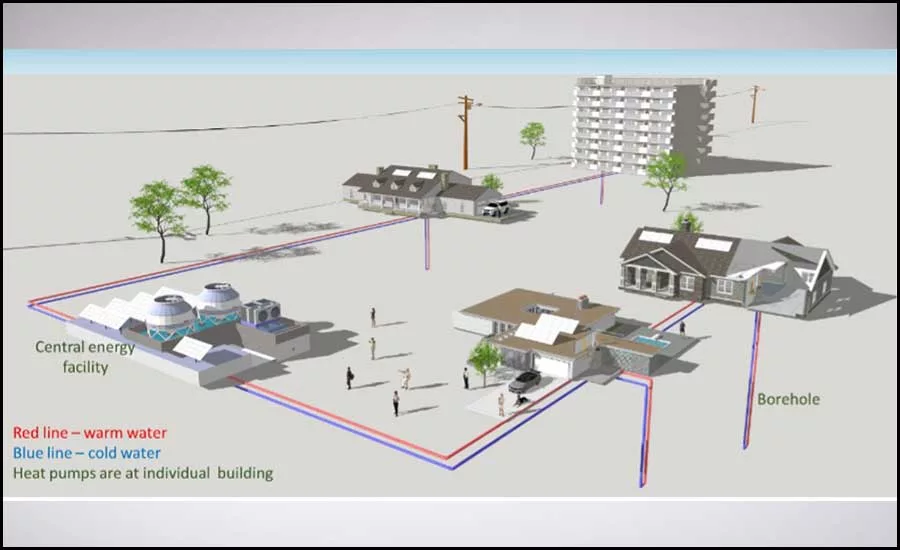
FIGURE 1. The project will apply artificial intelligence techniques and pilot sites in Denmark, Sweden, and the U.S. in pursuit of better district heat pump systems.
Image courtesy of Dr. Zheng O'Neill
An international team of researchers is applying artificial intelligence techniques to design energy-efficient district heat pump systems that better serve human needs and behaviors while reducing the carbon footprint of buildings.
The $1.5-million project is funded by the National Science Foundation’s (NSF) Partnerships for International Research and Education (PIRE) program and led by Zheng O’Neill of the J. Mike Walker ’66 Department of Mechanical Engineering at Texas A&M University. The PIRE program funds only an estimated 10-15 projects nationwide at a time, according to NSF.
The research is also supported by the Texas A&M Engineering Experiment Station’s Energy Systems Laboratory, of which O’Neill is an associate director. The project focuses on the technology of district heat pump systems, which distribute energy to buildings through a system of heat pumps and insulated networked pipes.
Since many people spend most of their time indoors, O’Neill said researchers are implementing climate resilience planning as they address heating and cooling needs in a comfortable and sustainable way. One of the most pressing and widely agreed-upon methods of decarbonizing heating and cooling systems is shifting to electric energy sources to replace higher-emission power sources like natural gas.
Researchers are working to build human-interactive artificial intelligence tools to equip building managers and owners with the occupancy and behavior modeling information they need to make timely heating and cooling decisions faster and, ideally, to incentivize a broader adoption of building decarbonization techniques.
“In an increasingly urbanized world, there is a pressing need to address the critical challenges of climate change through the built environment because the building sector accounts for nearly 40% of the primary energy use in the U.S. and associated greenhouse gas and carbon dioxide emissions, with about 50% of that energy dedicated to heating, cooling, ventilation, and lighting,” O’Neill said. “Carbon emissions reduction through building electrification and decarbonization will help human beings fight again climate changes.”
In addition to using artificial intelligence techniques, the project includes pilot sites in Denmark, Sweden, and the U.S. The pilot sites were specifically designed through a community-informed approach to ensure resilience, efficiency, and socially justified operation.
Collaborators on this project include Jin Wen at Drexel University, Teresa Wu, Selcuk Candan from Arizona State University, and Christina Rosan from Temple University. The international partner institutions include KTH Royal Institute of Technology and Blekinge Institute of Technology in Sweden, and Aalborg University in Denmark.
“This project will bring an interdisciplinary and international team of engineers, data scientists, economists, and social and behavioral scientists to reduce carbon footprint and improve climate resilience and energy equity,” O’Neill said. “A climate change-driven and community-engaged approach will be used to guide the integration of research, education, outreach, broadening participation and knowledge transfer, which can be used in other applications.”
The U.S.-based researchers will work closely with their European counterparts from Sweden and Denmark — where district heat pumps have been more widely adopted and implemented, in comparison to the U.S. — to collaborate and facilitate an exchange of data in the hopes of promoting, exploring, and refining sustainable methodologies of using district heat pump systems to better decarbonize buildings.
In addition to the research, the project will also provide opportunities to provide students with two cross-institutional education programs — the Summer International Graduate Bootcamp and Exchange Program, and the Smart Built Environment Certification Program — and train a diverse and convergent workforce well-equipped to address the multifaceted, global climate change challenges.
This article by Steve Kuhlmann originally appeared on Texas A&M’s College of Engineering website.
Looking for a reprint of this article?
From high-res PDFs to custom plaques, order your copy today!