Propane-Powered Generators Ensure Reliability
Construction pros count on propane for its clean, resilient power
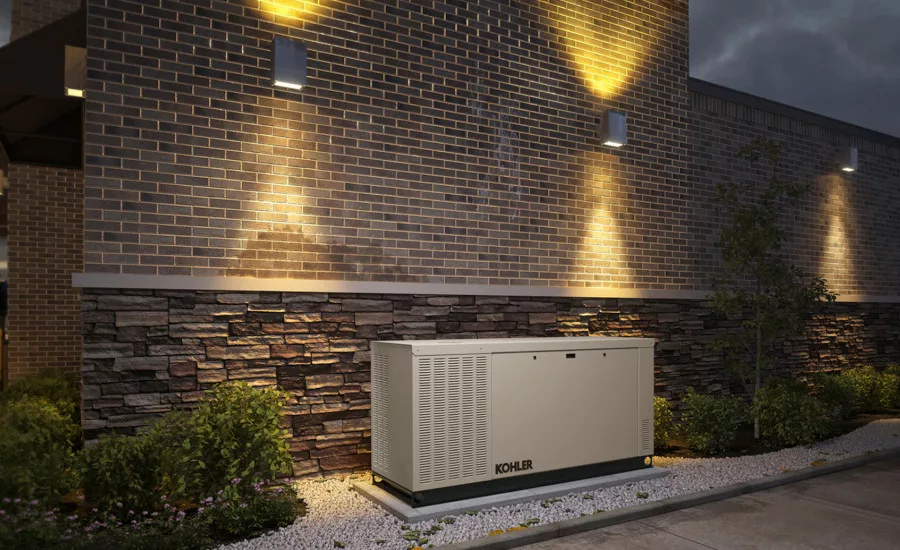
Image courtesy of the Propane Education & Research Council (PERC)
Power outages in commercial buildings create enormous costs and hardships for business owners, tenants, and employees. Most notably, the cost of outages can include loss in productivity, sales, and product as well as brand damage and safety issues. For these reasons, many commercial buildings incorporate backup power systems — either voluntarily or based on code requirements.
Backup power can help buildings be more resilient, mitigate against financial losses, keep employees and customers safe, provide vital services, or some combination of these goals.
After experiencing vulnerabilities with the electrical grid, business owners and building operators are seeking resilient power solutions — and commercial construction professionals can meet this need by being well versed in backup power systems and energy sources — something that’s not just important during September’s National Preparedness Month but all year long. Propane is a stable, portable energy source that is ideal for backup generators and can help support Americans even when the grid goes down, ensuring continuity of operations.
The impact of power outages on commercial buildings
S&C Electric Co. surveyed facilities and energy managers of commercial and industrial businesses across the U.S. in 2018 and found that productivity loss and service, delivery, and production delays were the most common problems they faced because of power outages.
The same study found that around 82% of all businesses experience an outage at least every two years, and 24% of respondents experience an outage once a month or more. Of the various industry segments, the education sector experiences the most frequent outages, with 7% of that sector encountering an outage once a week. More than a quarter of the manufacturing industry deals with an outage at least once a month.
In this same research, the respondents said power outages can have a significant impact on their businesses’ reputations. The types of impacts vary by the building type and the industry. For example, a high-end hotel or restaurant is very sensitive to a damaged reputation.
Help customers achieve a resilient design with propane
Preparedness is the best defense, which is why it’s important to start a conversation with customers on this topic. Construction professionals who are well versed in reliable, resilient generator systems will set themselves up for success as a growing number of businesses continue to seek backup power solutions.
Installing permanent backup generators is one common building resiliency strategy, and the use of permanently installed backup power generators is increasing significantly. A new analysis from The Propane Education & Research Council (PERC), “Power Generation: The Emissions Shifting Problem,” looks at recent power generation trends and how propane systems can offer a low-emissions, resilient solution for commercial construction professionals and their customers.
Many commercial buildings are required to provide backup power solutions to meet building codes (IFC and IBC) for life safety. Propane backup generators offer a great solution as they can be configured to service the most critical building loads, maintain full operation in the event of power failure, or help with peak-shaving and demand-response programs that provide building owners with additional revenue.
Whole-building resiliency can be attained by combining a propane generator with a suite of propane appliances. Propane’s energy versatility extends to building heating, water heating, cooking appliances, fireplaces, clothes drying, and outdoor amenities. Choosing propane for these critical building systems can reduce the building’s reliance on standby power, oftentimes allowing facility managers to downsize to a smaller, more affordable backup unit.
Propane versus diesel: which is the better backup fuel?
Many codes require 72 hours of on-site fuel storage for emergency generators. Propane has many notable advantages when compared with its diesel counterparts. Its indefinite shelf life makes it the ideal fuel for generators, whereas diesel degrades over time. Additionally, the need for either automatic fuel maintenance systems or manual maintenance increases the diesel system’s total ownership cost, another important factor when evaluating fuel and equipment options.
Propane, on the other hand, does not degrade or oxidize over time like diesel, so it has no fuel maintenance issues. On-site fuel storage is an important consideration, helping ensure the generator is ready to operate and won’t be subject to upstream fuel reliability issues. A propane generator’s features make it easier for commercial buildings to achieve more comprehensive protection without having to go through the fuel storage, maintenance, reliability, and emissions challenges of a diesel-fueled generator. Additionally, the same propane tanks that are used to power a backup generator can also provide power for other propane systems and appliances.
According to PERC’s research, commercial applications rely heavily on diesel generators, which is creating an emissions problem. Diesel generator sales have significantly increased due to electric grid disturbances caused by severe weather events, exacerbating local air quality concerns.
Propane’s environmental profile, which is favorable compared to diesel, offers lower nitrogen oxide (NOx) emissions, particulate matter, and carbon dioxide (CO2) emissions. Most notably, data from the DOE shows 16% greater carbon dioxide emissions per unit of energy for diesel compared with propane.
During National Preparedness Month, consider propane — a reliable power solution, with a low emissions profile, for your customers. Propane is a stable, portable energy source that can help support Americans even when the grid goes down, ensuring continuity of operations. For more information, visit propane.com/generators.
Looking for a reprint of this article?
From high-res PDFs to custom plaques, order your copy today!