The Blueprint: Honeywell Process Solutions’ Ebru Arslan
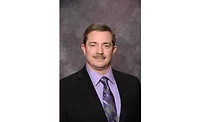
Ebru Arslan, global senior business development manager for renewables and energy storage for Honeywell Process Solutions, discusses the company’s latest battery energy storage services solutions.

Image courtesy of Honeywell Process Solutions
Honeywell Process Solutions is a pioneer in automation control, instrumentation, and services for the oil and gas; refining; energy; pulp and paper; industrial power generation; chemicals and petrochemicals; biofuels; life sciences; and metals, minerals, and mining industries.
Honeywell plays a critical role across the entire lifecycle of an industrial facility, including project design and engineering, technology licensing, technical services, ongoing operations, cybersecurity, continuous modernization, and more. Ebru Arslan, global senior business development manager, Honeywell Process Solutions, sat down with Herb Woerpel, editor-in-chief, Engineered Systems, to discuss the company’s latest battery energy storage system (BESS) solutions.
Engineered Systems: Please take a moment and introduce yourself.
Arslan: My name is Ebru Arslan, and I’m the global senior business development manager for renewables and energy storage for Honeywell Process Solutions. I’ve been with the company for about seven years. I have previous experience with grid infrastructure and high-level software management systems, like BMSs.
Engineered Systems: Please introduce us to the latest battery systems that Honeywell is offering.
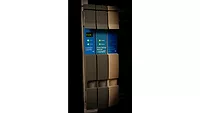
Arslan: Honeywell is offering BESS units, and the management of those, through its Experion control system. Everything is assembled in one container — 40 foot, 20 foot, or modular size. The control system handles the different distributed assets on the energy network through a response program. Depending on the need of each customer, we are controlling unique scheduling and different types of batteries at the same time. Scheduling can be done automatically or manually.
We are also launching a new solution, the virtual power plant application, control software that conducts energy arbitrage calculations for energy trading. Customers that want to sell excess energy during peak times to the grid can do so at their own pace through their own storage systems while, at the same time, earning money.
This applies to both independent power producers and commercial/industrial customers. If they have a need of around 30 kW of 35 kW, they can sell 5 kW to the power system and use the 30 kW.
Engineered Systems: I know most BESS are typically about 1 mWh or larger. Can you speak to the size of the solutions that Honeywell offers?
Arslan: For the 40-foot container, the maximum is about 4 mWh, while the 20-foot container is about 2 mWh. So, it depends ont eh size of the container and the needs of the customer.
We take customers’ 12-month, historical electrical usage data and predict their cases. Based on the market data and the weather conditions, we are predicting peaks for customers and calculating the amount of battery storage that best fits their needs to minimize peaks.
For example, consider a large construction store that operates different sites and places BESSs on their sites, they may also be generating solar energy. When electricity demand is low, energy can be saved. During the peak times, when electricity demand is increasing, that saved energy can be used during that time.
Engineered Systems: Can you talk about the importance of the control system when it comes to arbitrage?
Arslan: The needs of each customer are different. Utilities, for example, need support to meet local regulations. Locational base controls, which control the load coming to the grid, allow them to balance the grid. So, grid balancing is the main problem of the utilities, because grid infrastructure is aging, and congestion is a major problem. That load can be potentially damaging to the system, as the load is not suitable for the capacity. So, congestion relief is very critical for utility customers.
Disaster recovery backup power is also important. As you know, in Texas last year, there was a huge blackout due to the weather conditions. Because of that, many people were unable to use electricity. Because of this, community-type battery storage installations are growing in popularity, as they can be used like microgrids with BESS units. It would be difficult to install small battery storage units on every home, so this community-type approach is becoming desirable in multiunit residential settings.
Engineered Systems: Can you list any specific industries/applications that may benefit from BESS systems?
Arslan: One that comes to mind is the mining industry. Mines are hard-to-reach areas. When they lose power, they cannot use electricity from the diesel generators. The transportation of diesel is another issue for them. Thus, it’s better to have on-site electricity generation with the power coming from on-site electricity generation and storage systems. Honeywell can also build microgrid controllers, which can be connected to the grid or can be hybrid in both ways. These can also work as stand-alone units, generating energy directly to be consumed by themselves.
Engineered Systems: What are the most attractive benefits BESSs offer customers.
Arslan: For commercial and industrial customers, it’s important to manage peak shaving. This is one of the most important use cases that we apply for our customers, especially when they’re experiencing high electricity bills. Using the battery energy during peak time can help lower their electricity bills.
Another approach is carbon reduction. If you change the diesel generators on the site with one BESS unit, then you will be able to decrease the carbon footprint because you're going use the BESS in place of diesel generators.
Everybody has sustainability goals. Generating energy on-site can help customers achieve these benchmarks. In general, diesel generators have efficiency problems. They have to reach at least 70% or 80% of their operating level to generate electricity in terms of the fuel consumption, when all that is needed is 30%. A lot of fuel is being used to reach the target percentage — a lot of excess energy is being wasted.
When the electricity is gone, the BESS units can come to life in a second, while it takes time for the generators to come online. In the case of a blackout, most BESSs can provide support for up to four hours.
Engineered Systems: Four hours is not a long time. What about longer-duration batteries? Are those in the works? What types of battery technologies are being considered?
Arslan: Longer-duration batteries are coming. There are pilot projects in place, and it’s looking like they’ll be ready sometime around 2025. We’re experimenting with different types of lithium-ion batteries, such as LFP batteries, which tend to be safer than other NMC-type batteries.
With different battery types, it’s important to consider additional safety features so that we can create the highest-quality, safest batteries possible. In the past, there have been some battery fires, but, most of the time, these occurrences are due to installation issues. Prevention must be taken regarding the container so that it will not heat up so much, making cooling very critical. There are two different cooling types: air cooling and liquid cooling. If those systems are not properly installed, the batteries can heat up, leading to safety concerns.
Engineered Systems: By selling energy back to the grid, BESSs can be money-makers as well, right?
Arslan: Yes, selling energy back to the grid allows customers to generate revenue through their BESSs. This is especially true for multisite users. If there are many sites, such as our retail customers or owners operating different industrial sites, they’re interested in using their BESSs to generate more electricity, which they can sell back to the market. This is critical for large businesses operating numerous rooftop solar panels on their facilities.
Renewable power is not continuous power. So, the excess energy that is not being used needs to be stored by BESSs. It's best to have both renewable energy options and BESSs. That is the best way to utilize the efficiency of the systems and reach the greatest rate of return of investment.
Engineered Systems: Tell us about Honeywell’s new flow battery.
Arslan: Flow batteries utilize a different technology. Chemical energy is provided by two chemical components dissolved in liquids that are pumped through the system on separate sides of a membrane. There is a need for maintenance of these tanks. These systems have plusses and minuses. There is not currently one technology on the flow battery side that is accepted by everybody in America. Everybody's trying something different right now — Duke Energy is trying Honeywell batteries in a pilot project. If that works on their sites, that will most likely emerge in the commercial market.
Engineered Systems: What message would you like to share with the consulting/specifying engineers who are interested in BESS technologies?
Arslan: Buildings, especially data centers, for example, are critical infrastructure areas. Blackouts are disastrous. If you lose the electricity, even once, you could lose millions of dollars. It is critical for them is to be on time, 24/7. In Honeywell Process Solutions sites, we are bringing the energy to the entrance of the building, and then Honeywell deals with the efficiency of the building. Honeywell considers: Is there a better environment out there? Did that BESS help the energy efficient solutions remain online 24/7? If the building has high electricity costs, this can be adjusted. When there is minimal or no usage, that can be adjusted as well. They can also get energy from the battery and storage systems when they charge the batteries. During that time, when the number of visitors increases in those buildings, they can use the energy coming from the battery and storage units, which will help decrease their costs.
Sustainability is another part of the equation, because they will not have to use the diesel generators on-site nor transport fuel to the site. Buildings with solar panels can still install battery storage units. An energy storage as a service model can be deployed as well. In that case, customers pay for the service, and Honeywell deals with everything else.
Looking for a reprint of this article?
From high-res PDFs to custom plaques, order your copy today!