What the Wave of Retiring Machinists Means to Plant Safety
Currently, the average age of highly skilled manufacturing employees is 56, and nearly one-third of all manufacturing professionals are over 50. As they retire, knowledge goes out the door with them.
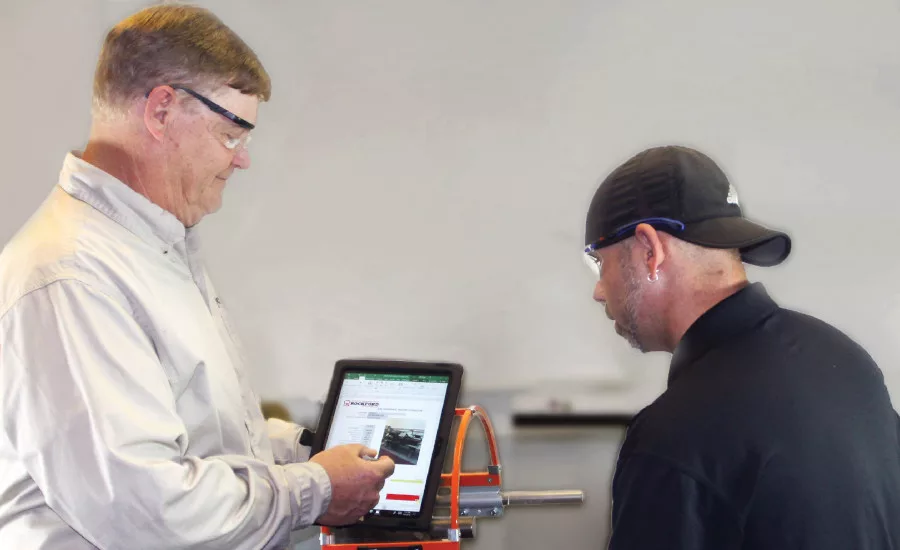
Faced with the wave of Baby Boomer retirements, many manufacturers are trying to hold on to their older workers, persuade some to return after retirement, or recruit those retired from other companies. Image courtesy of Rockford Systems
Within the next decade, approximately 2.7 million “baby boomers” (b. 1946-1964) will retire, thereby ensuring that tens of thousands of skilled, well-paid positions will become available without a ready supply of American workers to fill them. Statistics paint an especially gloomy picture for the manufacturing sector, a widening of the skills gap, and a possible dilution of existing training programs.
Compared to the rest of the economy, the impact on manufacturing of this generational shift is oversized owing to two factors:
- Despite increased efforts by colleges and vocational schools to train new manufacturing workers, available jobs still outpace qualified employees; and
- The existing manufacturing workforce is considerably older than the national employee average of 42 years. Currently, the average age of highly skilled manufacturing employees is 56, and nearly one-third of all manufacturing professionals are over 50. As they retire, knowledge goes out the door with them.
What are the implications of these trends for your plant’s productivity? How will it impact employee safety? What can you do to transfer knowledge from one generation to the next?
Safety Knowledge Gap
Besides having less experience operating machinery correctly, workers new to the job are often unsure about their safety rights and responsibilities, or might feel uncomfortable speaking out about a potential hazard. They may also not have the proper training, so they underestimate the risks involved with operating high-speed machinery. A recent survey of machinists in North America exposed that 70% couldn’t recall receiving any formal training when they were first hired on.
Equally troubling, the millennials (b. 1980-1996), who are replacing baby boomers, are more apt to job hop — 90% expect to stay in a job for less than three years — leaving manufacturers with heightened turnover and a badly depleted knowledge base, especially when it comes to safety. The so-called "Great Resignation," the unprecedented mass exit from the workforce spurred on by COVID-19, also has reduced the pool for skilled labor.
Given all this, it probably comes as little surprise that employees under the age of 25 are twice as likely to visit the emergency room for an occupational injury than those over 25. The dangers facing younger workers underscore the critical importance of machine safeguarding. The lathe, press, or saw on the plant floor considered “safe” solely on the basis of being accident-free for many years is no guarantee that modern safety regulations and standards are being met. A machine mistakenly perceived as “safe” may be the most dangerous in your maintenance shop or on your production floor.
Safeguarding Assessment
Faced with the wave of Baby Boomer retirements, many manufacturers are trying to hold on to their older workers, persuade some to return after retirement, or recruit those retired from other companies. Unfortunately, these steps only postpone the inevitable. A more meaningful first step is to conduct a thorough machine safeguarding assessment on your machinery.
A machine safeguarding assessment draws on the expertise and experience of an outside company to identify and address machine hazards before they cause accidents. Over the course of a machine safeguarding assessment, detailed information is collected concerning each machine, how the operator interacts with the machine, and the process it is tied to. Hazardous areas are pinpointed on the machine, and a hazard level is assigned to each machine. Evaluating this hazard level helps determine which safeguarding methods should be applied to each machine to make it safe. If a risk is not tolerable, safeguarding measures need to be applied that will reduce the risk to an acceptable level that is in accordance with applicable regulations and standards. The assessor should also accurately identify all costs associated with the final project. After installing safeguards, a follow-up assessment will be conducted to verify that risk levels have either been eliminated or reduced to a tolerable level.
Transferring Tribal Knowledge
Retirees won’t leave behind every bit of knowledge they’ve gained over the years, but capturing a majority of the important operational details will be beneficial down the road. Your organization needs to find ways of both learning and sharing this “tribal” knowledge before experienced machinists retire.
One common way of doing so is implementing a structured training and mentoring program pairing young workers with senior people who are technically competent in complex machinery. Along with face-to-face training on the machinery, the experienced worker is there to answer questions about operating procedures and to help the young worker learn how to operate the machinery correctly. Recognizing hazards and learning safe work practices must be a central part of training and mentoring programs so make sure they are given equal billing with productivity during conversations. Training and mentorship also play an important role in informing young workers about OSHA, every worker’s right to a safe workplace, and the right to refuse unsafe work. Once retired, the mentor can return on a part-time or as needed basis to continue training new hires.
Outside Training
While older machinists certainly have the experience and technical knowledge, they may not know how to teach because they aren’t professional trainers or they can’t communicate effectively with a younger generation. Others may feel that training is an additional obligation that has been hoisted upon them when they are already crunched for time.
Hiring an outside firm to teach your team about machine safety regulations and standards is another step toward overcoming dilution in training. Outside seminars ensure employees will be better able to interpret the OSHA 29 CRF and ANSI series standards as they relate to their specific machine applications and production requirements.
Annual Audits
Outside companies also offer Annual Verification Audits to verify your properly safeguarded equipment is being used as intended to protect employees working in dangerous environments. Moreover, the audit ensures that your capital investment in providing a safe working environment is sustained and continues to be in compliance with OSHA regulation and ANSI B11 series standards as well as meeting any internal safety policies that a company may have established.
The primary evaluation criteria for the audit are visual inspection and function testing of safeguarding, controls, disconnects, motor starters, and mechanical power transmission apparatus covers. Once an audit is completed, Rockford Systems identifies issues in a detailed report highlighting deficiencies or changes from the original project specifications and recommendations for corrective actions to bring the equipment back into compliance.
Final Thoughts
A perfect storm has formed, making it increasingly difficult for manufacturers to find and train labor. The retirement of tenured and experienced machinists only makes matters more challenging. To ensure plant productivity and safety needs are continuously met despite retirements, take proactive steps through working to develop and promote training and mentorship programs, properly safeguarding your machinery, and conducting annual verification audits to ensure that your safety program is being followed as intended.
Looking for a reprint of this article?
From high-res PDFs to custom plaques, order your copy today!