The ABC’s of HVAC – Plus D for Indoor Cannabis Growing Facilities
In this current day and age of the ever-increasing discussion and actual work being done within the cannabis cultivation space, we now add a D to the HVACR acronym for dehumidification.
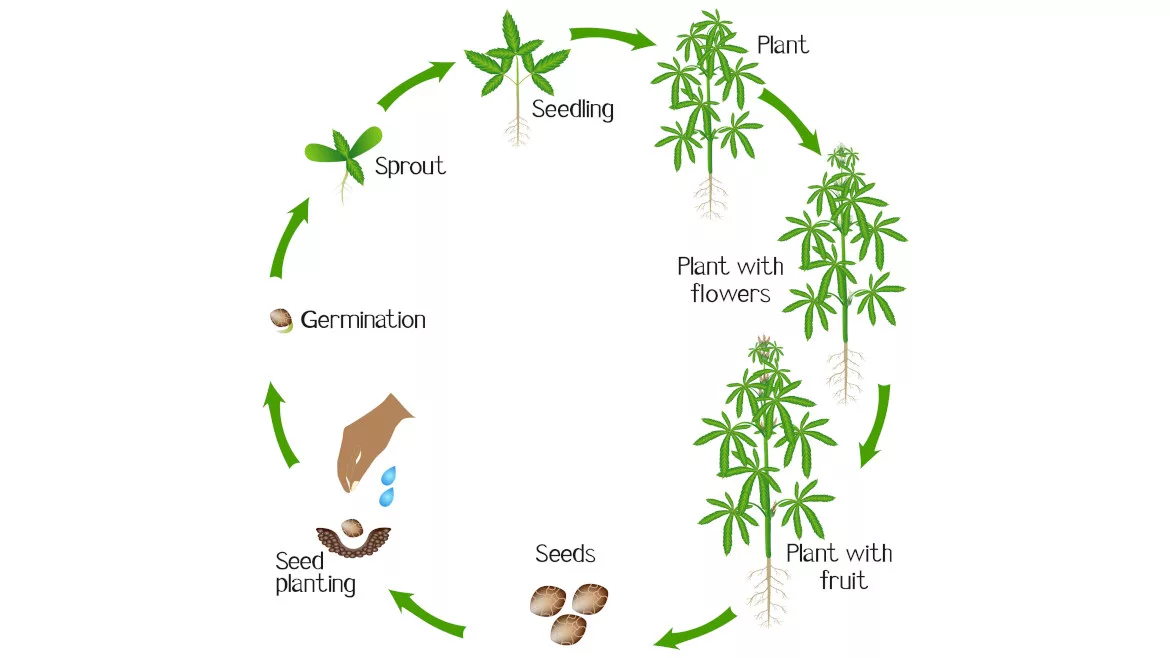
FIGURE 1. A brief overview of the cannabis growth cycle.
Most of you reading this are well steeped in this industry and know the acronym HVAC to mean heating, ventilation, and air conditioning. Then, in recognition for the refrigeration industry, we add the R, thus making it HVAC/R. In this current day and age of the ever-increasing discussion and actual work being done within the cannabis cultivation space, we now add a D for dehumidification.
Why the emphasis on the D? Well, as it turns out, a big part of the growth cycle of the cannabis plant is deeply rooted in the ability of the plant to absorb and rid itself of water vapor. Any time we are dealing with an increased level of relative humidity (RH) and the controlling of it, dehumidification becomes a very critical point in the overall conversation. One unique aspect in this scenario is that the bulk of the humidification of the plant stems from the water delivery means.
While all of the usual components of the typical vapor compression cycle are required (compressor, condenser, metering device, and evaporator) for direct expansion (DX) climate control or with the same desired results via a chilled water coil utilized: The ability to remove vast amounts of latent heat, in the form of water vapor, at key and opportune times is paramount.
If you are new to the discipline of cannabis cultivation as it pertains to the use of HVAC, like the majority of us are, there are a few basic principles to consider in regard to the climate and the growing environment. Seed, then sprout, then vegetative to flowering — these are the rudimentary phases of a plant’s life. In order to follow that cycle in a healthy and productive way, a few needs must be met. Soil, water, sun (light, natural or artificial), and nutrition.
OK, what role does our industry play? Our primary objective as an HVAC/D practitioner is to remove the water from the environment the plant has absorbed through its root system and control the ambient temperature. The plant will readily emit this water, we just need to have the ventilation and the cold coil surface to help the process along. Below we will step through the growing life cycle of a plant.
The keyword here is “transpiration,” which is defined as: to emit or give off waste matter, watery vapor, etc., through the surface, as of the body or of leaves. (Source: Webster Dictionary)
Cannabis Life Cycle
We will begin our journey into the typical life cycle, although there are several best practice schools of thought, with a seed. The seed lies dormant until it is exposed to warmth and moisture. Seeds are planted in a starter mix, covered with plastic, and placed on a heat mat. Once the seeds have sprouted, two seedling leaves will be the first to appear. Placing the seedlings in a grow light environment, about 2 inches from the top of the plants for 18 hours per day, will get the process off and running. This is a delicate time during the plant’s life cycle, as during this time, the seedlings are focusing their energy on growing roots and foliage. Because the roots are so small, care must be given to ensure they are not overfed or overwatered.
After a few weeks, as seedlings, the plants will really start to grow, demanding more food and light. The roots and foliage are growing rapidly during this stage, thereby allowing the plant to take in more nutrients and carbon dioxide. Growth rates of 2 inches or more a day are not unusual in properly controlled environments.
At this vegetative stage, you will be able to identify whether you are growing an indica or sativa, the two dominate strains of cannabis cultivation. Indicas tend to be short and bushy, while Sativas are lanky with less foliage. These strains can be traced back in history to 8,000 years or so.
You will also be able to identify the sex of your plants. About four weeks into the vegetative cycle, pre-flowers start to appear. By six weeks, you should be able to determine whether those new buds are male or female. Most growers remove the males from their garden, so they don’t pollinate the females and cause seeds to form.
Now, we enter the Flowering stage. At this age, the growing plants need varying levels and amounts of nitrogen, phosphorus, and potassium. Silicon is also beneficial at this stage because it helps to build strength in the stalk and stems, which is needed to support the buds that will soon grow. You imitate autumn in your garden when you reduce the light to 12 hours on and 12 hours off and by altering the type of artificial light provided. This triggers the cannabis plants to start blooming so they can procreate before they die at the end of the season. The flowering stage lasts six to 10 weeks, depending upon the strain being grown. During this time, dense buds covered in resin will form on the plants. This resin is where the THC and terpenes are found, therefore growers are trying to achieve the maximum amount of these two substances possible.
Following the growth cycle come the harvesting, curing, trimming, and packaging. These too have specific and unique climate considerations.
OK, now that we have a general idea of the life and growth cycles of the plants, there are many variations to this very simplistic representation. You can see below how the HVAC/D piece of the growing environment comes into play.
Temperature and Humidity Settings By Grow Room Type
- Mother Room
- Typically used as a genetic ‘bank’ to preserve cannabis varietals in the case of pest or pathogen contamination in the propagation, vegetative, or flowering rooms.
- Temperature: 75°F.
- Relative Humidity: 60%.
- Propagation / Clone Room
- Typically comprised of cuttings taken from plants in the vegetative room that are in the process of sprouting roots of their own and becoming a genetically identical plant to the plant the cutting was taken from.
- Temperature: 80°F.
- Relative Humidity: 90%.
- Veg (Vegetative) Room
- Once the cuttings have established a healthy root system, they are moved to the vegetative room to grow to roughly ¾ of their eventual size prior to flowering.
- Temperature: 80°F.
- Relative Humidity: 70%.
- Flowering Room
- Fully established plants are moved from the vegetative room into the flowering room, where the photoperiod is reduced to 12 hours and the plants begin producing flowers — the part of the plant used in recreational and medicinal products.
- Temperature: 70°-80°F
- Relative Humidity: 40%-60%
- Lighting choices, the desire to fully express plant genetics with low temp/humidity, and budget all play important roles in this decision.
- Curing Room
- Once the cannabis flowers are fully mature, they are cut down and moved into a drying room. Special care is needed here to preserve terpenes — temperature and light are the most effective oxidizers for the essential chemicals that we are attempting to preserve during this process.
- Temperature: 65°F.
- Relative Humidity: 45%.
- Trim Room
- Depending on the cultivator, trimming can take place before or after drying. The trim room is where fan leaves around and in between the cannabis flower are removed.
- Temperature: 75°F.
- Relative Humidity: 50%.
- Packaging Rooms
- Packaging rooms are used to individually package dried cannabis flowers for distribution and retail.
- Temperature: 75°F.
- Relative Humidity: 50%.
There are many variables, as well as opinions, techniques, and styles, to all of these cycle periods and lengths as well as the chronological order in which the final steps must occur. The constant remains that the environmental conditions that are required for each phase of life and process are key to the productivity, as measured in yield of product, and are indeed germane to the commercial success of the industry and the HVAC/D communities’ ability to serve the ever-growing industry well.
Special thanks to InSpire Transpiration Solutions for the keen insight and data points related to this article
Looking for a reprint of this article?
From high-res PDFs to custom plaques, order your copy today!