Data Reports: Preserving the Boiler Industry’s Past and Registering the Future
The National Board of Boiler and Pressure Vessels is so good at registering items, it has done so more than 63 million times since 1921.
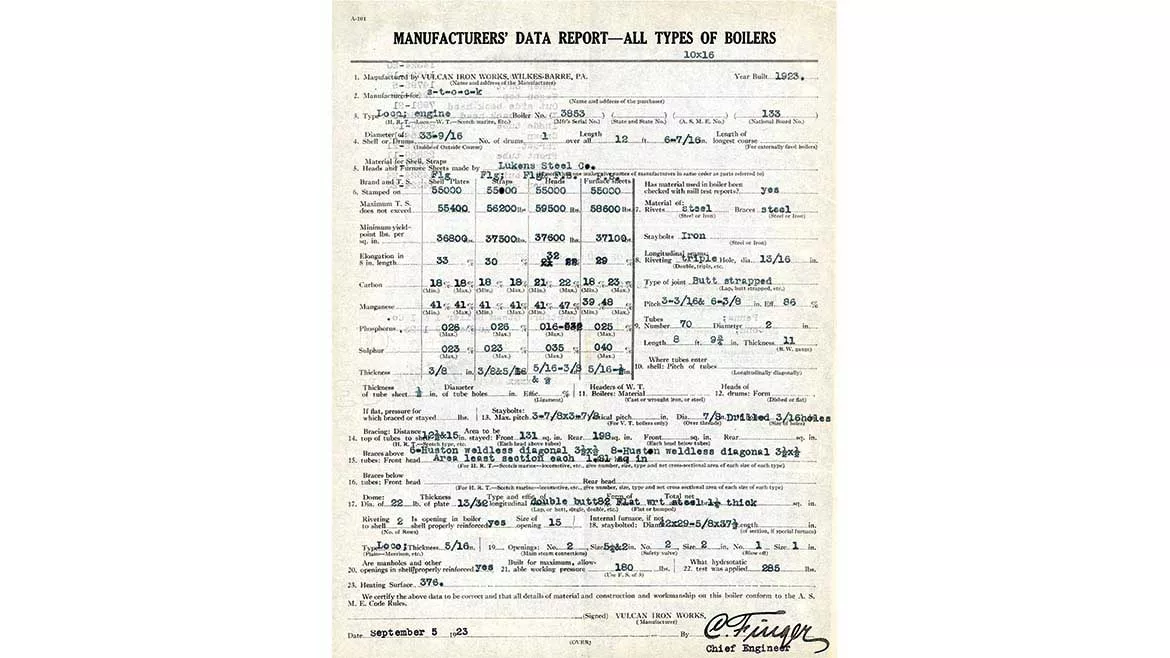
Figure 1. While time has enhanced the basic principles of National Board registration, the goal is still the same as it was in 1921: ensuring a pressure-retaining item was constructed in accordance with the ASME “Boiler and Pressure Vessel Code” and that it was inspected by a qualified National Board Commissioned Inspector.
The National Board of Boiler and Pressure Vessels is so good at registering items, it has done so more than 63 million times since 1921.
Compared to registering a new car with the Department of Motor Vehicles (DMV) or enrolling a child in daycare, registering a boiler or nuclear vessel seems simple. In fiscal year 2020 alone, NBBI registered more than 2 million boilers, pressure vessels, attachments, and pieces of nuclear equipment.
Registration is proof that a boiler or pressure vessel has been fabricated according to the ASME “Boiler and Pressure Vessel Code.” It is the last step in certifying the manufacturing, testing, and inspection process of boilers and pressure vessels.
“It’s not an exaggeration to say that registration is at the heart of what NBBI does,” said Joel Amato, executive director, NBBI. “National Board registration — and the processing and retention of the data reports that describe those vessels — tracks the commissioning of inspectors, the inspection of boilers and pressure vessels during construction, and the repair of registered vessels. Those records are vital to the daily work of inspectors and the safety of the public.”
Unlike consumer registration that typically involves submitting purchase and contact information for a product warranty, NBBI registration is aimed at promoting safety by documenting specific equipment design and construction details for future use.
The National Board NB registration stamp indicates to owners, users, and public safety personnel that the item has been inspected by National Board Commissioned Inspectors and built to the required standards.
NB-264, “Criteria for Registration of Boilers Pressure Vessels and Pressure-Retaining Items,” requires the:
• Boiler, pressure vessel, or other pressure-retaining item to be manufactured in accordance with the ASME B&PV Code;
• Manufacturing organization to implement a quality system; and
• Manufacturing organization to provide for third-party inspection as required by the code of construction.
“It’s among the most cost-effective document retention solution in the world, ensuring the availability of accurate information for generations past and present,” Amato said. “To think we have records of boilers and pressure vessels dating from the Roaring ‘20s to today – literally right now, someone somewhere is probably registering a boiler through the National Board – it’s an outstanding look at the history and progress of our industry.”
Boiler ‘Birth Certificates’
A century ago, boilers often were a patchwork quilt of stamps bearing the names or symbols of states and municipalities where inspectors had verified the equipment met fabrication requirements in those jurisdictions — and only those jurisdictions. This meant a boiler manufactured in one state would not necessarily be accepted for operation in a neighboring state, even if it had been constructed in accordance with the code. The National Board knew it had to find an answer to the problem.
Adoption of the ASME code in those days was akin to a charter needing an enforcement mechanism, C.O. Myers, former executive director, and NBBI founder, told attendees of the 1924 General Meeting.
A “practical system of registering and recording” boilers fabricated according to the code was born “so that no state need fear of a counterfeit code boiler, if it bears the National Board stamp.”
As the U.S. economy grew after World War I, the National Board learned inspectors needed to meet the legal mandates to inspect boilers and pressure vessels during construction. The jurisdictions needed a uniform method by which to ensure a piece of equipment was fabricated to meet all ASME requirements and that this had been verified by a qualified inspector. National Board registration allowed objects inspected during construction by a National Board Commissioned Inspector to bear a National Board stamp in addition to the ASME stamp, and the inspector included his or her commission number and signature on the manufacturer’s data report.

Jurisdictions agreed to accept these boilers and pressure vessels without additional requirements. Registration of a boiler with the National Board gave the chief boiler inspectors the assurance they needed to allow safe installation. The foresight of the National Board’s founders encouraged boiler sales among multiple states and provided the only central repository for manufacturers’ data reports. Although not required, records of repairs filed with the National Board document the vessel’s entire history and provides evidence of its code integrity.
“That is important since a boiler or pressure vessel’s useful life can extend well beyond that of its manufacturer and on-site inspector,” Amato said. “Careful record-keeping helps protect the public. The National Board strives to keep complete and reliable information on every manufacturers’ data report because it helps grow the record of that piece of equipment.”
From Filing Cabinets to the Cloud
When data reports were first filed in 1921, no one could have envisioned that in less than 100 years, the bulk of the registration process would be handled electronically.
In the early days, receiving, filing, and storing data reports was handled by several dedicated staff members who processed the information and microfilmed supporting documents for permanent storage.
Some changes to data reports have occurred over the years, including:
• Commissioning inspectors engaged in new fabrication inspections as authorized inspectors;
• Allowing National Board registration of pressure vessels, piping, and nuclear components as the ASME code grew to include those items; and
• Implementing an NB symbol stamp for manufacturers to place adjacent to the National Board number.
Throughout the 1980s and 90s, mail carriers would often make two trips to National Board headquarters in Columbus each workday. By the late 90s, an average of 8,500 data reports bearing postmarks from around the world were delivered each week until the age of email. Launched in 1999, electronic data transfer (EDT) gave manufacturers the option to register via the internet, electronically submitting documents and having on-demand 24/7 access to the files, simplifying and expediting the registration process.
Technology has helped eliminate some of the human errors that plagued earlier data reports: missing data or signatures, poor photocopies, and illegible faxes. Because the EDT system prompts entry of all required data before a form can be submitted, administrative rejection of data reports was cut by as much as 90%. The EDT transition two decades ago eliminated the need for costly and cumbersome storage of paper files and saved time, paper, and postage. Data reports are securely backed up and stored electronically.
Manufacturers may retrieve their own electronic data reports anytime for free, and completed reports can be searched in a variety of ways, including National Board number, manufacturer serial number, Canadian registration number, or drawing number.
These changes have enhanced the basic principles of National Board registration, but the goal is still the same as it was in 1921: ensuring a pressure-retaining item was constructed in accordance with the ASME “Boiler and Pressure Vessel Code” and that it was inspected by a qualified National Board Commissioned Inspector.
“Complete and accurate registrations are the starting point for a repair organization,” Amato said. “It’s why National Board staff reviews each data report before it’s filed and works diligently with manufacturers to ensure we get it correct. A manufacturer that registers a data report with the National Board is providing an essential form of customer service over the lifespan of that equipment. This paper trail can be particularly important if the manufacturer goes out of business or if an original nameplate is lost or unidentifiable. Like diamonds, data reports are forever.”
Summary
Registration allows chief boiler inspectors to be assured that inspectors performing third-party inspections at manufacturing facilities meet the uniform qualifications of NBBI and relieves the jurisdictional staff of the time and expense of maintaining data reports. Registration also helps notify chiefs of new boiler or pressure vessel installations in their jurisdictions, and NBBI guarantees assistance investigating any registered vessel in its jurisdiction upon request.
For manufacturers, registration allows proof of fabrication to the ASME code with inspections performed by a National Board Commissioned Inspector, allowing the widest possible market for their products. Consumers know that buying a National Board-registered boiler or pressure vessel makes good business sense since registered vessels are more attractive for resale.
Looking for a reprint of this article?
From high-res PDFs to custom plaques, order your copy today!