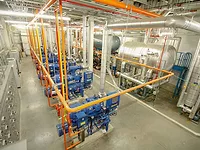
The Evolution of Hydrogen Technology: Zero-Emission, Closed-Loop Boilers
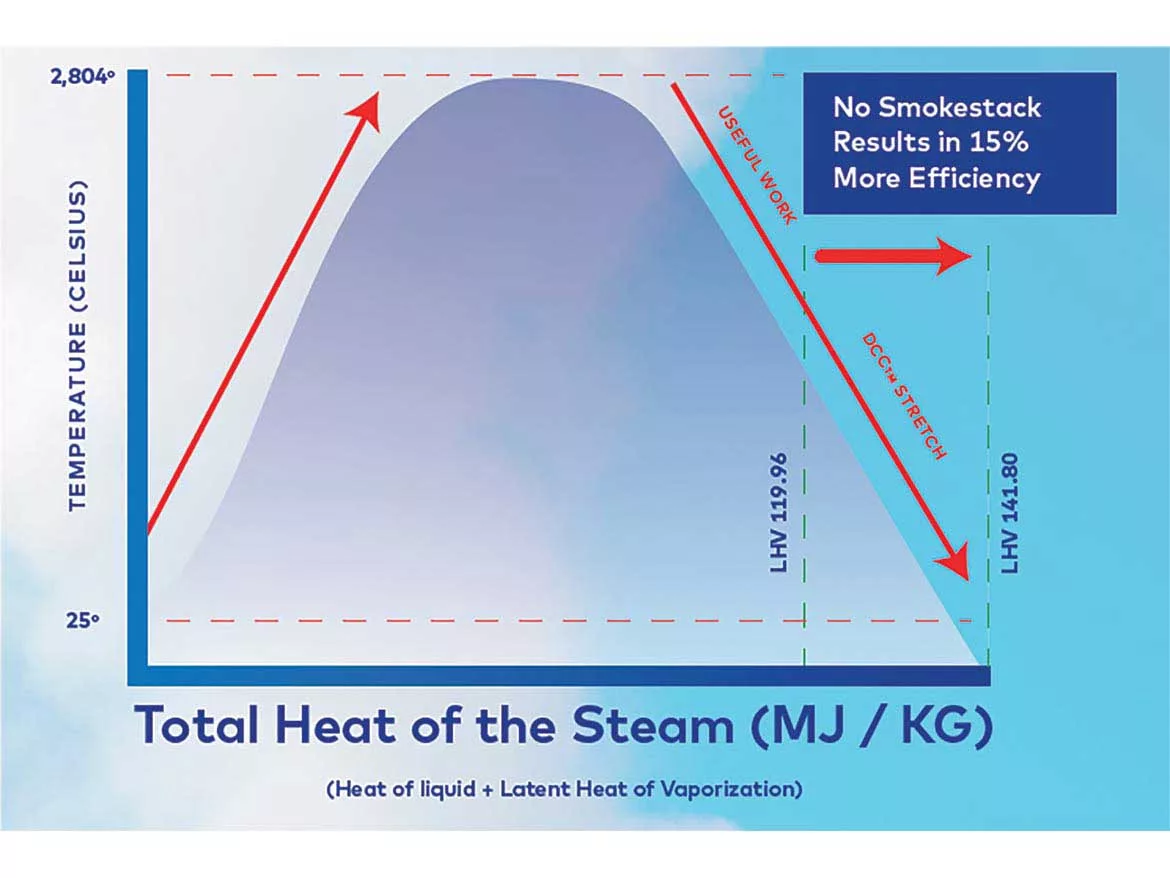
Figure 1. The Dynamic Combustion Chamber (DCCTM) Stretch. All images courtesy of Hydrogen Technologies Inc.
Burning coal, natural gas, diesel, or fuel oil for everyday thermal needs (hot water, space heating, industrial steam, and power processes) accounts for more than 20% of all global greenhouse gases (GHG) emitted each year. As developed economies and industrial geographies, like India, China, and Southeast Asia, grow their means of production, there will be an ever-increasing call on fossil fuel-based boilers. Meanwhile, the underlying commercial, industrial, and power (CI&P) boiler market is slated to grow 5%-7% per annum over the next 10 years. Despite net-zero sustainability goals front and center for global political bodies, Fortune 1,000 corporations, and asset managers alike, there remains little progress in solving the issues of GHG emissions related to thermal energy needs.
Under-comprehended by most of the energy consumer public, steam is a pervasive energy medium in commercial and industrial applications (not to mention electricity production). For example, 37% of the fossil fuels burned by U.S. industry alone are burned to produce steam. All major industrial energy users devote significant proportions of their fossil fuel consumption to steam production: 57% for food processing, 81% for pulp and paper, 42% for chemicals, and 23% for petroleum refining, to mention a few. Eliminating emissions related to thermal energy needs is critical to achieve global net-zero goals. For example: A single 1-MWe coal-fired boiler (running at 100% capacity) produces the same emissions as 5,000 passenger vehicles per year.
Using Technology to Solve Problems
The dual problem related to inefficient boilers results not only in harmful GHG emissions in the form of waste heat and gas but in an increase in total cost. The inability to design efficient, closed-loop boiler systems with carbonless molecules greatly increases the amount of carbon-emitting fuel input for the same amount of useful energy increasing one’s total cost of energy production and carbon footprint.
The majority of natural gas boilers can already accept a fuel mix at sub-20% pure hydrogen. Further, many large boiler manufacturers are already marketing dual-fuel or 100% H2 boilers for residential and limited commercial applications. However, all of these designs burn H2 in the presence of air, which generates emissions that must be vented via a smokestack. The existence of this smokestack is responsible for efficiency losses and GHG emissions that cannot be designed around.

Zero-emissions, closed-loop hydrogen boilers, such as the Dynamic Combustion Chamber (DCCTM), produce clean “process steam” without generating air pollutants. They do not require a smokestack or any other energy-dissipating exhaust and are generally fuel efficient.
Instead of burning H2 in the presence of air, the scalable process of zero-emission, closed-loop hydrogen boilers is based on combining pure H2 and pure O2 to form water molecules and heat. The combustion produces an exothermic reaction between H2 and O2 that releases 61,000 Btu (heat index) per pound of H2 compared to 12,000 Btu per pound of coal.
This combination, in the presence of a spark, immediately flashes into superheated steam in a high-temperature reaction that reaches 5,080°F or 2,804°C, creating a mild vacuum owing to the condensing characteristic of the chemical reaction. When the superheated steam encounters the boiler tubes, it effectively transfers heat to the boiler shell to create cycle steam for useful work.
Fuel Efficiency Explanation
Figure 1 is called the DCC Stretch. It represents visually the effects of eliminating a conventional smokestack. The thermal condensing technology allows for the process to fully capture the total heat of the steam without losing it to the atmosphere. All of the hydrogen and oxygen used in the HTI system is condensed back to water and recycled back into fuel for the process again.
The full capture of the latent heat of water vaporization in combustion products allows for the greatest amount of heat retained in the combustion reaction of hydrogen and oxygen. This natural phenomenon results in the maximum combustion energy for hydrogen retained for useful work (known as higher heating value [HHV]) versus a more standard atmospheric (i.e., using air) combustion process exhibited by conventional technology, which is limited to lower heating value (LHV). The DCC extracts, on average, up to 15.4% more useful energy from hydrogen combustion in the presence of pure oxygen.

Applications
High-quality clean process steam is largely consumed and utilized in CI&P end-market applications. Commercial applications and markets are primarily focused on steam boilers for space heat, hot water, combined heat and power (CHP), and combined cooling, heat and power (CCHP) applications. Industrial applications are primarily focused on high-quality process steam related to food and beverage, chemical and petrochemical processing, textiles, pulp and paper, and metals and mining, among other large consumers of heat and steam. For example, steam plays an integral role in food and beverage processing, including sterilization, disinfecting, pasteurization, reducing microbiological bacteria, cooking, curing, and drying.
Within the power and utility space, zero-emission, closed-loop hydrogen boilers can be combined with a turbine genset for CHP applications. They can also be used as part of a microgrid, building, or district energy system, or in a remote, unconnected location. Combined with electrolysis, gas storage, and a turbine, this technology can offer significant advantages over other energy generation alternatives. Hydrogen’s ability to be a store of energy and be separate (via storage) from the DCC system allows customers to take advantage of favorable power pricing during off-peak hours or when renewable power sources generate excess power supply to produce the hydrogen and oxygen input fuel — creating a favorable economic proposition.
Conclusion
HTI developed the DCC from a clean sheet of paper to be the boiler of the future. It maximizes thermal efficiency, minimizes operating headaches, and emits no greenhouse gases or other pollutants. By combining pure hydrogen and oxygen gas in an exothermic reaction, the DCC achieves previously unattainable fuel efficiencies in the range of 95%-98%. It is a closed-loop system with no smokestack that meets all current air and emission regulations.
Looking for a reprint of this article?
From high-res PDFs to custom plaques, order your copy today!