AI: The Practical Solution for Energy Engineers
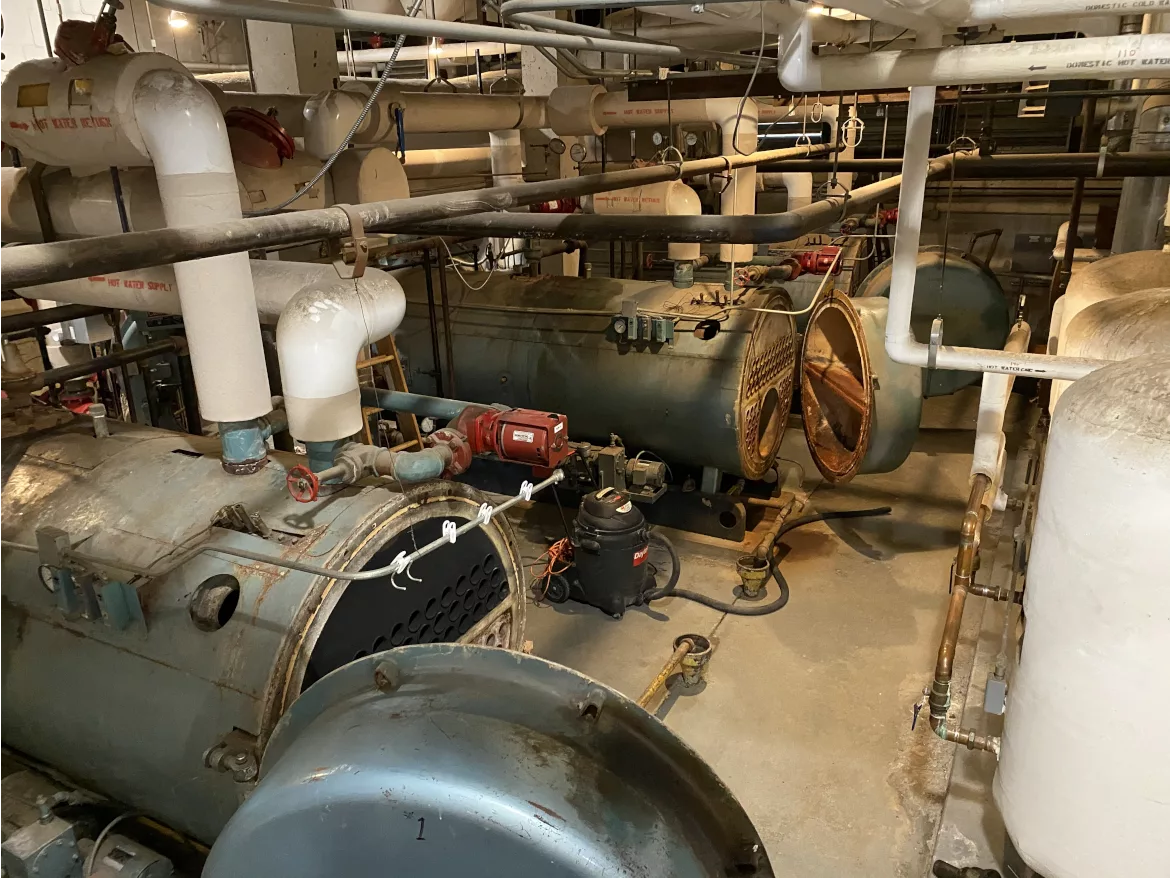
The value behind AI adoption is simple: AI can help conduct faster, more cost-effective, and less frustrating energy audits.
“Time is money.” We hear this phrase all the time, but most energy engineers aren’t employing one of the greatest time-savers available to them: artificial intelligence (AI). Manufacturers, quality control engineers, and building owners have all integrated AI tools into their day-to-day operations to cut costs and inefficiencies. However, according to a McKinsey & Company report, engineering has the lowest predicted AI adoption rate compared to every other major industry analyzed in the study.
But the value behind AI adoption is simple: AI can help conduct faster, more cost-effective, and less frustrating energy audits. So, how can energy engineers begin to adopt AI? And what tools can help create practical solutions to the challenges they face?
Workforce Woes: Audits on the Clock
It’s no secret that one of the larger, more mundane time investments for energy engineers is the audit phase — pulling data from hundreds or even thousands of pieces of equipment to determine the type, location, condition, age, and other critical information for an energy upgrade project. Using traditional data capture systems, like spreadsheets or paper and pencil recording, engineers are prone to a myriad of issues that add to the length of an audit.
According to ASHRAE, “missed improvements” is the No. 1 most common mistake made by energy auditors. According to the ASHRAE Journal, “We believe that the importance of comprehensiveness in energy audits has been widely recognized as critical ... We speculate that energy auditors miss evaluating good improvements for many reasons, including lack of training, insufficient time spent in the building, [and] insufficient budgets.”
AI can greatly reduce the time it takes to conduct an audit leading to more identified energy conservation measures (ECMs) in less time and for less cost. These common mistakes and missing information can also lead to skewed cost projections and siloed data systems. Moreover, converting pictures and notes into digital format leads to mistakes, often requiring auditors to go back recapture data. Compounding this issue, important team members do not have access to the captured data they need when they need it.
This problem has now become compounded by a dwindling labor pool in the HVAC and energy engineering market. According to the U.S. Bureau of Labor Statistics, demand for energy engineers and HVAC technicians is expected to grow by 15% between 2016 and 2026. However, job growth for this sector is not expected to respond to increasing demand, with fewer skilled laborers joining their ranks year over year. So, in addition to having fewer staff members to complete the increasing number of audits coming down the pipeline, engineering firms are dealing with a much younger — and, by extension, a much less experienced — workforce.
This bottleneck forces senior engineers to be on-site for the vast majority of audits and then spend far too much time on data entry back at the office; all time that would be better spent calculating efficiency projections and cost appraisals for projects.
AI tools not only make senior engineers’ jobs easier, but they also open up an opportunity for a younger, more diverse, and smartphone-wielding generation of energy auditors. It also allows newer energy engineers to work alongside and learn from their senior counterparts seamlessly, building the future of the workforce.
Intelligent Equipment Identification: Seeing with New Eyes
One of the greatest time-savers AI can provide to today’s energy engineer is intelligent equipment identification (IEI). Using a smartphone camera, engineers can take pictures of any type of equipment, like boilers, chillers, air filtration units, and rooftop fixtures, to catalog all of the necessary data they will need for an audit. The IEI software will then compile all of the product information of that piece of equipment and turn it into manipulatable text within a centralized database. Then, that data can easily be exported to an engineer’s favorite modeling, estimating, construction, customer relationship management (CRM), or enterprise resource planning (ERP) software.
Engineers equipped with IEI will now have a standardized method of data capture that automatically cuts down on their on-site mistakes. When asking engineering firms how much time IEI saved them in the long run, many estimated that time spent on audits was cut by 75% since adopting AI. Those are numbers that are difficult to ignore, particularly in a multi-trillion-dollar industry.
GPS tracking: Mapping Success with GPS
In some cases, energy audits have equipment that needs to be surveyed across a broad area. Lighting units, in particular, are often spaced widely across a site, with each piece of equipment potentially requiring vastly different upgrades or maintenance. Tracking these with the traditionally siloed method of data capture can be cumbersome, and this often leads to mistakes when it comes time for efficiency calculations.
Having a data capture method that incorporates GPS tags can automatically and drastically reduce these mistakes as well as make it easier to catalog groups of equipment within the same area. AI tools that incorporate GPS into the data already pulled from IEI capture means that in addition to all the information captured from the photo, engineers now also have its exact location. This makes returns to the site far easier to conduct, removing the need to hunt for that stubborn boiler in the corner of the worksite.
Centralized data: Make Databases a Force Multiplier
One of the earliest lessons I learned in boot camp as a Marine is that momentum is a force multiplier. The more momentum that can be brought by all members of a team to complete a task, the higher the chances of success. In my experience, performing more than 300 energy audits, I’ve learned that the No. 1 killer of momentum on-site surveys is siloed information between team members. With pencil and paper data capture, one engineer can collect a binder full of equipment data without ever sharing it with the next engineer who might be tasked to complete the project a week later.
Centralized databases powered by AI-driven tools eliminate this problem entirely. Data pulled from IEI recognition and GPS tracking are automatically compiled into one easily accessible location, available to anyone with a smartphone or computer and an internet connection. Not only does this make sharing a job between engineers easier, it also allows for younger staff members to conduct audits while providing all the mission-critical information to senior engineers, working anywhere in the world, instantly.
By giving senior engineers the ability to view project information from virtually anywhere, engineering teams keep their momentum in full swing, allowing them to finish more projects in a fraction of the time.
Today is the Day for AI
As cities, companies, and business leaders work to improve the energy efficiency of their operations in an increasingly sustainable world, energy engineers can no longer wait to adopt AI. The time is now and the early adopters will be the ones leading the industry in the years ahead. Are you ready?
Looking for a reprint of this article?
From high-res PDFs to custom plaques, order your copy today!