The Future Is Hybrid: HVAC Training Advances
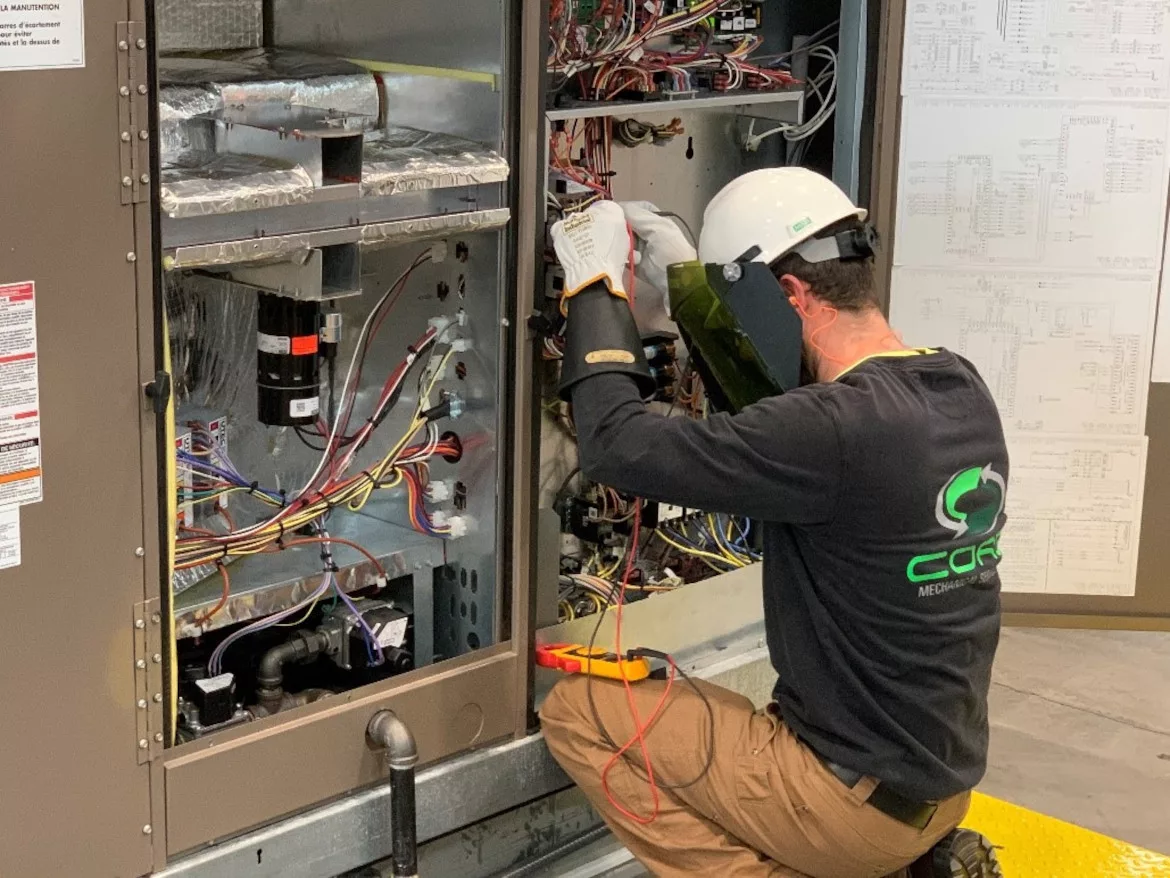
A service tech training on a commercial rooftop unit at Johnson Controls Ducted Systems Academy. Image courtesy of Johnson Controls
The HVAC workforce is shrinking. As experienced technicians now retire, the HVAC industry is struggling to fill open jobs. And that’s not projected to change anytime soon. According to the U.S. Bureau of Labor Statistics, the 2016-2026 job outlook for HVAC technicians is expected to grow 15%, more than three times as fast as the average 4% growth rate of all occupations. Yet, the pool of qualified labor is not expected to keep pace. As fewer new technicians enter the HVAC workforce, a skilled labor shortage is imminent.
To prevent it, the HVAC industry needs to find ways to attract and retain new technicians as well as better educate its existing techs. One way to do this is by offering flexible, engaging training opportunities that align with a wide range of learning styles.
By evolving from a sit-and-get structure to a hybrid model of in-person classes, remote learning, and in-the-field training, the HVAC industry can draw in more technicians. A hybrid model can better accommodate a range of schedules and learning needs, while mentorship and virtual reality may offer greater appeal and engagement.
Proven in Practice: The Advancement of a Hybrid Training Framework
While not yet widespread, hybrid learning in the HVAC industry isn’t new. Over the past several years, leading manufacturers and trade associations have been transitioning their training programs to hybrid models. The mandated stay-at-home orders of the COVID-19 pandemic only accelerated this transition and gave the industry a chance to see the true impact that this training model offers.
While the pandemic was particularly remote-learning heavy, effective hybrid training should have balance. There are four key aspects to a well-rounded hybrid curriculum: remote training, in-person training, virtual reality training and in-the-field training. These four aspects work together to help techs build the knowledge, skill, confidence, and wisdom they need to effectively grow in their careers.
Remote training
Trade associations and leading OEMs both offer digital learning opportunities that technicians can access from wherever they are. Depending on the software used, they can accommodate a few to a few hundred participants. Ideal for workshops, lectures, panels, demos, and Q&A sessions, remote learning keeps technicians up to speed on critical topics, such as the upcoming refrigerant transition, the newest technology, and industry trends. This empowers techs to expand their expertise beyond what they’ve gained from their local communities; participate in larger, industry-wide conversations; and establish connections with leading experts.
Remote training offers added flexibility that makes it possible for HVAC technicians to access training they may not have had the time or budget for if a training is only offered in person. Since there are no travel expenses, remote trainings minimize expenses. Techs can log in from wherever they are, so they can more easily fit remote training into their schedule. And, if an event is asynchronous, techs can view at their own convenience and pace.
In-Person Training
While remote learning makes it possible for more people to receive training, certain skills can’t be gained through a screen, and some respond best to live instruction. For this, a few manufacturers offer on-site HVAC training academies. These academies provide traditional, face-to-face classroom learning and hands-on opportunities to work on live manufacturer equipment.
In-person training lets techs apply theoretical concepts they’ve learned, ask questions in response to their engagement with equipment, and receive personalized feedback. By practicing installs, setup, and service in a safe, monitored environment, techs can develop skill by refining what they’ve learned. Plus, being in the same room as instructors and other technicians makes networking easier and can deepen professional relationships.
Virtual reality training
One valuable aspect of in-person training is virtual reality (VR) simulation. VR allows technicians to practice in real-life field conditions, like servicing a commercial rooftop unit or residential air conditioner, from the safety of training labs. This lets technicians independently work on equipment without instructor direction — or true consequence. It can also help bring lectures to life.
VR training can be key for understanding specific processes that are highly technical and offers techs a “safe zone” in which failure doesn’t damage equipment or cause injury. In addition to training, it can be used to enrich the onboarding process or refresh knowledge before a critical or complex install. By allowing technicians to troubleshoot machines safely, VR helps build confidence that’s essential for a technician’s career growth. While this alone can make VR great for anyone, it may be especially attractive to those who have a great affinity for technology or have grown up in the digital era.
In-the-field training
There is some knowledge you can only get by working one-on-one with a seasoned pro, and some techs learn best this way. Mentorship enables on-the-job knowledge to be transferred from veteran HVAC technicians to the new workforce before it’s lost to retirement. In a short amount of time, new techs can gain wisdom and accumulate tips and tricks that veteran techs have earned over decades of installs, services, and repairs.
In addition to the wisdom gained, mentorships have a wide range of benefits. Those who have been mentored often feel more valued and empowered in their jobs, and they have a greater chance of promotion and salary-grade change.[1] What’s more, it’s highly likely that technicians who have been mentored will share their skills with others in the future; 89% of people mentored become mentors in turn.[2] Setting up a mentorship structure can create a knowledge loop that perpetuates into the future.
While this type of knowledge transfer has traditionally happened between techs in the same company, or at least the same zip code, some industry professionals are using technology to document and share best practices that can be accessed from virtually anywhere in the world. Just-in-time learning, in the form of blogs, articles, and videos, is especially important on the job site where time is money.
Mentorship and Coaching
Attracting new talent involves more than elemental training, it requires an understanding of people and how to develop them. The industry is experiencing a shift in generations, and with that shift comes a loss of legacy knowledge. Mentorship programs allow people from all walks of life to learn from one another. It’s a mutually collaborative partnership where a mentor invests time in the mentee, taking an active role in their development of skills and knowledge. The mentee learns from the direct experience of the mentor and gets the opportunity to absorb that legacy knowledge.
A coaching approach allows an individual to work on specific areas they want to develop. Although there is a shift in the workforce, one need stays consistent through each generation: The need for soft skills. An individual working with an experienced coaching professional can begin to define his or her core values and deepen his or her emotional intelligence. This growth and development can help define a more empathic and customer-centric technician. The technician who understands the value of the customer relationship will experience a higher level of career success and personal fulfillment.
Teaching Today’s Techs to Become Tomorrow’s Experts
The industry must work harder to attract newcomers of all kinds, and the first critical step it must take is to evolve its training practices. A training framework that includes remote learning, in-person training, virtual reality, and mentorship gives the industry a chance to welcome in more techs and create a knowledgeable, skilled workforce.
Hybrid training creates well-rounded experts of tomorrow, preparing them to safely and effectively operate a variety of equipment while providing the flexibility required to reach the next generation.
Looking for a reprint of this article?
From high-res PDFs to custom plaques, order your copy today!