Energy Efficiency and the Impact of Machine Replacement
Is your work currently tied to an energy initiative? Chances are, regardless of your current role, you’re hearing a lot of talk about efficiency as new corporate energy initiatives sprout throughout the industrial sector. These initiatives take many shapes and tend to focus primarily on improving operations with existing infrastructure. However, investments in new technology and infrastructure can help industrial organizations make a stronger, faster impact on energy and sustainability. And while taking on new technologies can seem daunting, a simple place to start is with the most fundamental of industrial technologies — the machines themselves.
In a comprehensive review on corporate sustainability targets among Fortune 500 companies, a series of Power Forward reports showed that 72% of consumer staples companies have energy sustainability goals. And across a more varied sample of manufacturing companies, nearly half had public energy efficiency targets.
The industrial sector’s focus on energy efficiency makes sense as energy costs comprise a substantial portion of the sector’s overall operating costs. In 2015, McKinsey & Company reported that, globally, the chemical, cement, metals, and mining sectors spent approximately one-third of their operating budgets on energy at the time with other industrial sectors not far behind. The power generation sector was then spending 50%-80% of its overall operating budget on energy. At the individual machine level, energy costs make up approximately 85% of a machine’s overall life cycle cost, with the purchase price at 5% and maintenance costs at 10% of the life cycle cost.
Despite the opportunity for improvement, the International Energy Agency reports that corporate investments in energy efficiency are currently at risk of being deprioritized because of the perception of a long path to a return on investment (ROI). However, McKinsey’s data shows that where operational improvements result in energy savings of approximately 10%-20%, investments in energy-efficient technologies can reduce energy consumption by more than 30% with an ROI in less than three years. By focusing on improving energy efficiency through primarily operational means, these organizations are missing their largest opportunity.
In my own experience, the hesitation surrounding new technology investments stems from the stress associated with implementation, including speculation about efficacy, costs of implementation, likelihood of adoption, scalability, and a lack of clarity around internal roles in relation to implementations that have both cross-functional and cross-hierarchical impact. For this reason, Grundfos begins energy efficiency projects with a simpler approach. We look first at a technology with which facilities are well acquainted: their machines.
 Figure 1. A Grundfos technician completes the installation of a new pump serving a boiler system.
A recent Grundfos case study corroborates a quick return on energy investments by showing the impact of a mere machine replacement. In this case, Grundfos observed a 30-year-old pump with manual controls. A first energy audit showed that this pump consumes 930,000 kWh per year (at 0.09 EUR/kWh). Grundfos then replaced the pump with a new model, which included onboard speed control and was well-matched to the system’s requirements. By merely replacing the old pump with a new model conducive to the application, energy consumption decreased by 410,800 kWh (-44%). The facility recognized an ROI on this pump in less than 1.5 years due solely to energy savings.
In identifying the most valuable opportunities for pump replacement, Grundfos looks at a few common circumstances known to cause inefficiency: aging pumps, motor capacities mismatched for their application, fixed-speed machines (including cooling tower fans), fixed pressure control (as opposed to proportional pressure control), and poor temperature control. Where one or more of these circumstances exist, machine replacement often yields a relatively quick ROI on energy costs.
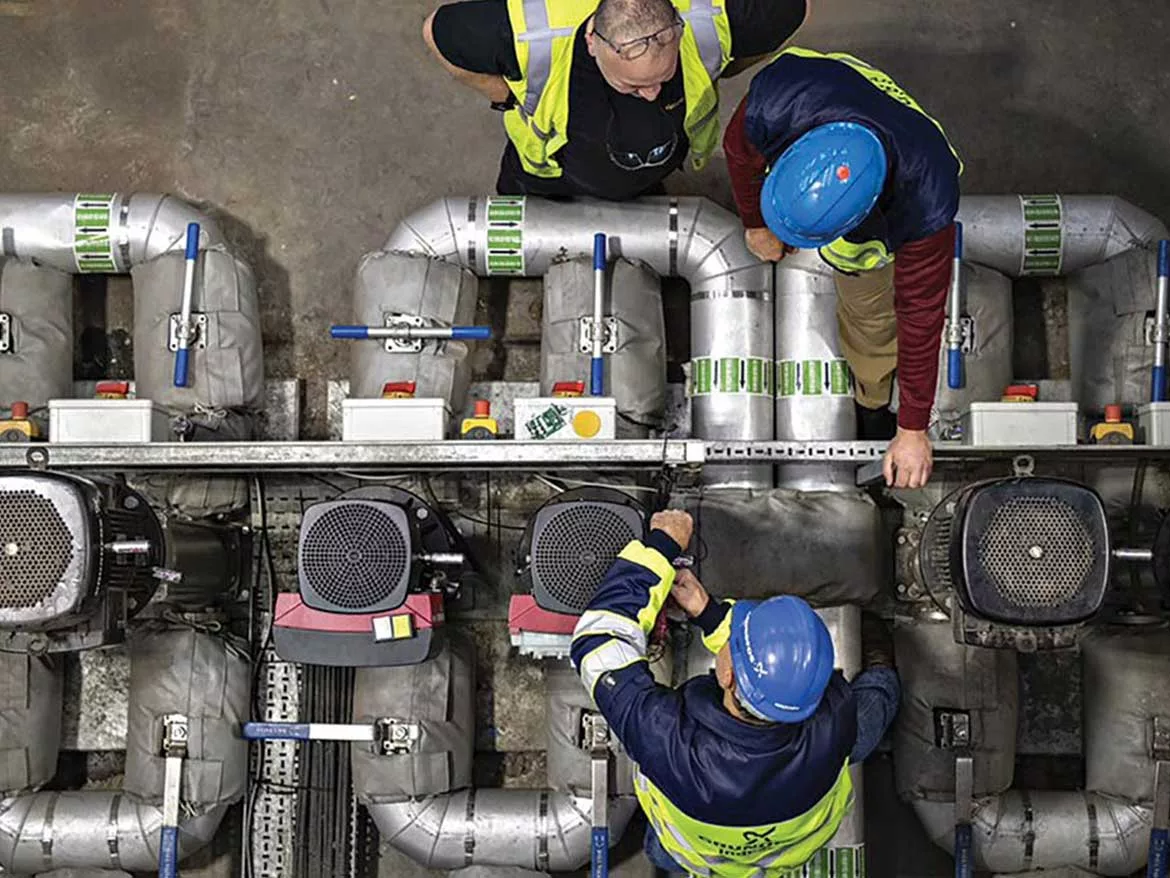
 Figure 2. A Grundfos technician performs a follow-up energy audit to track energy savings following a pump replacement.
If your organization is pushing for quick action on energy savings, consider an audit of your mechanical infrastructure. You might find a simpler path to improvement than anticipated.
Looking for a reprint of this article?
From high-res PDFs to custom plaques, order your copy today!