Comparing and Contrasting Fire-Tube and Water-Tube Boilers

Condensing boilers can be divided into two subcategories, which are based on the volume of water they can hold.
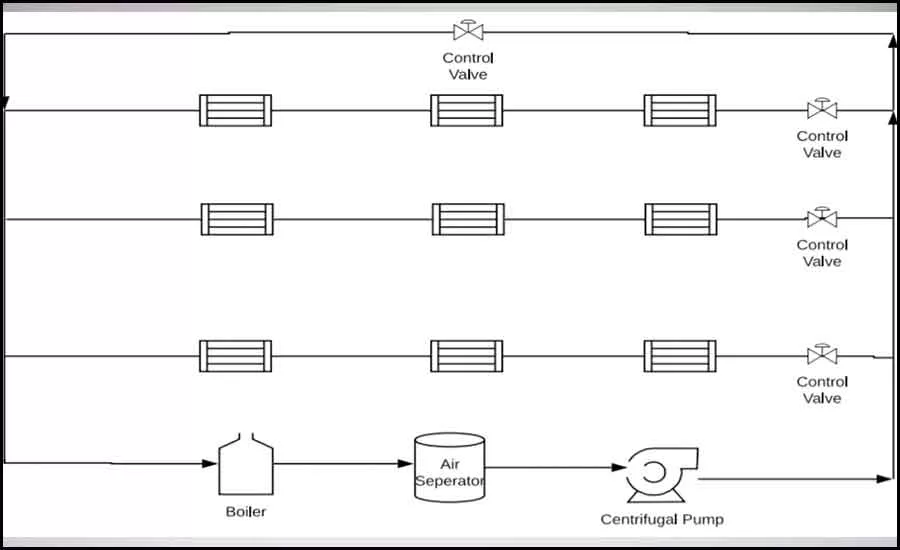
FIGURE 1: Using just one set of variable-speed pumps to serve the boilers and terminal units creates a variable primary system. Images courtesy of Cummins-Wagner
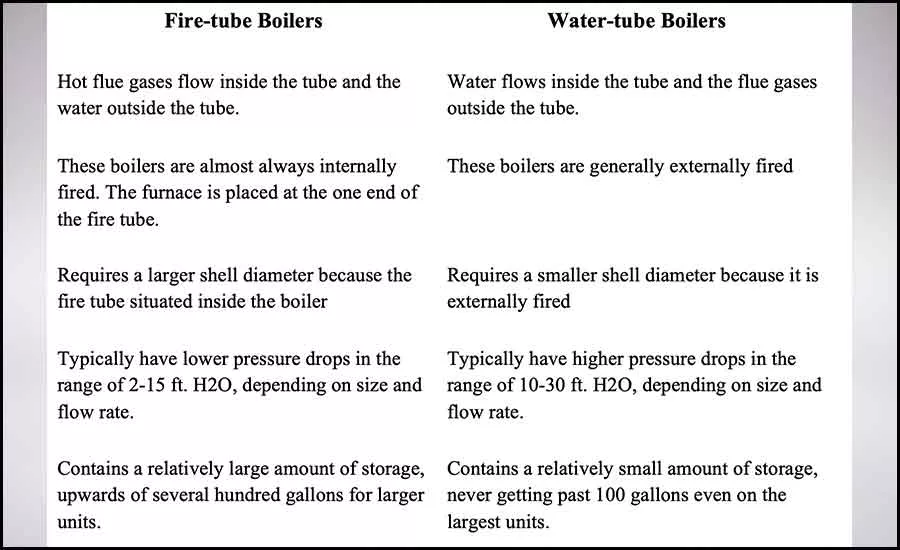
TABLE 1: A comparison of the options and benefits afforded by both fire-tube and water-tube boilers.
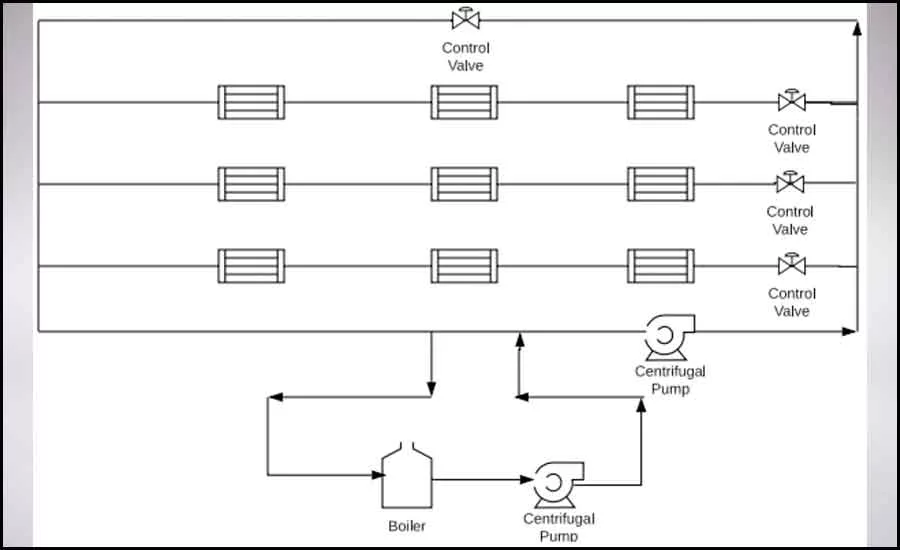
FIGURE 2: Variable primary systems have provided an alternative to the traditional primary and secondary design, which is still required for water-tube condensing boilers and other boilers with a low-mass design.
With the constant rise in equipment costs, building owners and engineers are constantly looking for ways to decrease initial and utility costs for their HVAC projects. This has driven the market standard to pumps on variable-speed drives and high-efficiency condensing boilers.
Condensing boilers can be divided into two subcategories, which are based on the volume of water they can hold. This element leads installers to recognize whether they should consider high-mass fire-tube boilers or low-mass water-tube boilers.
Compare and Contrast
There are several factors to consider when determining which type of boiler system is optimal for your application. Table 1 showcases a few of the differences to help a designer select the correct system.
One significant difference is that higher mass boilers do not need to maintain a constant flow. Fire-tube boilers can handle a wide range of capacity through them. Using just one set of variable-speed pumps to serve the boilers and terminal units creates a variable primary system.
Variable primary systems have provided an alternative to the traditional primary and secondary design, which is still required for water-tube condensing boilers and other boilers with a low-mass design.
With a variable primary flow design, the need for a second set of pumps within the boiler loop is eliminated, which can reduce a system’s initial cost.
Minimum Flow Rate
When large-mass boilers are designed in a variable primary system, the boiler’s minimum flow rate and how it affects the system becomes a concern. One formula we will need to understand for this topic is a heat transfer formula that is used quite often in HVAC:
Q=m∙c∙∆T
Considering that HVAC projects in the U.S. usually measure water flow in gallons per minute, not pounds per hour, and that the c value of water at 60ºF is around 1.0, the formula is often simplified to read:
Q(Btu/hr) = 500∙m(gpm)∙∆T(F)
When relating this equation to a boiler, it can be translated as: The total heat produced by the boiler = 500 x flow through the boiler in gpm x temperature rise in °F.
So how low can we flow water through our boiler? Some important information needed to solve this equation is the minimum capacity of our boiler. If this is not given, it can be calculated using the turndown of the boiler and its maximum capacity. The final piece of information needed is the temperature rise. Usually this will be designed by a mechanical engineer and is typically set somewhere in between 20º-60º.
To find the minimum flow rate possible through the boiler, consult the boiler’s manual and look up the largest temperature rise allowed per the manufacturer. All boilers have a maximum temperature rise. This rise is normally 80º or 100º. If the inlet and outlet temperatures are any wider, it will create enough thermal stress on the heat exchanger to break it.
As an example, let’s say there is a 3,000,000 Btu/hr boiler that is capable of a 10:1 turndown.
That means the minimum output is 300,000 Btu/hr.
If the boiler manufacturer states that the max temperature rise of our boiler is 100ºF we get the following equation.
300,000 = 500∙m(gpm)∙100℉
Solving for the flow rate, the minimum flow is 6 gpm. If the flow is any lower, the boiler will shut itself off in order to protect it from damage. All boilers have a minimum flow rate at which they can continuously fire, even if it is implicitly stated.
Taking a look at the operations manuals for several major manufacturers of fire-tube boilers, they all have a relatively similar sequence of operations, use a system supply temp sensor, and follow the (simplified) order of operations below:
1. When there is a call for heat, the boiler will turn on at low fire;
2. If the set point is not reached, the boiler will increase its firing rate;
3. If the set point is exceeded, then the boiler will decrease its firing rate; and
4. If the set point is exceeded at the minimum firing rate, then the boiler will shut off.
Using the boiler from the previous example and a system design temperature rise of 40ºF, the heat transfer formula looks like this:
300,000 = 500∙m(gpm)∙40℉
This gives a minimum system flow rate of 15gpm. Any less than this and the boiler will surpass its set point and shut off until the supply temperature drops again.
It is important to limit the number of times the boiler will cycle on and off in a given period of time. The more often a boiler cycles, the more frequently it will need to be serviced.
Frequent cycling will also lead to an increase in energy consumption due to the loss of the thermal energy stored in the heat exchanger and vent being lost to the outside.
If a building is going to have frequent periods of very low heat demands compared to its design point, a good solution would be to have several smaller boilers to increase the boiler plants turndown.
While any fire-tube condensing boiler can handle little to zero flows through the heat exchanger while the unit is not firing, no boiler can sustainably continue to fire when flow through the boiler is less than its inherent minimum running flow.
In order to properly size a boiler plant, a designer needs to look at the full range of heat loads that will be required for the building and be aware of the limitations of the equipment they are selecting.
Conclusion
In a hydronic system, both fire-tube and water-tube boilers can be viable solutions. A water-tube unit can be a great selection on a retrofit job with limited space for a large boiler. A primary secondary setup is very easy to integrate with an existing system. A fire-tube can also be the better solution if you are designing a system with only one set of variable-speed pumps in mind. They have the ability to handle varying flows through their heat exchangers without risk of damage. It is still important to keep in mind that even fire-tube boilers have their limits in terms of flow variance.
Every building is unique, and the best boiler plant solution will depend on a number of factors. Navigate all options to ensure you’re making the proper choice.
Looking for a reprint of this article?
From high-res PDFs to custom plaques, order your copy today!