search
Ask ACHR NEWS AI
cart
facebook twitter instagram linkedin youtube
  • Sign In
  • Subscribe
  • Sign Out
  • My Account
  • NEWS
  • TECHNOLOGY
    • Heating & Boilers
    • Cooling & Chillers
    • Pumps & Flow Controls
  • SECTORS
    • Commercial
    • Health Care
    • Data Center
    • Educational Facilities
  • DESIGN | CONSTRUCTION
  • OTHER TOPICS
    • High-Performance Buildings & Automation
    • Ventilation and IAQ
    • Commissioning
    • HVAC Retrofits
  • TODAY’S BOILER
    • Today’s Boiler Archives
    • Today’s Boiler Digital Edition
  • MORE
    • Case Studies
    • Podcasts
    • Videos
    • Directory
    • Webinars
    • ES NEWS Store
    • White Papers
  • SIGN UP
  • Back to The NEWS
Engineered Systems NEWSHVAC Engineering TechnologyToday's BoilerHeating & Boilers

CHP Plant Combines Solar Turbines with HRSG to Reduce Carbon Dioxide Emissions
By Harry Kumpula
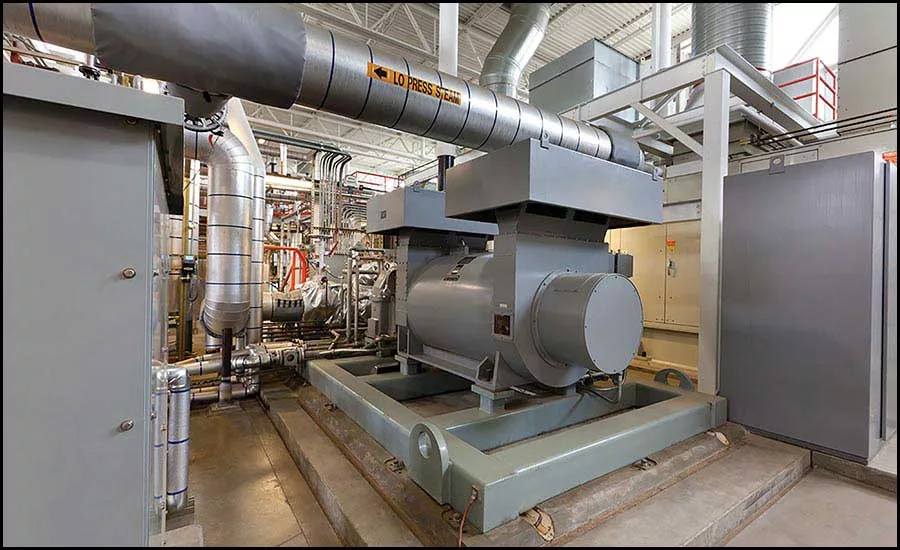
dual pressure system

The dual-pressure system produces steam at 400 psi and 600°F and sends it to the high-pressure steam header for the back-pressure steam turbine generator.
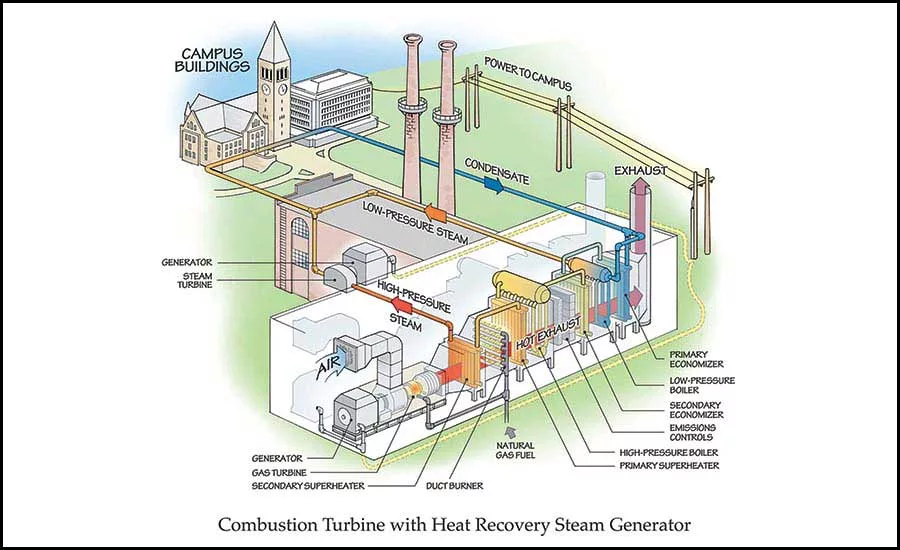
CHP Plant

The new CHP plant allowed the university to cut CO2 emissions by 20% below its 1980 level and by 30% below its 1990 level, despite the square footage increasing by more than 40%.

dual pressure system
CHP Plant
March 31, 2021

A university on the eastern seaboard includes 14 million square feet of research and administrative space. It has a 35-MW peak electrical load for a total of around 240 Gwh/year as well as needing 1.2 million klbs./year of steam and 40 million ton-hours/year of chilled water. Previously, campus heating relied on coal-fired boilers that released about 65,000 tons of CO2 per year. Management decided to switch to on-site combined heat and power (CHP) to help reduce CO2 emissions to 30% below 1990 levels.

The new CHP plant can fulfill all electricity requirements; however, the steam side presented a problem due to two factors: 

  1. Steam production is decoupled from a lake-based cooling system; and 
  2. Steam load varies from a peak of 380,000 pounds in the winter down to 55,000 pounds in the summer. 

The core of the CHP plant consists of two 14-MW Solar Titan 130 dual-fuel combustion turbines. Natural gas is fed from a three-mile high-pressure gas line. This line was added to connect the school directly to the interstate gas transportation system to deliver 15,000 decatherms per day of natural gas. As a backup, the facility has 700,000 gallons of on-site fuel oil storage.

The engineer responsible for the project selected heat recovery steam generators (HRSG) from Rentech Boiler Systems due to their efficiency and ability to extract plenty of heat from the exhaust gas. The dual-pressure system produces steam at 400 psi and 600ºF and sends it to the high-pressure steam header for the back-pressure steam turbine generator. The low-pressure section feeds directly into the campus steam distribution system. The pressure floats with the distribution system pressure. The HRSGs have a modular design that enabled them to be shipped in sections and assembled on-site. Each HRSG generates 58,000 pounds of steam per hour. 

As part of the project, the university upgraded its 50-MVA substation to 78 MVA to accommodate the additional generation. The campus generates and distributes at 12.2 KV, so the power from the project is fed directly into the secondary bus at the substation. 

As well as reducing CO2 significantly, the college benefits by generating most of its own power. Previously, it purchased 80% of its electricity from the grid. Now, it generates 80% of its own. It could generate 100%, but the variation in steam load makes this option less economical and efficient than continuing to purchase a portion of its power from the grid.

Since each turbine/HRSG combination produces 58,000 pounds of steam per hour, only one is needed during the summer. During a power emergency in the summer months, or if electricity costs increase, both units can be brought online. During spring and fall, one turbine/HRSG operates full time, with the second coming on when needed. During the winter, both operate continuously. The university also installed an air-cooled steam condenser to smooth out system pressure and match the demand. 

“The new plant allowed the university to cut CO2 emissions by 20% below its 1980 level and by 30% below its 1990 level, despite the square footage increasing by more than 40%,” said the facility engineer in charge of the project.

Share This Story

Looking for a reprint of this article?
From high-res PDFs to custom plaques, order your copy today!


Harry Kumpula is the director of marketing for Rentech Boiler Systems.

Recommended Content

JOIN TODAY
To unlock your recommendations.

Already have an account? Sign In

  • HVAC-enrollment

    The Trades Are Back: HVACR Programs See Nearly 30% Enrollment Spike

    A new wave of future technicians is entering the pipeline.  
    News
    By: Matt Jachman
  • 2025 Top 40 Under 40

    2025 Top 40 Under 40 HVACR Professionals List

    The 11th annual Top 40 Under 40 list highlights those...
    HVAC Commercial Market
    By: Hannah Belloli-Oster
  • LG Ductless Mini-Split Systems

    The 9 Types of Heat Pumps

    As the U.S. moves toward electrification, heat pumps are...
    HVAC Residential Market
    By: Joanna R. Turpin

More Videos

Today's Boiler

Spring 2026 Issue

Today's Boiler - Spring 2026 Cover

Read More from Today's Boiler

Case in Point Logo

Smarter Hydronic Design for Data Centers - Free Webinar - January 22, 2026

Related Articles

  • Storing Away Carbon Dioxide Emissions

    See More
  • Study Examines Economy, Carbon Dioxide Emissions

    See More
  • June 13, 2007: U.S. Carbon Dioxide Emissions Declined in 2006

    See More

Related Products

See More Products
  • Building Information Modeling: Planning and Managing Construction Projects with 4D CAD and Simulations

  • HVACR Electrical Troubleshooting: Deciding Where To Begin Training Kit

  • HVAC/R Electrical Troubleshooting: Deciding where to begin DVD

See More Products

Related Directories

  • Copeland

    Copeland, a global leader in sustainable climate solutions, helps commercial, industrial, refrigeration and residential customers reduce their carbon emissions and improve energy efficiency.
  • NetZeroPLUS Canada

    An association that promotes the production of dispatchable thermal renewable energy that can reduce carbon emissions by 71 billion kg each year in Canada's buildings.
×

Sign Up. Stay Informed.

The #1 trusted source for the HVACR industry since 1926

SUBSCRIBE
  • RESOURCES
    • Advertise
    • Contact Us
    • Advisory Board
    • Classifieds
    • Submit a Letter
    • Directories
    • Store
  • ACCOUNT CENTER
    • Create an Account
    • Start a Subscription
    • Manage My Account
    • Sign Up for Newsletters
    • Visit Customer Service
    • Update Preferences
  • SERVICES
    • Marketing Services
    • Reprints
    • Market Research
    • List Rental
    • Survey/Respondent Access
  • STAY CONNECTED
    • LinkedIn
    • Facebook
    • Instagram
    • YouTube
    • X (Twitter)
  • PRIVACY
    • PRIVACY POLICY
    • TERMS & CONDITIONS
    • DO NOT SELL MY PERSONAL INFORMATION
    • PRIVACY REQUEST
    • ACCESSIBILITY

Copyright ©2026. All Rights Reserved BNP Media, Inc. and BNP Media II, LLC.

Design, CMS, Hosting & Web Development :: ePublishing