search
Ask ACHR NEWS AI
cart
facebook twitter instagram linkedin youtube
  • Sign In
  • Subscribe
  • Sign Out
  • My Account
  • NEWS
  • TECHNOLOGY
    • Heating & Boilers
    • Cooling & Chillers
    • Pumps & Flow Controls
  • SECTORS
    • Commercial
    • Health Care
    • Data Center
    • Educational Facilities
  • DESIGN | CONSTRUCTION
  • OTHER TOPICS
    • High-Performance Buildings & Automation
    • Ventilation and IAQ
    • Commissioning
    • HVAC Retrofits
  • TODAY’S BOILER
    • Today’s Boiler Archives
    • Today’s Boiler Digital Edition
  • MORE
    • Case Studies
    • Podcasts
    • Videos
    • Directory
    • Webinars
    • ES NEWS Store
    • White Papers
  • SIGN UP
  • Back to The NEWS
Engineered Systems NEWSHVAC Engineering SectorsCommercial HVAC

University of Missouri Engineers Design a Flexible Material Intended to Protect Buildings
By Eric Stann
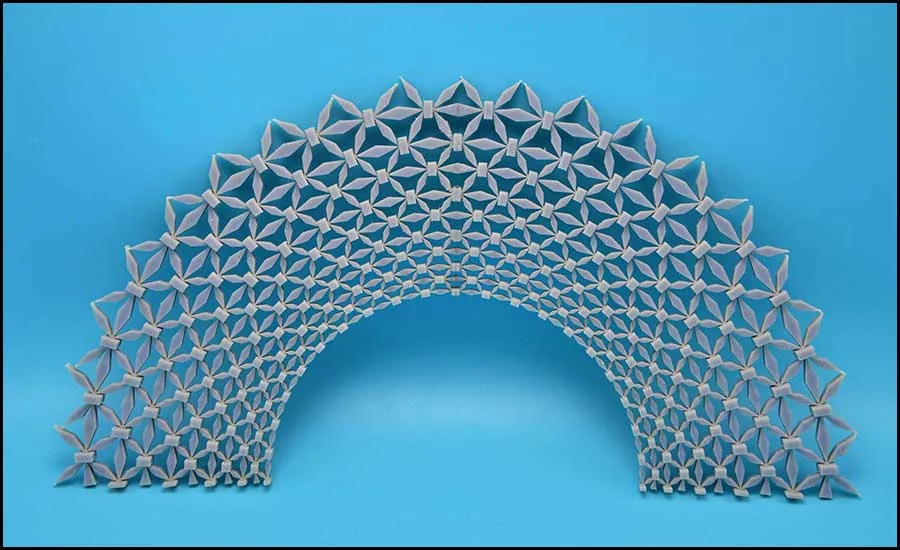
Lattice type material

This structured lattice-type material protects against both types of energy waves — longitudinal and sheer — that can travel through the ground.
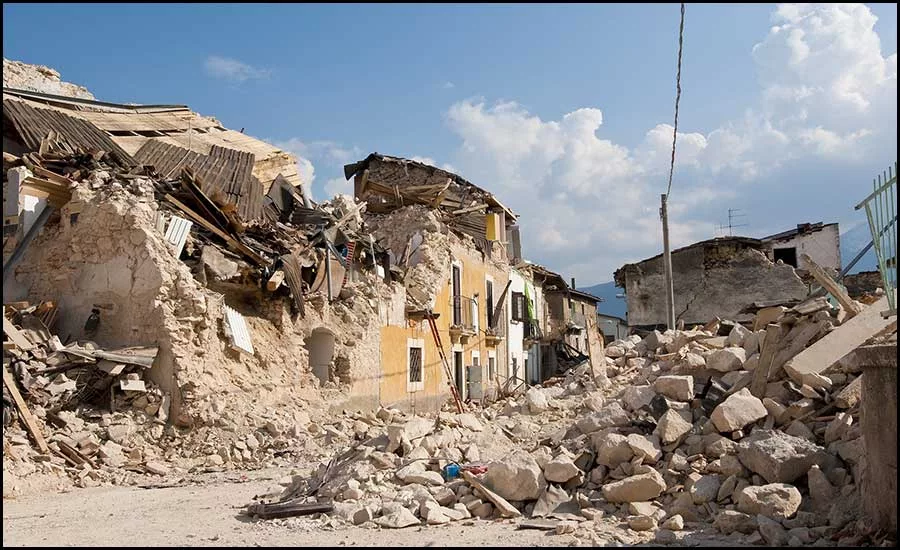
Team of Engineers

A team of engineers at the University of Missouri has designed a flexible material that can help buildings withstand multiple waves of energy traveling through a solid material, including the ground motions found in earthquakes.
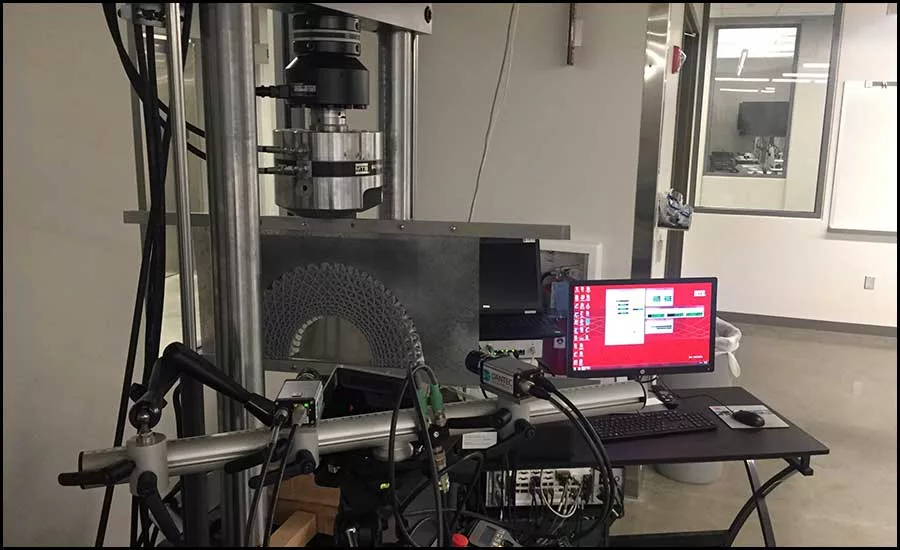
Lab Equipment

Lab equipment used to conduct experiments in the study.

Lattice type material
Team of Engineers
Lab Equipment
March 8, 2021

Shake, rattle, and roll.

Even though they are miles from the epicenter of an earthquake, buildings can collapse due to how an earthquake's energy makes the ground shake and rattle. Now, a team of engineers led by Guoliang Huang, a James C. Dowell Professor in the Mechanical and Aerospace Engineering Department at the University of Missouri College of Engineering, has designed a flexible material that can help buildings withstand multiple waves of energy traveling through a solid material, including the simultaneous forward and backward and side-to-side motions found in earthquakes.

“Our elastic material can stretch and form to a particular surface, similarly to a wrap on a vehicle,” Huang said. “It can be applied to the surface of an existing building to allow it to flex in an earthquake. What is unique about the structured lattice-type material is that it protects against both types of energy waves — longitudinal and sheer — that can travel through the ground.”

Huang said the material also can be used by the defense industry to protect against vibration in mechanical parts, such as aircraft or submarine engines.

“For over 20 years, no one had a natural solution for this issue in a solid material,” Huang said. “Now, we’ve designed, modeled, and fabricated a new material with properties that do not exist naturally for what we believe is a nearly perfect protective device.”

The Army Research Office, which provided funding for the basic research effort at the University of Missouri associated with this project, is encouraged by the results from Huang’s team.

“The results that the University of Missouri team has recently published are encouraging,” said Dan Cole, the program manager at the Army Research Office, a part of the U.S. Army Combat Capabilities Development Command’s Army Research Laboratory. “This research could lead to new strategies for steering mechanical waves away from critical regions in solid objects, which could enable novel capabilities in soldier protection and maneuvering.”
The studies, “Polar Metamaterials: A New Outlook on Resonance for Cloaking Applications” and “Physical Realization of Elastic Cloaking with a Polar Material,” were published in Physical Review Letters, a journal of the American Physical Society.

Other authors on the studies include Nassar Hussein, Yangyang Chen, Xianchen Xu, and Chen Wangat at MU; Wan Shou, Beichen Li and Wojciech Matusik at the Massachusetts Institute of Technology; and Zongliang Du at MU and the Dalian University of Technology in China. The content is solely the responsibility of the authors and does not necessarily represent the official views of the funding agencies. For more information, visit https://engineering.missouri.edu/2020/05/researcher-designs-and-creates-new-cloaking-material.


Share This Story

Looking for a reprint of this article?
From high-res PDFs to custom plaques, order your copy today!


Eric Stann is a research news strategist at the University of Missouri. Contact him at stanne@missouri.edu. 

Recommended Content

JOIN TODAY
To unlock your recommendations.

Already have an account? Sign In

  • HVAC-enrollment

    The Trades Are Back: HVACR Programs See Nearly 30% Enrollment Spike

    A new wave of future technicians is entering the pipeline.  
    News
    By: Matt Jachman
  • 2025 Top 40 Under 40

    2025 Top 40 Under 40 HVACR Professionals List

    The 11th annual Top 40 Under 40 list highlights those...
    HVAC Residential Market
    By: Hannah Belloli-Oster
  • LG Ductless Mini-Split Systems

    The 9 Types of Heat Pumps

    As the U.S. moves toward electrification, heat pumps are...
    Ground Source Heat Pumps
    By: Joanna R. Turpin

More Videos

Today's Boiler

Spring 2026 Issue

Today's Boiler - Spring 2026 Cover

Read More from Today's Boiler

Case in Point Logo

Smarter Hydronic Design for Data Centers - Free Webinar - January 22, 2026

Related Articles

  • Biomass Boiler Provides Savings, Sustainability to University of Missouri

    See More
  • Oct. 18, 2012: Cold Climate HVAC Conference Intended to Advance Building Design

    See More
  • Masonic Complex of Missouri gets a $1.8 million renovation

    See More

Related Products

See More Products
  • EHEP002028.jpg

    Principles of Heating, Ventilation, and Air Conditioning in Buildings, 1st Edition

  • 1966.gif

    HVAC Duct Construction Standards - Metal and Flexible

  • Green Tips for Building Maintenance Engineers

See More Products

Related Directories

  • Fall Protection Distributors LLC

    Standing Seam Roof Anchor is the industry's lightest and most universal fit fall protection anchor for standing seam roof systems. The patented non-penetrating design fits over 500 seam profiles with just one simple device. Made in the U.S.A. with a lifetime warranty.
×

Sign Up. Stay Informed.

The #1 trusted source for the HVACR industry since 1926

SUBSCRIBE
  • RESOURCES
    • Advertise
    • Contact Us
    • Advisory Board
    • Classifieds
    • Submit a Letter
    • Directories
    • Store
  • ACCOUNT CENTER
    • Create an Account
    • Start a Subscription
    • Manage My Account
    • Sign Up for Newsletters
    • Visit Customer Service
    • Update Preferences
  • SERVICES
    • Marketing Services
    • Reprints
    • Market Research
    • List Rental
    • Survey/Respondent Access
  • STAY CONNECTED
    • LinkedIn
    • Facebook
    • Instagram
    • YouTube
    • X (Twitter)
  • PRIVACY
    • PRIVACY POLICY
    • TERMS & CONDITIONS
    • DO NOT SELL MY PERSONAL INFORMATION
    • PRIVACY REQUEST
    • ACCESSIBILITY

Copyright ©2026. All Rights Reserved BNP Media, Inc. and BNP Media II, LLC.

Design, CMS, Hosting & Web Development :: ePublishing