20 to Watch: Women in HVAC - Soph R. Davenberry
Chief Technology Officer of the National Energy Management Institute Committee (NEMIC)
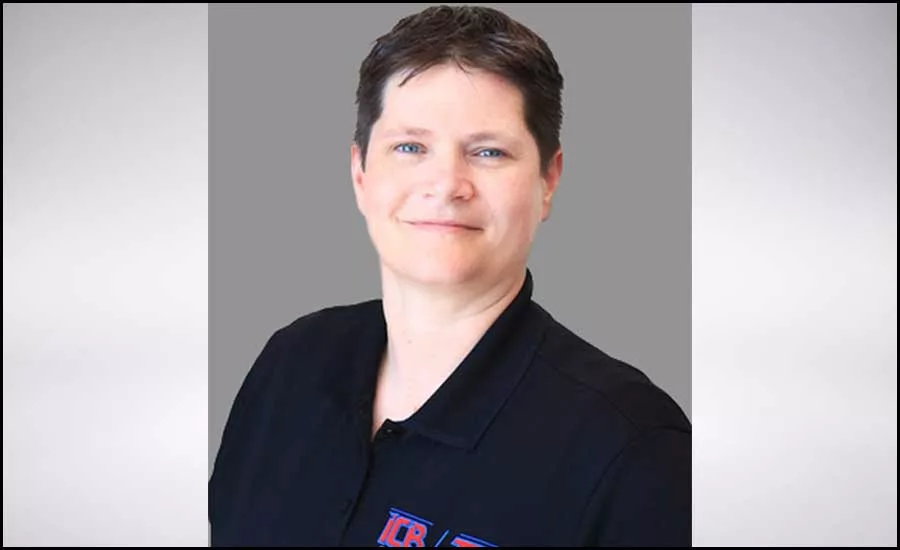
Name:Soph R. Davenberry
Title: Chief Technology Officer of the National Energy Management Institute Committee (NEMIC)
Age: 49
Educational Experience: Bachelor of arts, New College of Florida; journey cards in building trades, sheet metal, and test, adjust, and balance (TAB); and a bachelor of applied science in sustainable building science technology from South Seattle College
Professional Credentials/Accreditations: Multiple certifications from the International Certification Board/Testing, Adjusting, and Balancing Bureau (ICB/TABB), including TAB, fire life safety, and commissioning; and Certified Measurement and Verification Professional (CMVP), Association of Energy Engineers (AEE)
Organizational Affiliations/Achievements/Awards: Co-chair of the marketing and outreach committee for the newly formed Rainscreen Association in North America (RAiNA) and a board member at large for the Pacific Northwest Chapter of AEE
What caused you to/when did you fall in love with engineering?
I didn’t recognize it as such at the time, but my first experience with engineering and building structures was playing with Legos as a child. As I became a young adult, I volunteered for housing projects with Habitat for Humanity, which helped me become aware of the mental aspects of construction in addition to the physical ones. I later discovered my joy of building things for a living when I became an apprentice with the sheet metal workers/SMART (International Association of Sheet Metal, Air, Rail, and Transportation workers). About 10 years into my sheet metal career, I up-skilled to learn TAB, which brought me to the aspects of building science I love to explore today.
What has been the most rewarding aspect of working in the skilled trades?
Like most skilled trades workers, I take pride in referencing all the places I’ve worked. Sometimes, I can point out the very thing I installed, such as an awning or a run of exposed duct, and other times, the evidence is in stable control system trends from a unit running well with low energy consumption and airflows that occupants don’t even notice as they go about their daily activities. I have learned my skills from a combination of formal classroom training and on-the-job field experience. These are skills that can’t be gained any other way. Applying these skills with continual problem-solving in service to others is the best reward.
Describe the proudest moment in your career.
That’s an interesting question for me to answer, because I am the type of person who tends to remember my mistakes far more easily than my successes. Many times, I’ve had the honor of someone I admire in my industry taking me into their confidence to discuss particularly difficult questions, ranging from how to explain a system failure to coaching apprentices new to the trade. Those moments — when those whom I hold in the highest esteem seek my perspective and trust me with their vulnerabilities — continue to mean the most to me.
What challenges do women face in this profession? Can you give a personal example?Why aren’t there more women in engineering? How can we increase the number of women in engineering?
I certainly can’t sum up all the challenges women face in this profession, although I can speak to some of my own. From the get-go, people don’t imagine women doing this work. As a young union organizer many years ago, I called a lot of companies to apply for work as an HVAC technician and was told there were no positions available. If I called and said I was asking “on behalf of my husband,” suddenly the company couldn’t get “him” on the payroll quick enough. I’ve been told, to my face, that I was taking a man’s job and I would only ever be allowed to run one certain piece of equipment. In sheet metal, women comprise less than 5% of the total workforce. I would not have made it this far in my career without the women ahead of me and my trade siblings of all genders supporting me now. Our numbers are trending upward as women gain more visibility in the trades and in engineering but not at nearly the rate needed to meet declining workforce numbers or for parity with the percentages present in our society. The most gains occur where formal programs for equity compliance and/or mentorship are in place. How do we, as systems engineers, know what actions to take to improve performance? We take measurements before and after adjustments and continue until the goals are met. Formal programs support this activity. We need our male counterparts to actively participate in these efforts.
What does your day-to-day job entail?
My current position in workforce development is quite different from my background working in the field. I participate in meetings regarding building standards and codes, develop certifications and other credentialing, write documents to support these activities, and do outreach through presentations. I also attend many conferences throughout the year to stay current on information emerging from the building sciences. I enjoy the days I go on-site to a training or test facility and can work with the hum of mechanical equipment in the background, which are fewer than when I was in a service van.
What drives/motivates you every day?
I suppose that depends on the day. Talking with others in a way that we can learn from each other is of most interest to me. At the same time, seeing outcomes from changes I’ve implemented to resolve an issue as well as the satisfaction of tackling a problem keeps me going. Tinsmiths, tinkerers, engineers — we do like challenges, especially ones that change over time.
How has the COVID-19 pandemic impacted you personally and professionally?
My travels, for personal and business, came to a halt when the pandemic first hit. I tested positive for the COVID-19 antibodies in recent months, and, in retrospect, I believe I contracted it before the pandemic was identified. I still don’t have much of a sense of taste or smell. I grieve for the people we are losing, especially our working-class black, indigenous, and people of color (BIPOC) siblings who are being hit especially hard. Professionally, more people in the general public seem to be interested in what I do. I did not anticipate such keen interest in IAQ and filtration. Because so much of the work I do now can be done remotely, my co-workers and I have continued with most of our tasks, even without in-person meetings. Being scheduled to be in three meetings at once is no longer an excuse to bow out with so many virtual platforms available and in use. The people investing in our efforts at NEMIC are on the front lines of industry response: measuring airflows, setting pressure differentials, changing out filters, assessing system performance, and carrying out creative solutions. My co-workers and I are doing our best to ensure policies are implemented for the well-being of the public at large.
What remains on your engineering bucket list — what do you aspire to do that you haven’t accomplished yet?
I see trends toward more integrated design of building enclosures and HVAC systems as well as a shift toward system performance and occupant comfort as a service. I also know there are many talented people out there who would excel in our industry who have not been approached to join us. Everyone knows the movie trope of escaping through the ductwork, but few have ever heard of a sheet metal worker or know what a mechanical engineer specializing in HVACR does. I hope to promote our skilled, expert workforce to the point that we are recognized as a desirable, exciting career that bridges the inside and outside of building science.
For access to more podcast episodes, click here.
What’s one thing no one knows about you?
When I got married, I changed my first and middle names so together they mean “well-balanced.”
List any mentors who’ve helped you succeed and describe exactly how they’ve shaped your success.
We do not have nearly enough space or time for me to list everyone who has contributed to my success, so I’ll highlight just a few.
- My family has supported my endeavors and encouraged my independence, sometimes at the cost of less family time.
- The leaders of my youth group growing up took us on field trips to participate in programs like Habitat for Humanity.
- I had many teachers, instructors, coaches, and counselors over the years who let me experiment outside the planned curriculum and believed me when I shared my experiences of discrimination.
- Journey workers of all genders chose to share their wisdom and actively taught me the trade.
- My colleagues in positions of leadership have extended opportunities to me, even when I didn’t think I was ready.
- The young people, who are coming up in the industry ask questions of me daily, help me stay alert, and show me how I can learn and become better.
What advice do you have for prospective female engineers considering entering the field?
Before I answer that, I’d like to challenge anyone who has a habit of describing someone as a “female engineer,” “female doctor,” or “female mechanic” to try labeling men the same way: “male engineer,” “male doctor,” or “male mechanic.” If that seems silly, it is. I am a sheet metal worker. I am an engineer. I am a professional in an industry that must change our demographics in order to thrive. Women are needed in all aspects of our industry. Focus on doing the work. Find peers through industry organizations, social networking, and podcasts. Keep asking questions, and model the respect you expect.
Looking for a reprint of this article?
From high-res PDFs to custom plaques, order your copy today!