Senate Bill Aims for School IAQ Upgrades
The bill’s scope extends beyond new equipment. Current wording instructs the Secretary of Education to provide schools and districts with technical guidance.
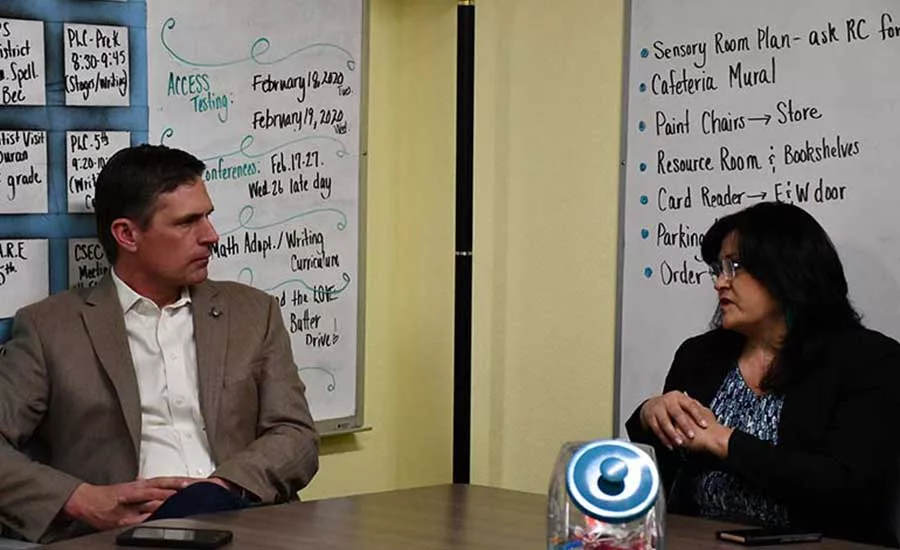
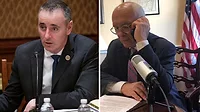
Sen. Martin Heinrich of New Mexico, seen here meeting in February with Las Cruces Public Schools Superintendent Dr. Karen Trujillo, would combine HVAC grants with input from the CDC, ASHRAE, and teachers.
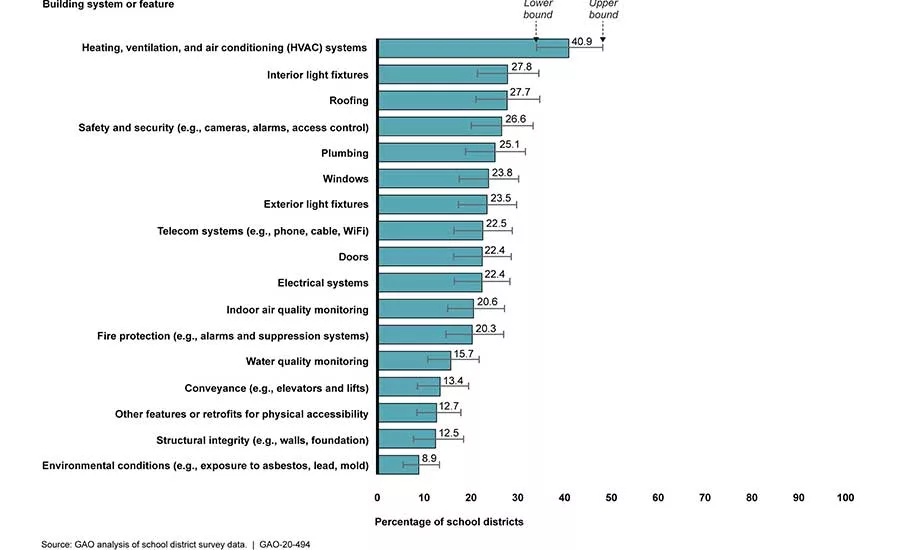
The estimated percentage of school districts in which at least half the schools need updates or replacements, broken down by type of building system or feature. Image courtesy U.S. General Accountability Office.
Senator Martin Heinrich of New Mexico introduced the Keeping Schools Safe Act on Oct. 1. The bill proposes $1 billion in Department of Education grants, designed to fight COVID-19 transmission by funding IAQ upgrades in elementary and secondary schools.
“The COVID-19 pandemic has created unprecedented challenges for schools and districts across the country. Educators are putting their health and safety on the line, working parents are struggling to balance childcare and at-home learning, and some students are facing technological disadvantages — creating setbacks in their education,” said Heinrich. “That is why I am introducing this legislation to provide elementary and secondary schools with funding to improve air quality and ventilation — putting them one step closer to safely reopening. If we follow the science and the evidence brought forth by leading public health officials, we can start taking real action and use proven, innovative technologies to create safe, learning environments.”
Guidance Counseling
The bill’s scope extends beyond new equipment. Current wording instructs the Secretary of Education to provide schools and districts with technical guidance regarding:
- Indoor, outdoor, or combined air or air pressure ventilation, filtration systems, or air cleaners.
- Equipment, supplies, and technical services necessary to provide indoor environmental air quality in a manner that optimizes safety and health for children and staff while reducing viral transmission risks.
- Making facility changes, repairs, and monitoring to address air filtration and ventilation.
In researching air decontamination and other issues for this effort, Heinrich consulted his local ASHRAE chapter in New Mexico; ASHRAE’s Epidemic Task Force; the National Education Association; and the American Academy of Pediatrics.
Heinrich’s office stated that subsequent technical guidance would be developed by the Centers of Disease Control and Prevention, in collaboration with teachers’ unions and organizations specializing in ventilation, standards development, and public health and infectious disease in children.
ASHRAE president Charles E. Gulledge III, P.E., welcomed the opportunity for the association to participate and cited its 125 years of experience in standards for the built environment.
Decentralized Reactions
The Keeping Schools Safe Act grants, which could range from $5,000 to $20,000,000 per grant, would represent federal layer of school building COVID response along with whatever a given state or school district has elected to do (or not do) so far on its own. Strategies and levels of support have varied, as do the existing conditions that administrators are facing.
In Vermont this summer, the state’s coronavirus relief package included $6.5 million specifically for school HVAC improvements. That School Indoor Air Quality Grant program is administered by Efficiency Vermont.
Valley News local coverage mentioned one engineering consultant’s recommendation to isolate the nurses’ office ventilation along with that of any rooms designated for COVID-positive students.
In Oregon, state guidance (PDF) included new cleaning requirements and many now-common recommendations involving increased outdoor air in mechanical ventilation, more natural ventilation where necessary or practical, and filtration improvements.
In Massachusetts, city of Worcester school officials had been hoping for federal funds along the lines of the Heinrich bill over the summer as they conducted a facilities assessment.
According to local media, nearly half of the district’s buildings went up before World War II, and only one-fifth are less than 30 years old. Administrators already had a services contract with Honeywell and have been working on equipment and filtration upgrades.
36,000 Systems Ready for Help
ACCA cited a June study (PDF) from the U.S. Government Accountability Office (GAO) that establishes a sober view of the situation on a national scale.
That study found that 41% of school districts need HVAC updates for at least half of their schools. ACCA works that out to roughly 36,000 public schools with faulty or outdated HVAC systems.
“This issue is pervasive, and Senator Heinrich’s bill takes a step in the right direction to correct it,” ACCA officials commented. “A comprehensive solution, however, will likely take billions more in total investment, given the fact that school districts collectively spend tens of billions of dollars each year on facility repairs and improvements.”
Much as pre-pandemic “hidden” benefits involving student health and productivity can reward schools that invest in good IAQ, adhering to quality installation standards can in turn avoid disappointing performance results. ACCA commented that including quality installation language would strengthen the bill and increase the value of its grants.
“HVAC systems that are not properly installed can lose up to 40% of their expected energy efficiency, face greater strain, and need to be fixed and replaced at a greater rate than HVAC systems that are properly installed according to ACCA standards,” ACCA added.
While that makes a substantial difference regardless of COVID-19, ACCA and others understand that better IAQ and ventilation compose just one component of a pandemic strategy alongside cleaning, monitoring occupants, and protocols in place to guide responses and adjustments as needed.
Year End Is Looming
Senator Heinrich is not the first in recent history to introduce such legislation. Fellow Democrat Bobby Scott introduced a Rebuild American Schools Act in the House last year, proposing a more ambitious scope of work and a much larger price tag ($100 billion). It did not become law and was not included in the House’s recent HEROES Act.
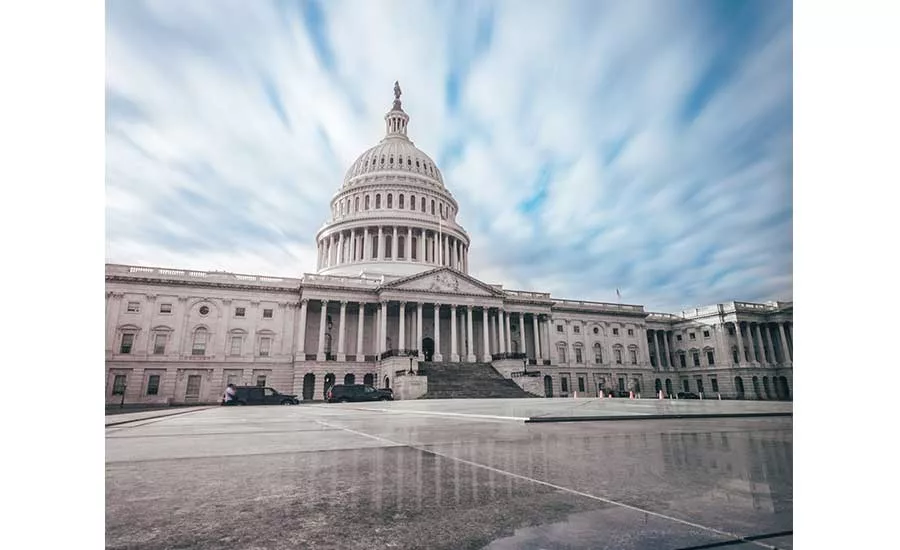
That may or may not be an omen for the Keeping Schools Safe Act. Some sort of lame duck session is the next likely event for the Senate. Its agenda is unclear, although with an election behind it and Justice Bennett seated on the Supreme Court, there may be more room to consider bills like Heinrich’s individually or as part of a larger relief package.
If the bill does not advance beyond the Committee on Health, Education, Labor, and Pensions before the end of the year, COVID concerns seem likely to continue well into 2021, and Heinrich (who is not up for reelection until 2024) would be free to reintroduce his proposal when the new Congress gathers in January.
Looking for a reprint of this article?
From high-res PDFs to custom plaques, order your copy today!