Lean Team Boosted its Productivity during New Aircraft Engine Program

GE Aviation Czech (GEAC), the Turboprop division of GE Aviation, recently embarked in the development of Catalyst™, a clean-sheet engine for the turboprop segment.
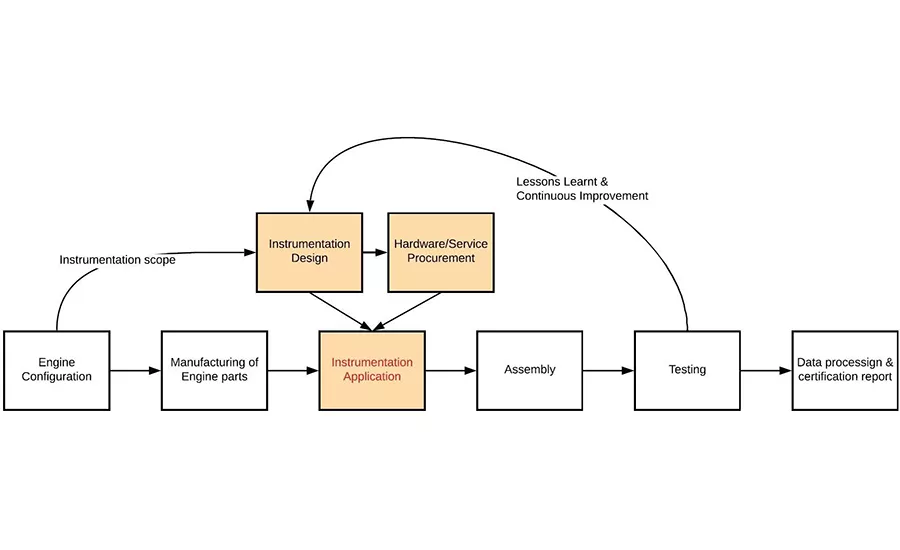
Lessons learned and continuous improvement in the lean process.

Figure 1. Interconnected boards.
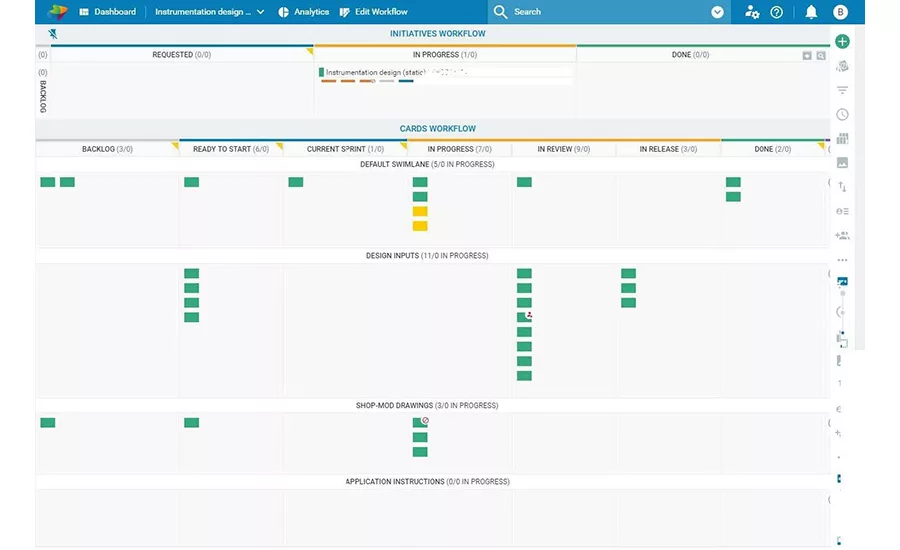
Figure 2. An instrumentation design board.

Figure 3. A procurement board.
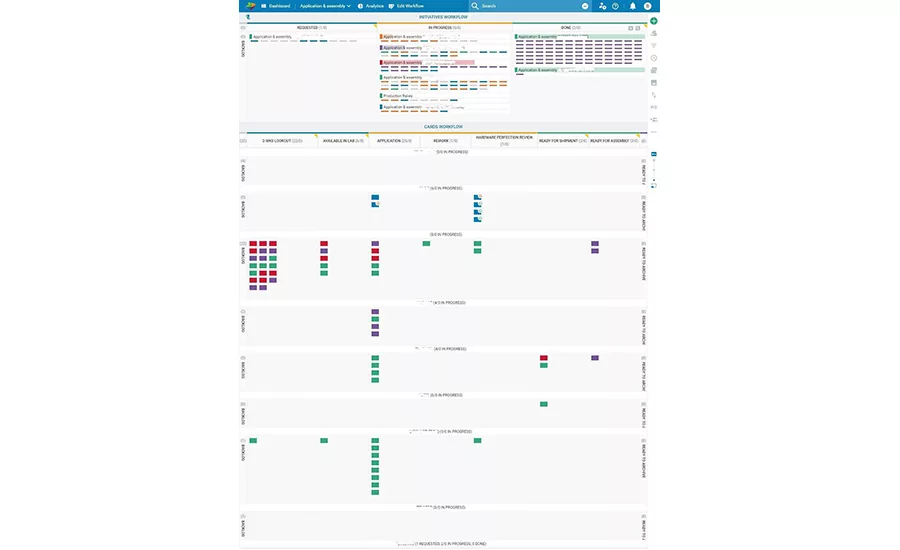
Figure 4. An application and assembly board.
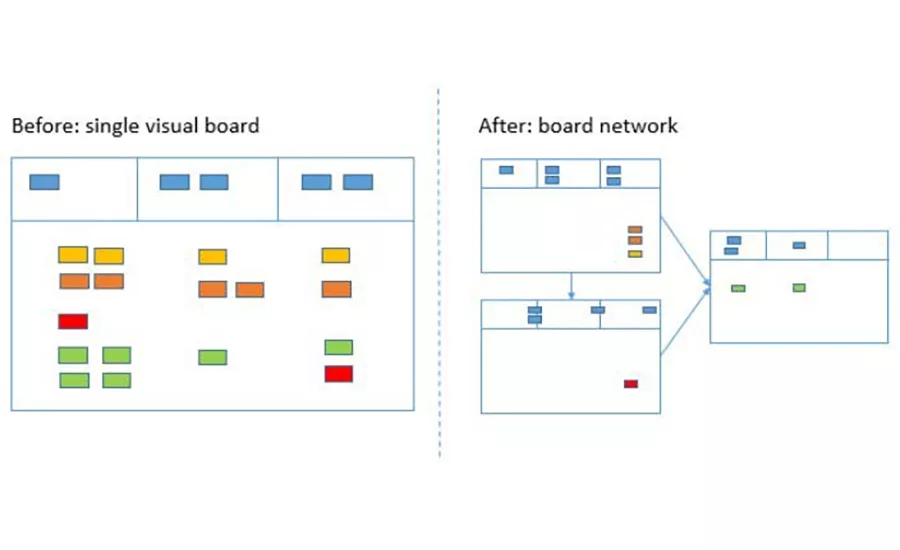
Figure 5. Defining workflows: single vs. multiple boards.
GE Aviation Czech (GEAC) is the Turboprop division of GE Aviation, a provider of aircraft engines and related components and systems. The company recently embarked in the development of Catalyst™, a clean- sheet engine in more than 30 years for the turboprop segment.
The end goal of the development program is to certify the new engine for commercial flights — a process that has involved hundreds of engineers over several years. They’ve worked closely together to manufacture, instrument, and assemble the very first engines before they go through draconian testing in specialized test centers.
To tell their story, we talk with the instrumentation project leader, Benoît Guillaud, to understand how he and his team managed to apply lean and agile principles in the world of hardware product development and how Kanbanize enabled transparency and efficient communication in the multi-million dollar instrumentation effort that spans 10 teams across eight countries.
Instrumentation boils down to installing thousands of sensors to measure the “health” of an engine, very much like doctors measure heart rate, blood pressure, or body temperature, to draw a diagnostic. The effort typically involves design work (choosing the right sensor and specifying engine modifications), procurement work (buying the sensors), and lab work (physically installing the sensors on the engine).
Structure, Goals, and Challenges
While GE Aviation has well-defined quality processes for new engine development, they tend to be tool- and program-agnostic. Inevitably, the Catalyst team needed to transpose these company processes into a working system tailored to the specific needs of the program. The challenge for the instrumentation team was to get their diverse network of internal and external partners to understand these processes and consistently apply them.
When they started the program, there was no tool in place to manage the workload, and it was difficult to understand what the team needed to prioritize and deliver over the following weeks. What's more, everyone in the newly formed team had a different interpretation of the processes they ought to follow.
While the program-level GANTT chart shows the roadmap to certification, Benoît explains that it gives little support to drive the day-to-day work.
“Any date on the GANTT is plus or minus one month to me,” said Benoît. “Adding more details to a GANTT is simply too tedious, and the chart gets too cluttered very quickly. Do more with fewer resources — this is what engineering teams have been facing for decades. I was looking for something that is efficient, and where I can actually see the flow of value.”
At first, the team kept the work going with lengthy Excel trackers and Powerpoint presentations for management communication.
“It was painful to maintain, and, somehow, the material was always out of date no matter how hard we tried,” recalled Benoît.
Their effort to take control started with Trello, where they set up two distinct boards: one for hands-on applications in the laboratory and one for everything else, including design and project management. Trello’s simple interface worked great as long as they had only one engine to deliver. It was very difficult to keep the Trello boards up to date without the automation and card links, so they were becoming overwhelming.
As the program ramped up, the team needed a more powerful tool to deliver several engines in parallel. At this time, the instrumentation project leader surveyed more than 10 online solutions and settled for Kanbanize due to the neat implementation of Swimlanes and Initiatives, which allowed them to cram a lot of data onto one board and easily slice them to see the tree from the forest.
Kanbanize Board Structure
The Catalyst instrumentation team set up three interconnected boards that visually represent the complete instrumentation value stream: design of a solution, procurement of sensors, and physical installation on the engine.
The first board we see (Figure 2) is for instrumentation design. The compact view allows them to see, at a glance, where the work piles up, which task is blocked, and which is a predecessor.
The next board is where the most work in Kanbanize happens - the Procurement board (Figure 3). There are two types of work there, hardware and service, that need to pass through the same stages. For both, the most time-consuming seems to be tracking, which we notice across all the industries as it depends on external parties.
The third board is the application and assembly board (Figure 4), where we can see a most complex structure. Each swimlane is a different lab and the color code is used to distinguish the types of work. In the portfolio lane, we see in a glance that there currently six engines (initiatives) in progress and the progress bar signals that the third is about to be ready first.
About the Solution
The board structure above was iterated over time. The team shared with us some of the learnings they picked up along the way.
Creating a network of boards allowed the team to tailor individual workflows that suit team preferences and the uniqueness of their work while still visualizing the entire value stream though card linking across the three boards.
Take for instance the instrumentation design board (Figure 2). For this type of work (highly iterative in nature), they found that a scrum-like framework is most appropriate and implemented accordingly in Kanbanize. By contrast, the work captured in the procurement and application boards is much more linear, and the team preferred to elicit the detailed steps.
Defining ‘Value’ — Initiatives, Cards, and Swimlanes
The team derived some simple rules for everyone to use the boards consistently. The most important is that each and every card on the boards has to represent an item of value: something tangible as opposed to a specific action. For example, a card can represent a drawing, but not “set up review meeting.”
“I want the team to think in terms of value,” said Benoît. “A review meeting, for instance, is just a means to an end, and no one will pay for it unless you release the drawing afterward. It's a subtle difference, but successful teams are outcome-driven, not action-driven.”
Taking this idea further, they decided that initiatives will be used across the boards to represent engines because the program wants to see instrumented engines ready for testing. In each board, they easily visualize all the work related to a given engine since the cards are linked to the initiative as child cards that can be filtered in one click.
Swimlanes are convenient to quickly visualize some relevant information. There were no specific instructions to set up the swimlanes consistently across the teams. Their definition was left to each board owner, who sometimes split by type of work (e.g. class of drawing), sometimes by the team (e.g. instrumentation laboratory).
Key to Success: Tool, People, and Operating Rhythm
A good tool is essential to success. The adoption rate of Kanbanize was high in the instrumentation team because the software is user-friendly and yet packed with features to cater to specific needs.
Beyond the tool, Benoît found that the key to success (and arguably the biggest challenge) is to build a team that behaves like one, i.e., with a common understanding of how work gets done. His tip to engage people and build a common culture is to give ownership of the boards. In their case, each board has a different owner responsible for the setup of the board (e.g., workflow details), but individuals are encouraged to curate the work items under their responsibility and suggest improvements. Looking back, Kanbanize supported the team through its continuous improvement journey:
- At first, boards were used only to build a backlog of work;
- Later on, the team used the workflow editor to implement the company processes and project-specific processes; and
- Over time, they also baked in the board simple “Definition of Ready” and “Definition of Done” checklists.
Having explicit rules directly on the board (not in a 200-page company process book) really help to build a common culture when the team members come from different backgrounds.
“Initially, I just want to track my deliverables, but mapping the workflow had a completely unintended, yet amazing effect: The team built a common understanding of how work gets done.”
Finally, the team formalized an operating rhythm to orchestrate the actual work. They defined for instance:
- When the boards should be populated with new cards (backlog is created when the scope is 80% known, then refined over time);
- When the cards are prioritized (weekly prioritization in a dedicated meeting);
- How often existing cards should be updated (daily for cards “in-progress,” using card block to highlight issues); and
- How often the boards are monitored to spot any bottleneck and ensure flow by removing roadblocks (daily at a team level with weekly escalation to the leadership team).
One feature that really simplifies the operating rhythm is card block in conjunction with a business rule to automatically block a parent card. It helps focus the team on resolving issues as soon as possible, while the analysis of block reasons can support process improvements.
Achievements
The benefits that we observe within the instrumentation team were astonishing. The first thing they focused on during our discussion is higher personal productivity. Benoît states that now one person does the work of three people from the days before Kanbanize.
This is made possible because Kanbanize supported the establishment of a lean culture in the newly formed team:
- They learned to define value from the customer's standpoint and deliver value, not just close actions; and
- They mapped their workflow themselves to easily visualize bottlenecks and take action to improve the flow of value. In the procurement process, for instance, the slowest part was “waiting for offers” as it included tracking and collecting feedback. This discovery triggered positive communication between teams as everyone is looking at reality from the same angle without bias, and together they reduced the cycle time.
For the project manager, it’s extremely valuable that Kanbanize bridges the gap between the abstract project plan and the day-to-day work.
They share that now nothing falls through the cracks: Work may be postponed, but nothing gets forgotten.
Moreover, due to the huge amount of data the Kanbanize gathers and processes, they are willing to use it to become more predictable. This will also allow them to use the data when planning for another project when they don’t have it a priority.
Final Thoughts
This case study illustrates that lean and agile principles apply beyond manufacturing and software development. Benoît demonstrated that they can successfully translate in hardware product development too, even as they span across several years. Kanban is linear, and the aviation industry is nothing but linear. Benoît has managed to reinvent the way the program works with the help of Kanbanize and incorporate all of the Kanban principles and practices into the process.
Looking for a reprint of this article?
From high-res PDFs to custom plaques, order your copy today!