Reopening K-12 School Buildings After an Extended Shutdown

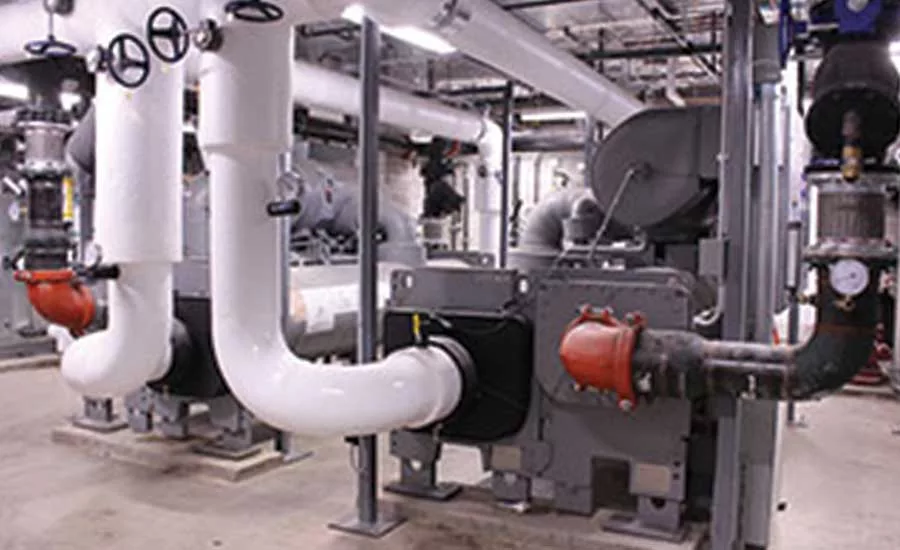
With COVID-19 concerns and the changing environment, we know that schools are adapting HVAC system operations to protect the health and safety of their employees, staff, and students. The following is meant to provide helpful information to school district facility managers, administrators, and maintenance technicians to prepare school buildings to re-open after an extended period of shutdown.
Re-opening Buildings: Determine Building Readiness
- Confirm that all scheduled maintenance has been performed;
- Inspect spaces to identify any potential concerns for water leaks or mold growth;
- Verify that all HVAC equipment and control systems are completely operational and functioning properly. Don’t overlook exhaust fans; it is critical that all exhaust fans are working properly in order for the school’s ventilation systems to be effective;
- Consider eliminating the use of portable box fans that may recirculate infectious aerosols within the space. If fans are removed, take steps to prevent heat hazards;
- Inspect rotary energy recovery wheels and eliminate air leakage from the exhaust side to the supply side to reduce the potential for cross contamination;
- Confirm filters are installed correctly and are clean; and
- Ensure supply chain for critical items, such as filters.
Building Automation Systems
- Check for alarms, overridden points, or locked points;
- Determine why any points or systems are in alarm, have been overridden, or locked at a specific setting;
- Release or remove the overrides or locked points, where appropriate;
- Return the building to normal operating schedules;
- Verify the accuracy and calibration of key sensors, such as temperature, relative humidity, building pressure, etc.;
- Consider an update to the programming that would incorporate HVAC strategies to reduce infectious disease transmission prior to future events. Automate these control sequence operations such that an “Epidemic Mode” command can be manually selected by the operator; and
- If higher MERV filters have been installed in air-handling units, consider adding filter differential pressure sensors to more accurately monitor filter loading and for scheduling filter change-outs.
Readiness for Occupancy
- Perform 100% outdoor air building flush for four hours;
- Operate building HVAC systems under normal schedules for a minimum of one week prior to the students returning. This may be completed at the same time as teachers start returning to the building;
- Monitor building conditions to ensure that acceptable space temperature and humidity levels are not exceeded; and
- Verify the proper operation of all systems.
Operating School Buildings During an Infectious Disease Crisis
There is a broad variation of complexity, flexibility, age, and condition of HVAC systems in educational facilities. Consequently, any enhancements or modifications to equipment, systems, or operations must be thoroughly analyzed by a qualified individual to ensure that they do not adversely affect the building environment. We recognize every school district is different. It may not be practical to implement some or all the recommendations, so it is incumbent upon school officials to utilize an integrated approach (considering cost, benefit, energy usage impact, maintenance, etc.) when evaluating each recommendation.
Ventilation Recommendations
- Action 1: Disable Demand Control Ventilation1.
- Action 2: Increase outdoor air ventilation rates as much as possible to maximize dilution of the return airstream1,2. Investigate existing equipment functionality and capacities to identify the maximum amounts allowable to ensure temperature, humidity, and building pressurization problems do not develop.
- Action 3: Install localized exhaust systems for source control in high risk areas. Examples of high-risk areas include a nurse’s clinic or special needs classroom3. This will require design engineering along with a potential for significant costs. It may not be a viable option for many buildings.
- ASHRAE Guidance for Building Operations During the COVID-19 Pandemic (3/24/2020)
- CDC - Interim Guidance for Businesses and Employers to Plan and Respond to COVID-19 (3/21/2020)
- ASHRAE Position Document on Infectious Aerosols (4/14/2020)
Filtration Recommendations
- Action 1: Change filters and clean coils, drain pans, and the interior of air-handling units according to the manufacturer’s instructions1. Utilize proper PPE.
- Action 2: Install filters with increased efficiencies and enhanced particle filtration capability to the greatest extent possible, considering the limitation of the existing air-handling equipment2. Investigate the capability of the existing air-handling equipment to accept deeper filters along with the fan capacities to accommodate the increased static pressures.
- Action 3: Install portable, free-standing high-efficiency particulate air (HEPA) filters with integral fans (portable room air cleaners) in high risk areas2.
- Action 4: Seal edges of filter racks3. Consult the filter rack manufacturer’s recommendations for acceptable materials and methods to employ.
- ASHRAE Epidemic Task Force - Checklist for School IAQ Operations (4/15/2020)
- ASHRAE Position Document on Infectious Aerosols (4/14/2020)
- ASHRAE Guidance for Building Operations During the COVID-19 Pandemic (3/24/2020)
Temperature Recommendations
- Action 1: Maintain standard comfort conditions during occupied periods and standard setback/setup unoccupied space temperatures1.
- ASHRAE Epidemic Task Force - Checklist for School IAQ Operations (4/15/2020)
Humidity Recommendations
- Action 1: Maintain space relative humidity (RH) between 40%-60%. Scientific literature generally reflects the most unfavorable survival for microorganisms when the RH is between 40%-60%1. Consider the addition of humidification equipment only when reviewed by a design professional to verify minimum RH set points will not adversely impact building or occupants by contributing to condensation and possible biological growth.
- ASHRAE Position Document on Infectious Aerosols (4/14/2020)
Controls Recommendation
- Action 1: Keep systems running longer hours to enhance the effects of increased ventilation and filtration1. Investigation is required to ensure that this measure will not cause relative humidity problems.
- ASHRAE Guidance for Building Operations During the COVID-19 Pandemic (3/24/2020)
UVGI Statement
- Action 1: While UV light (specifically UV-C) has been well studied in infection reduction, no definitive science is available regarding its effect on COVID-19. Therefore, no COVID-19 recommendation can be made at this time1. UV lighting systems have been installed in air-handling units to improve air quality by reducing certain viruses and bacteria and also reducing the amount of microbial growth (such as mold) on cooling coils and drain pans. UV-C is harmful to all organic matter, including humans. Safety and maintenance issues must be addressed.
- ASHRAE Position Document on Infectious Aerosols (4/14/2020)
For more information, visit www.performanceservices.com.
Looking for a reprint of this article?
From high-res PDFs to custom plaques, order your copy today!