When Specifying Boilers, Design Details Matter
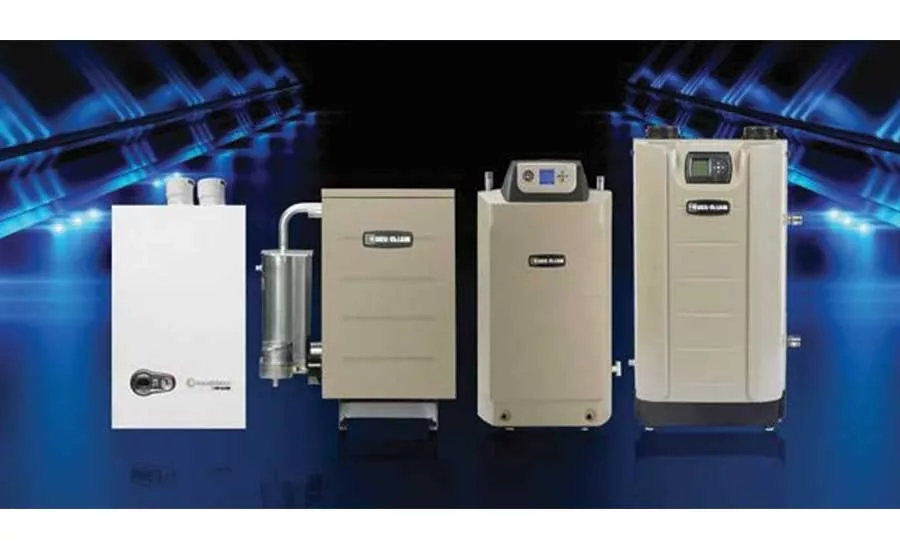
Whether for a single-family home, large-scale apartment complex, or commercial or industrial facility, installing a boiler system is a significant investment requiring thoughtful consideration to ensure heating comfort, reliability, and efficiency for years to come. Building owners, facility managers, engineers, and contractors seek systems that meet specification requirements, installation ease, serviceability, reliability, lower operating costs, and higher performance. Once these major parameters are met, buyers also should consider design details that may set one boiler apart from another.
Installation Ease
The installation process can significantly impact the overall cost of any new boiler system. Look for a boiler with design features that aid in simplifying the installation process, thus saving time and money.
Boilers with a “door-fit” design are ideal for applications that have limited access. Not having to tear out a wall or door frame can save thousands in installation expense. Likewise, boiler room floor space is always at a premium, so zero-clearance boiler designs where boilers can be placed side by side with minimal clearance is also desired. The key here is that the boiler still remains serviceable.
Sometimes getting a forklift at the installation site is harder than one would think. Smart packaging and mobile design features that mitigate this need should be a purchase target. Integrated unloading ramps that come as part of the shipping container make the unpacking process quick and easy. Couple this feature with integrated roller casters, and the boiler rolls on to the site and is easily positioned into place. If the boiler install includes a concrete pad, the shipping ramp can be used to move the boiler on to the pad as well.
Having a correctly leveled surface is a prerequisite to proper boiler operation and performance. Boiler designs with integrated leveling legs perfectly level the area. Simply position the boiler in place and adjust the leveling legs, which are very similar to the leveling legs on a household appliance but are industrial grade to support the weight of the boiler.
There are a variety of boiler controls on the market that offer varying setup processes and functionality, ranging from simple to complex. An integrated control system that offers a user-friendly setup wizard with intuitive controls will simplify the installation process for contractors.
Multiple pre-set systems are another popular boiler control feature. These units feature pre-set heating systems for typical operating conditions built into the controller, so installers don’t have to enter specific supply or return temperatures during installation but rather a specific application that reduces installation costs and time while increasing reliability.
Usability
Simple, user-friendly controls also are essential for efficient boiler operation long after setup is complete. Whether managing a single boiler or a system of boilers, contractors must understand how to leverage system features to optimize performance.
In a multiple boiler system, user controls will manage multiple units to deliver the desired heat and adapt accordingly as the environment changes. For variable primary flow and hybrid boiler system applications, specifically, it is important for user controls to offer configurability between different products and technologies. If one boiler in a system goes down, the unified controls will communicate across the units and vary output to adjust for the loss.
With a straightforward interface and simple navigation, contractors should seek controls that provide at-a-glance boiler status, diagnostics, troubleshooting, and integration with building automation systems. The right control system will fluidly connect different boilers to work synchronously and ensure the highest level of performance and efficiency.
Similarly, when expanding a boiler system, controls that maximize energy across all boilers on a system reduces energy costs. Weil-McLain’s SmartSequencing™, for example, controls an algorithm that runs as many boilers as possible at the minimum input, therefore maximizing efficiency. With this advanced control feature, boilers maintain optimal efficiency through lead-lag rotation and balanced heat loading.
Maintenance and Serviceability
Boilers must be well maintained for their benefits to be fully optimized, and the design of a boiler can have a significant impact on its serviceability over time. Proper inspection and regular native maintenance are vital to ensure uninterrupted, reliable, and safe boiler operation. Therefore, contractors will appreciate boilers designed to make annual servicing easier.
Tasks such as cleaning heat exchangers, replacing worn out components, adjusting air fuel mixture, adjusting combustion controls, and maintaining water PH balance will improve boiler efficiency and reduce costly failures while extending the life cycle of the unit. Easy access to boiler components will make it easier for contractors to complete these and other critical maintenance activities that support a high-performing unit.
Something as simple as selecting a boiler with a hinged cover plate can make the inspection and regular wash-down process easier. In these designs, the hinged cover plate can be safely propped open like the hood of a car, granting quick access to the center of the boiler, including the burner and firetubes, for inspection or cleaning. This is especially useful in more compact boiler locations, where overhead space is limited.
In addition, consider a design with a serviceable condensate tray that collects condensation during combustion. A boiler designed with a replaceable condensate tray allows for a vulnerable part of the unit to be swapped out quickly and efficiently before an expensive impact to the entire heat exchanger occurs. This improves the longevity of the boiler and reduces maintenance costs considerably.
Efficiency
Commercial-sized boilers are rated according to thermal efficiency, which is the measurement of output heat from the boiler that is transferred into the overall heating system. Higher efficiency boilers offer the most by reducing annual fuel consumption and capturing energy cost savings. Reputable boiler manufacturers are rated and listed by the Air Conditioning, Heating, and Refrigeration Institute (AHRI), which is a North American trade association of manufacturers of air conditioning, heating, and commercial refrigeration equipment.
Opting for a higher-efficiency boiler will result in significant fuel savings for customers, particularly when replacing an older system with a much lower efficiency rating — such as upgrading from 80% thermal efficiency design to 95% or higher. Boilers can account for about 55% of annual energy bills, and building owners with high-efficiency boiler systems often report energy cost savings up to 25% or more on their heating expenses. In addition, many regions offer efficiency rebates for installing high-efficiency boiler systems.
With more boilers on the market offering similar functionality and performance metrics, it can be difficult to differentiate which design is the best for each application. All the particulars that impact a boiler’s installation, including usability, serviceability, and efficiency, can set the superior unit apart from the rest of the field, showcasing a design developed specifically with contractors’ needs in mind. The smallest design details may have the greatest impact on a boiler’s value and performance over time, so choose wisely.
Looking for a reprint of this article?
From high-res PDFs to custom plaques, order your copy today!