Life Safety Dampers: Types and Applications
The differences between dampers and the control system requirements affecting their applications.
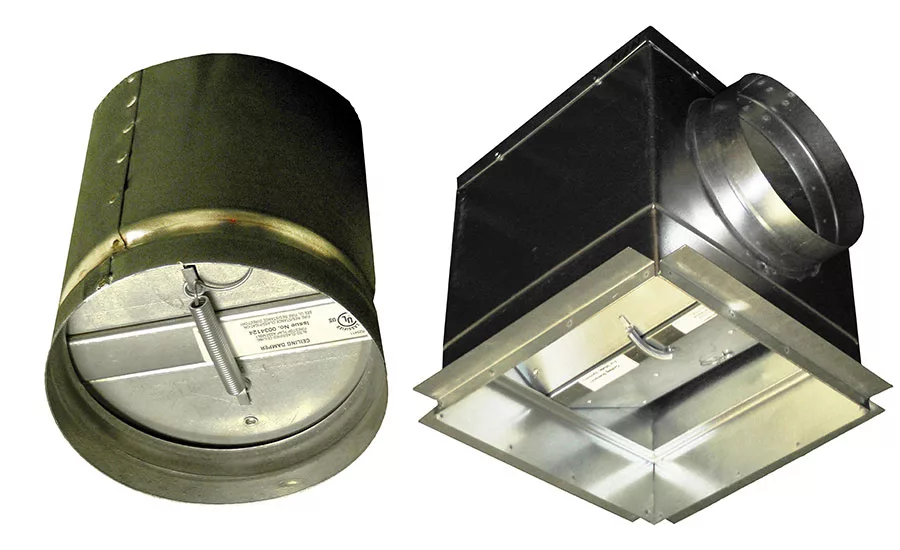
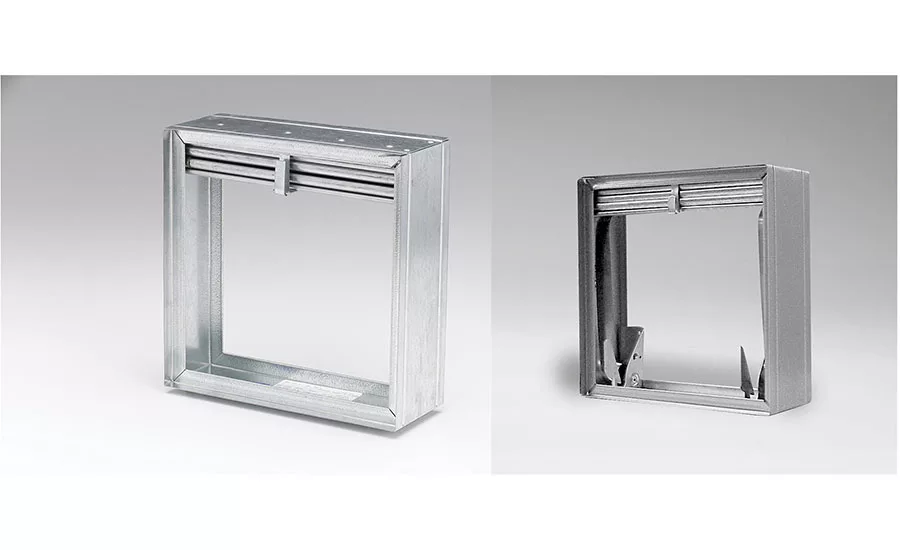
FIGURE 2. Curtain fire dampers.
(Photographs courtesy of Ruskin Co.)
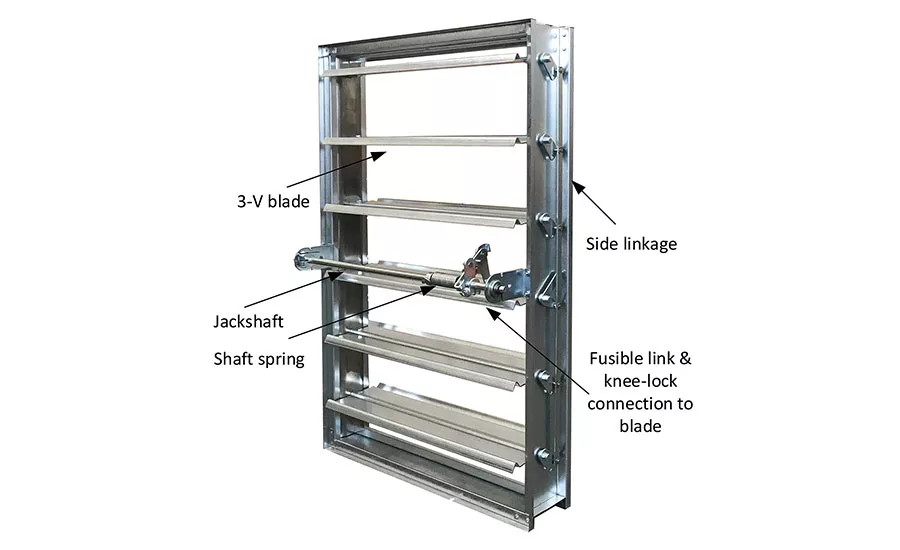
FIGURE 3. A multi-blade fire damper.
(Photograph courtesy of Pottorff.)
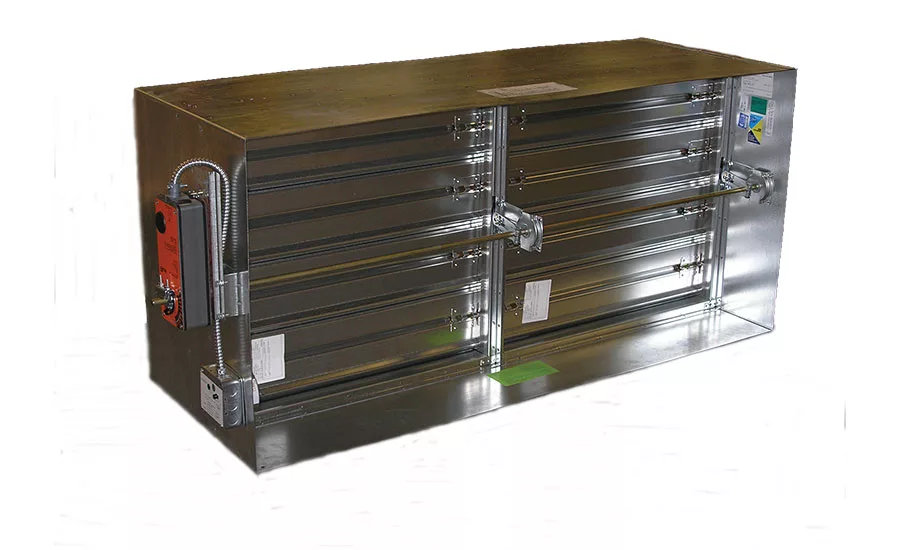
FIGURE 4. A multi-section fire damper with actuator.
(Photograph courtesy of Greenheck.)
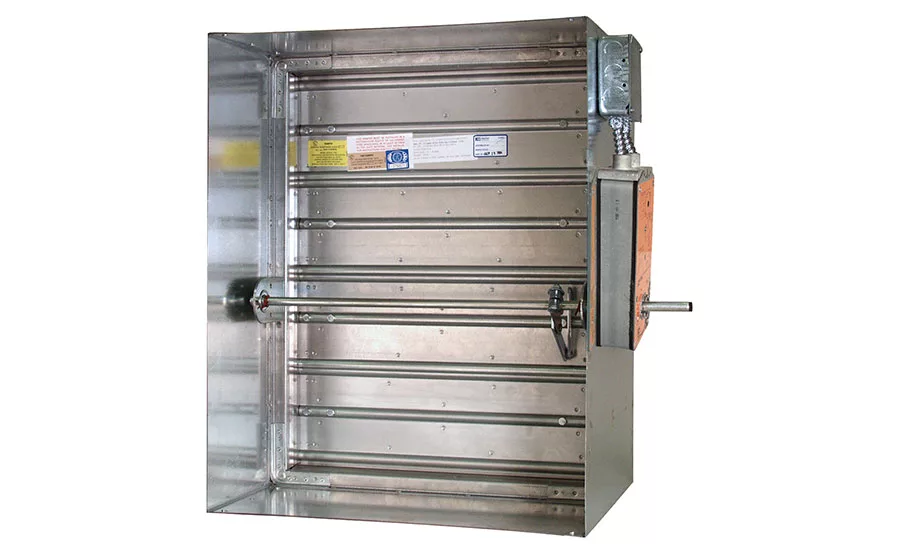
FIGURE 5. A smoke control damper.
(Photograph courtesy Nailor Industries.)
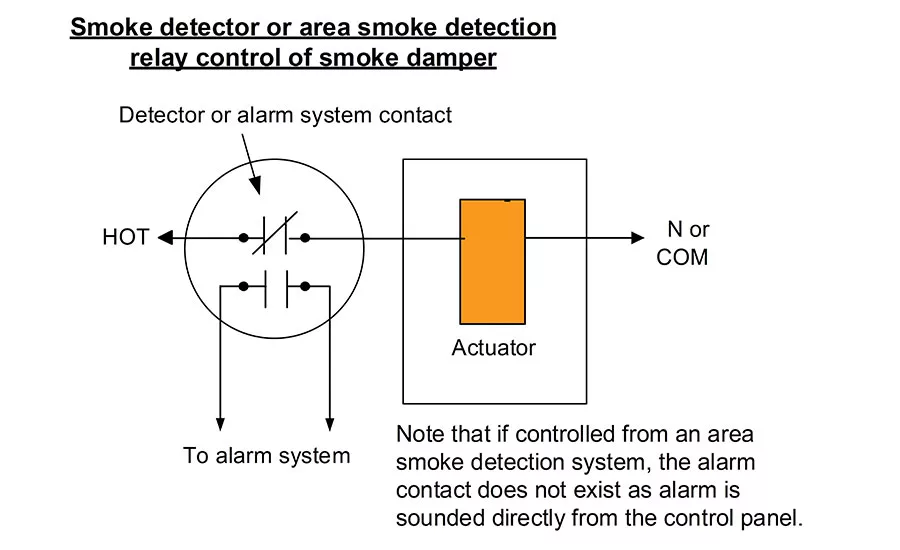
FIGURE 6. A smoke damper control – Chapter 7.
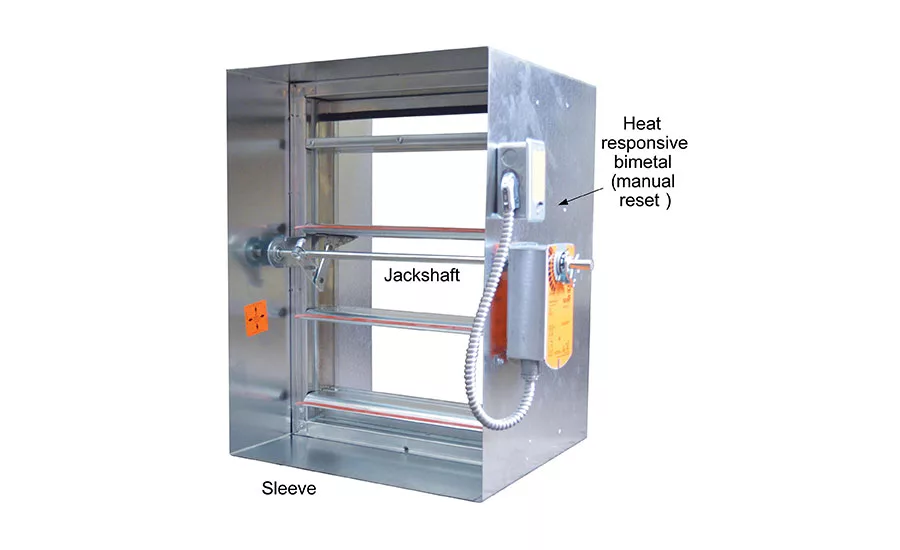
FIGURE 7. A combination fire and smoke damper.
(Photograph courtesy Pottorff.)
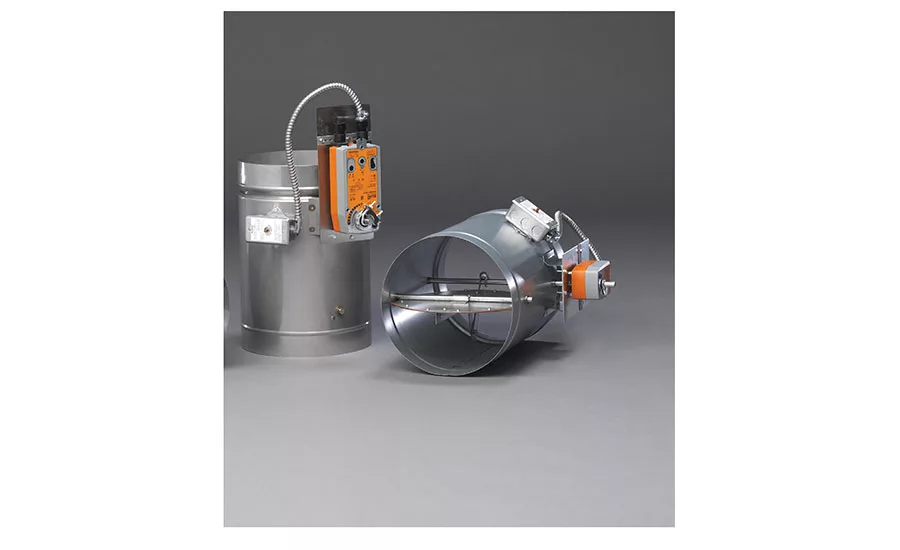
FIGURE 8. Round fire and smoke combination dampers.
(Photograph courtesy Ruskin Company.)
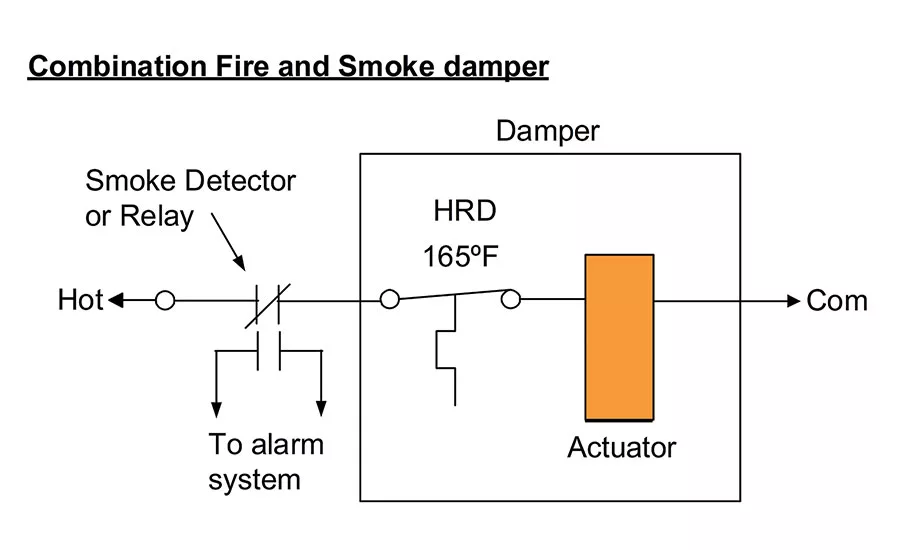
FIGURE 9. A combination damper control – Chapter 7.
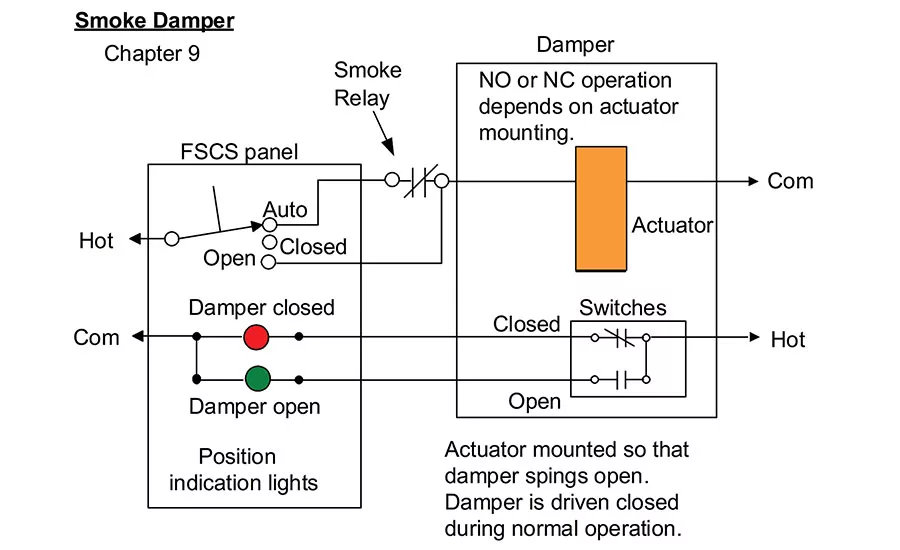
FIGURE 10. A smoke damper connected to an FSCS panel.
Chapter 7 of the International Building Code (IBC)1 requires life safety dampers to protect duct and air transfer openings within building separations — fire walls, fire barriers, fire partitions, horizontal assemblies, smoke barriers, and smoke partitions. It also focuses on compartmentation and the dampers used to prevent the spread of heat, fire, and smoke as they contain products of combustion. Chapter 9 of the IBC contains requirements for engineered smoke control system dampers. These are more varied in use, as they could be normally closed then opened to provide makeup air for atria, opened to pressurize a space to prevent smoke movement, or opened to exhaust smoke.
There is frequent confusion about the types of dampers and their applications. This article explains the differences among the damper types and provides a brief overview of the control system requirements affecting their applications.
There are five essential dampers types: ceiling radiation, fire, corridor dampers, smoke, and combination fire and smoke. This article will cover the three types that are required per Chapter 7 of the IBC and two additional damper types that are required in applications both in Chapter 7 and Chapter 9.
Life safety dampers are required by the codes to be certified to the appropriate standard in the UL 555 family2. UL does not investigate these dampers to UL 8643, the fire alarm standard. Roughly half of life safety dampers are installed in air-moving plenums. Section 303.22(c) of the National Electrical Code4 and Section 602.2 of the International Mechanical Code5 require that any flammable device installed in an air-moving plenum be tested to UL 20436 for low smoke generation. As actuators have internal components that are flammable, they must meet the requirements of UL 2043 if installed in a plenum.
Ceiling Radiation Dampers
Ceiling dampers prevent radiant heat transfer between the occupied spaces and entrances into supply and return ducts, ceiling-floor voids, or ceiling-roof voids. While smoke and flames may be restricted, the dampers are not tested for that purpose. Ceiling dampers close when a spring is released by a fusible link, which melts at 165°F (74°C). The blades then close to seal the opening. Figure 1 shows several types of radiation dampers.
Fire Dampers
Fire dampers prevent the passage of flames. They may restrict radiant heat transfer and smoke passage by obstruction, but they are not tested for those purposes. They are held open by a fusible link, which melts at a predetermined temperature, most commonly 165°F (74°C). There are four common types:
a. Vertical static curtain fire dampers: Gravity pulls the blades closed if the link melts so that it no longer holds them open. See Figure 2.
b. Horizontal curtain fire dampers: These are spring-loaded to pull the curtain blades closed.
c. Vertical or horizontal dynamic fire dampers: Dynamic dampers must close against air pressure as the fan may still be on. Therefore, whether vertical or horizontal, a spring pulls them closed if the fusible link melts. See Figure 2.
d. Single- or multi-blade fire dampers: These are heavier duty than curtain dampers and can be applied horizontally or vertically. Most have a shaft spring that is held from closing the blades by a fusible link. See Figure 3.
In the Americas, about 1% of large and multi-section fire dampers use an actuator to drive open and spring closed. See Figure 4. A bimetal temperature limit (heat responsive device in UL’s parlance) is in the 4-by-4-inch electrical box at the bottom left portion of the damper sleeve. If it heats up above its specified temperature, contacts open to remove power to the actuator, which then springs the damper closed.
Corridor Dampers
Corridor dampers are used where air ducts penetrate horizontal openings in fire-resistance-rated corridors. They are combination fire and smoke dampers. The difference is that they are sleeved to fit in ceilings and tested at a lower air velocity than combination dampers. Corridor damper requirements are given in Chapter 7 of the IBC, as they serve to contain smoke.
IBC Code
Chapters 3 and 4 of the IBC define occupancy types and what measures must be taken to maintain separations and where engineered smoke control systems must be applied. Chapter 7 of the IBC defines how separations are to be protected. It is in Chapter 7 that requirements for radiation, fire, and corridor dampers are found.
Chapter 7 also requires smoke dampers in smoke barriers and partitions. Chapter 9 defines smoke control system requirements. Dampers are an integral component along with fans in these systems. The controls are more sophisticated than those meeting Chapter 7 requirements.
Smoke Dampers
Smoke dampers resist the spread of smoke in HVAC systems (Chapter 7 of the IBC) and assist in the control of pressure differentials in engineered smoke control systems (Chapter 9 of the IBC). See Figure 5 for an example damper.
Smoke dampers do not have a heat-responsive high limit and are not tested for fire resistance, so they may be constructed of aluminum, while fire or combination dampers are typically steel.
In Chapter 7, containment applications, area smoke control, or duct smoke detectors remove power to the actuator to spring the damper closed. See Figure 6. While we have a mechanical method of sensing heat (the fusible link or a bimetal), we have only electric methods of sensing smoke. Thus smoke dampers are always actuated.
Combination Fire and Smoke Dampers
Smoke and combination fire and smoke dampers are required in various sections of both Chapter 7 to maintain compartmentation and Chapter 9 for engineered smoke control systems. The damper construction is the same, but the controls are different.
Roughly 98% of installed dampers are two-position drive open (closed), spring closed (open). A small percentage use modulating actuators for temperature control, pressure control, or system balancing. These are not covered here.
Combination dampers allow one damper to do the functions that once required two. Most smoke separations are also required to be fire-rated. Figure 7 shows a rectangular damper, and Figure 8 shows round variations. Corridor dampers are combination fire and smoke dampers tested horizontally at low velocity; they are sleeved for ceiling installation.
There are a number of functional variations among the dampers. Blades may be flat, triple-V, or air foil. A variety of seals are available. Different leakage classes and temperature ranges are available. Front access grilles and other mounting arrangements are available. See damper manufacturer websites for further information.
Figure 9 shows the controls and wiring on a Chapter 7 combination damper. Where in Figure 6, only a smoke detector controls the damper, now there is also a high-temperature limit referred to as a heat responsive device (HRD) by UL. It is a manual reset bimetal. If smoke is detected, or if the temperature at the damper rises to a dangerous level, then the actuator springs the damper closed.
Chapter 9 – Engineered Smoke Control
The construction of dampers used for Chapter 7 and Chapter 9 are the same, though the controls differ. Chapter 7 dampers are not connected to the Firefighters’ Smoke Control System (FSCS), whereas those for Chapter 9 are. This is the primary difference. Smoke detectors, not the dampers, are connected to the fire alarm system (if present) in Chapter 7 applications as shown in Figure 6.
Chapter 9 systems have various allowable methods for detection and control based on the requirements of the engineered smoke control system. Dampers may be opened (and fans on) only to provide exhaust or makeup air. Most dampers close to prevent smoke spread but may be reopened to pressurize a space to prevent smoke movement into the space. The variations are beyond the scope of this article.
The Chapter 9 damper can be overridden open, closed, or left in the automatic position. The damper has position indication switches, and the FSCS panel has lights to indicate status. See Figure 10.
The incident commander can control the damper from a selector switch. In Auto mode, the smoke detector relay can open or close the damper by applying power or removing it. If the selector switch is set to close, power is removed from the actuator, and the damper springs closed. If the smoke detector has closed the damper, it can be reopened if the bypass is powered. The indicator lights allow the open or closed position to be determined from the FSCS panel.
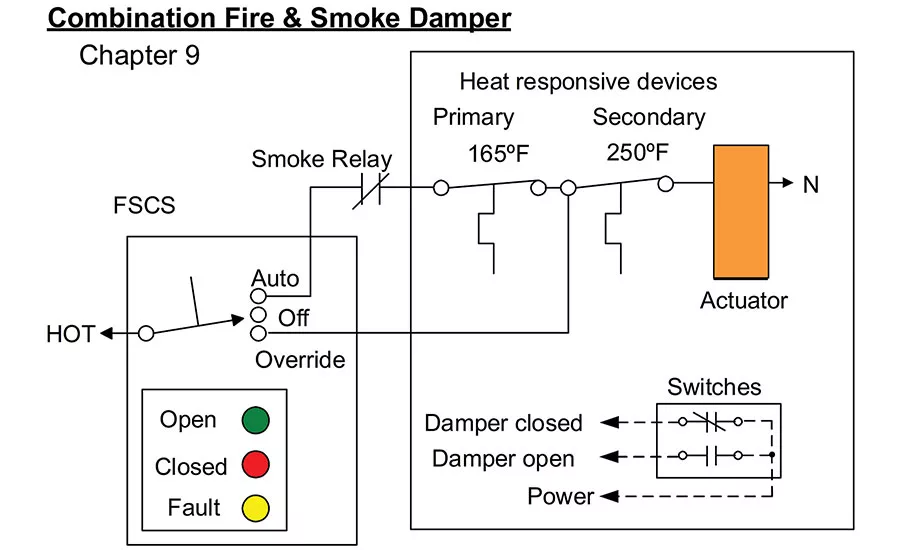
A common application is shown in Figure 11. This is a “re-openable” damper. If the smoke relay has opened its contact or if the temperature at the damper has reached 165°F (74°C) and the HRD has opened, then the actuator springs the damper closed.
The incident commander can override the damper open. However, if the temperature rises to 250°F (or 350°F if the fire protection engineer has specified that), then the secondary HRD contact opens and the damper closes and cannot be reopened until the HRD reset buttons are depressed.
Summary
Smoke and combination fire and smoke dampers are required by Chapter 7 of the IBC to maintain compartmentation and prevent the spread of smoke. Chapter 9 of the IBC defines requirements for smoke control systems. Along with fans and associated ducts, smoke and combination dampers assist in control.
The primary difference between the two chapters’ requirements is that smoke control dampers are connected to the FSCS panel while Chapter 7 dampers are not. The FSCS panel has override switches and status indicator lights that give the damper’s open or closed position.
Looking for a reprint of this article?
From high-res PDFs to custom plaques, order your copy today!