Five Maintenance Tasks Eliminated When Using Oil-Free Chillers
Oil-free compressor technology offers significant benefits in terms of efficiency and performance. Eliminating oil from the system can yield up to 40% improvement in part-load efficiency compared to fixed-speed screw compressors. And, this performance improvement can be sustained over the life of the compressor, since oil-free compressors incur no mechanical wear during operation.
While long-term performance is a key advantage, there are additional benefits of oil-free compressor technology in terms of maintenance. Removing oil from the chiller system results in a simplified chiller design that eliminates frequent maintenance tasks required on traditional oiled chiller systems.
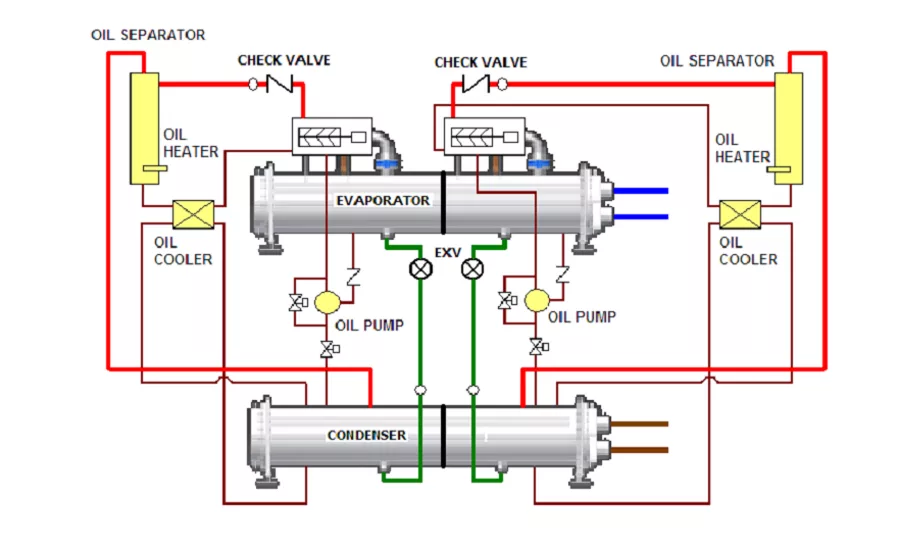
A chiller with an oil management system adds a significant number of additional components and design complexity to the system. A typical oil management system includes components such as an oil separator, which separates the oil from the refrigerant; oil cooler, which reduces the temperature of the oil because hot oil loses some of its lubrication properties; oil heater, which boils off refrigerant from the oil to prevent dilution; and an oil pump, which circulates the oil through the system.
A chiller using oil-free compressor technology, however, has significantly fewer mechanical components and design complexity, since all the components associated with the oil management system are eliminated. This results in reduced maintenance and higher reliability over the life of the chiller.
The following five maintenance tasks are required on traditional oiled chillers but no longer required on oil-free chiller systems:
1. Check the Oil Level — Frequency: daily. Maintaining the correct oil level is one of the most critical tasks on a traditional oiled chiller system. Similar to a car with an internal combustion engine, improper oil levels can have catastrophic consequences to the reliability of the chiller. Low oil levels can result in damage to the bearings and motor shaft while excess oil can significantly degrade the efficiency of the chiller. In fact, an independent study conducted by ASHRAE Research Project 751-RP found that the majority of chillers installed in the field have excess oil beyond the recommended charge levels which further degrades performance. This task is not required on oil-free chiller systems.
2. Change the Oil — Frequency: annually. Changing the oil on a regular basis is necessary to ensure the quality and reliability of the oil is maintained. Oil that is contaminated with foreign objects can result in significant damage to the compressor. This can typically cost $1,600, excluding disposal fees. This task is not required in oil-free chiller systems.
3. Replacing the Oil Filter — Frequency: biannually. An oil filter is required on a traditional oiled chiller system to filter contaminants in the oil circulating in the system. A clogged oil filter will prevent oil circulation in the system and can result in foreign objects damaging the compressor. This typically costs $1,000 per replacement. This task is not required in oil-free chiller systems.
4. Inspect and Maintain Key Components on Oil Management System (Oil Pump, Oil Sump Heater) — Frequency: weekly. There are many critical components in an oil management system needed to ensure proper oil circulation. An oil pump is necessary to ensure oil that collects in the heat exchangers and oil separator is delivered back to the compressor bearings. In addition, as oil mixes with refrigerant, it’s important that excess refrigerant is removed from the refrigerant/oil mixture to ensure only oil is sent back to the compressor. This removal of refrigerant from the oil is performed by the sump heater. Any failure by these two components will prevent oil from returning to the compressor and can result in significant damage to the compressor. This task is not required in oil-free chiller systems.
5. Conduct an Oil Analysis — Frequency: annually. An oil analysis is required on traditional oiled chillers to determine the condition of the oil and if any metal objects have contaminated the system. Metal object contamination in oil-free systems are significantly reduced as there is no metal-to-metal contact for any of the internal components of the compressor. This typically costs $50 for each analysis. This task is not required in oil-free chiller systems.
Conclusion
Eliminating oil from the chiller improves performance and reduces maintenance, saving up to $3,650 in annual maintenance costs associated with maintaining the complex oil management system. Considering that a chiller can expect to have a life expectancy of 23 years, this can result in $83,950 in lifetime maintenance cost savings.
When you consider both performance and maintenance, oil-free compressors offer clear advantages over traditional oiled compressors in both areas. The performance improvement and maintenance cost savings for oil-free compressors result in the lowest overall total cost of ownership of any chiller in the industry today.
Looking for a reprint of this article?
From high-res PDFs to custom plaques, order your copy today!