Today's Boiler
Selective Catalytic Reduction for Temporary Boiler Applications
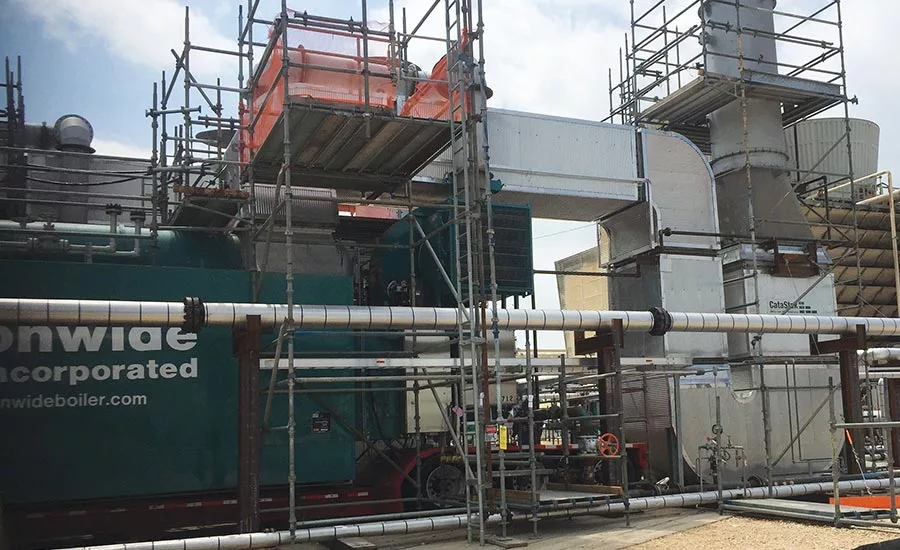
A 75,000 lb./hr. superheated steam rental boiler installed with a ground-mounted, urea-based SCR system.
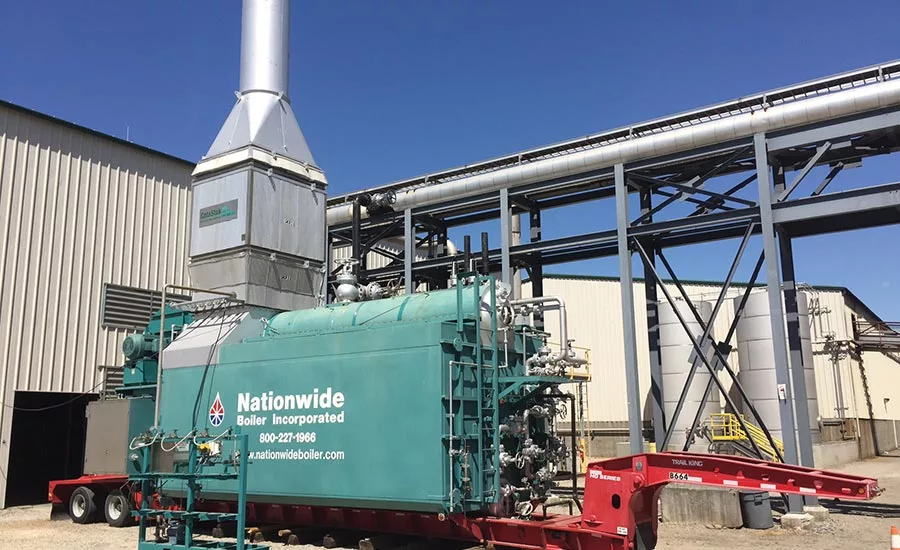
A 77,000 lb./hr. trailer-mounted saturated steam rental boiler installed with an anhydrous ammonia SCR system – no structure required.
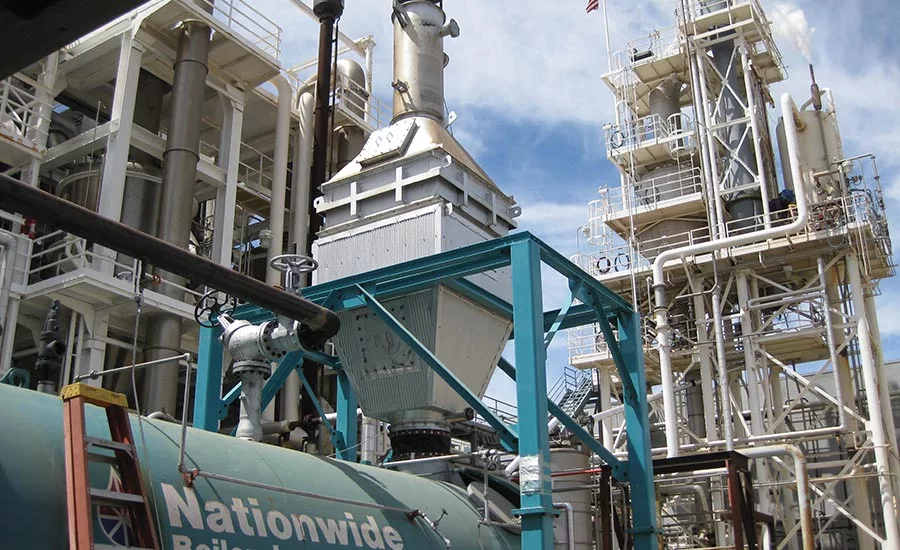
A firetube boiler with an SCR system rental.

Multiple ground-mounted rental SCR systems installed on 75,000 lb./hr. superheated steam rental boilers.

This 110,000 lb./hr. trailer-mounted superheated steam boiler is recognized as one of the world’s largest. It is installed with a urea-based SCR system, economizer, and support structure.
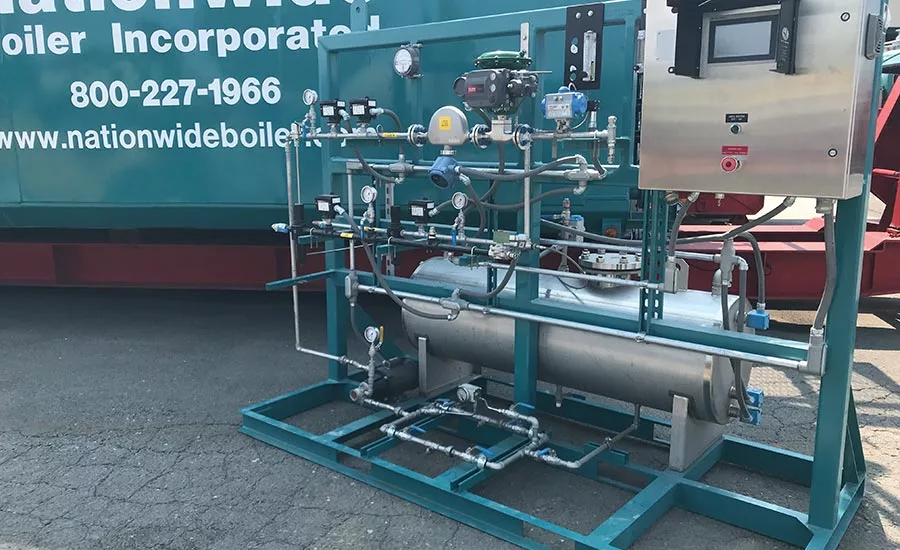
A urea supply skid for a temporary SCR system.
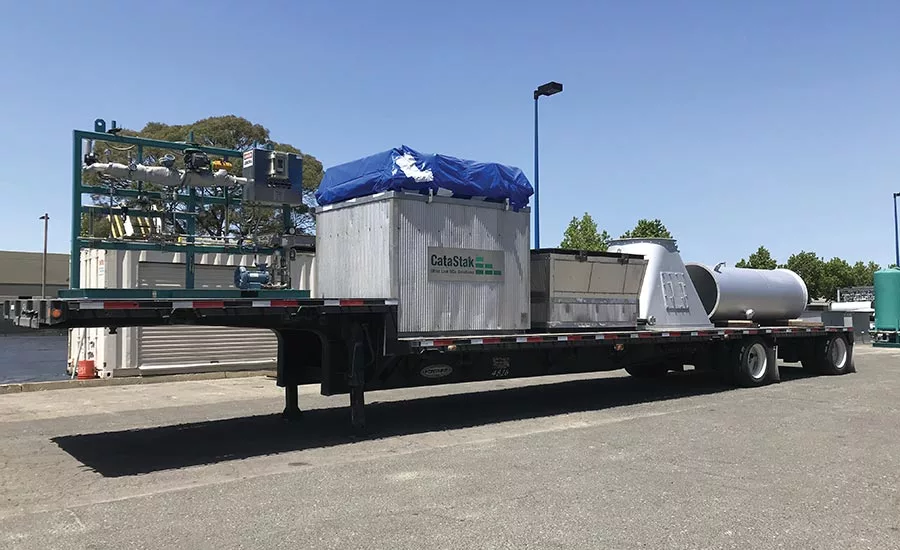
A flatbed shipment with all the temporary SCR system components that are typically provided by the rental supplier.
Pollutants emitted from combustion sources have been regulated by local and federal governments since the early 1960s. Specific rules vary by state and air district, but they generally apply to industrial, fossil fuel-fired equipment that emit nitrous oxides (NOX), carbon monoxide (CO), volatile organic compounds (VOCs), and other harmful pollutants. As a combustion source, most boilers fall into this category and are heavily regulated in some areas of the country.
These types of protocols have been implemented for the well-being of our society, and they extend not only to stationary or permanent equipment but also to boilers installed for temporary applications. A temporary rental boiler can be installed for short periods (one week) or long periods of time (multiple years) and are often required at industrial facilities for a variety of operational scenarios. These include increased process steam demand, planned maintenance outages, use during a new boiler installation, or unplanned/emergency situations.
Whether a temporary or permanent boiler installation, NOX compliance can be achieved in one of two ways: ultra-low NOX burners or selective catalytic reduction (SCR).
Background
During the 1990s, advancements in burner technologies emerged, allowing boiler owners to meet the 30-ppm low NOX limit that was soon to become the standard. Low NOX burners were developed to control the formation of thermal NOX through staged combustion and flue gas recirculation (FGR). Further advancements in burner technology have been made since then, and there are now ultra-low NOX burners available that can achieve sub-7 ppm NOX. However, there are some major drawbacks when it comes to utilizing these advanced burners on larger boiler systems. With their high FGR and high excess air rates, operational limits are compromised, resulting in limited turndown capabilities, flame pulsations, and unstable operation. In addition, they generally have a high carbon footprint due to increased electrical consumption and inefficient combustion.
One readily available and proven alternative to the use of current burner technologies is SCR. SCR systems provide a compact, multi-pollutant emissions control solution that does not affect flame stability and burner performance. Furthermore, systems have been installed that are performing at NOX emission levels as low as 1 ppm. And with additional design features, CO and VOC output can be reduced in a similar fashion.
SCR design and NOX reduction process
A typical SCR system consists of five major components: (1) an insulated reactor housing with inlet and outlet transitions, (2) modules or cassettes of low-temperature catalyst, (3) a reducing agent (reagent) control skid, (4) a reagent injection system, and (5) a stack with U.S. Environmental Protection Agency (EPA) ports.
The process is simple: Let’s take NOX as an example. The reagent is metered and diluted through the reagent control skid and delivered to the injection system located at the boiler outlet. The flue gas, now containing measured amounts of ammonia and mixed with the NOX from combustion, passes through a reactor chamber with active catalyst. As the mixture of ammonia and NOX in the flue gas contacts the catalyst, NOX is converted into inert nitrogen and water. This abatement strategy significantly reduces NOX emissions caused by fuel combustion, often by more than 90%.
SCRs for temporary applications
Since development, SCR systems have been utilized successfully for emissions reductions in both permanent and temporary boiler applications. In fact, some boiler rental companies, such as Nationwide Boiler, maintain an entire fleet of SCR systems specifically for use with package rental boilers in a range of sizes. As an added benefit, SCR systems are not limited to one boiler type, one orientation, or even one specific reagent. They can be customized in various ways to fit the unique needs of each temporary rental application.
1. Boiler type
Both firetube and watertube boilers are great candidates for SCR technology, however, in temporary applications, they are more commonly used with larger watertube boilers.
Since watertube boilers typically fire at higher rates and pressures, they produce a higher lb./hr. output of NOX. Thus, SCR systems are more efficient when paired with watertube boilers because of their higher exhaust temperature. Firetube boilers typically have lower exhaust temperatures, however, if the exhaust gas temperature is greater than 300˚F, they would meet the minimum temperature for effective catalyst operation.
2. SCR orientation
No two plants are the same, and when it comes to temporary installations, it can be difficult to determine the best location to install the rental equipment. Is there enough footprint? Is it close enough to the utility tie-in points? These questions and more must be considered prior to taking delivery of the equipment.
Although an SCR system is another piece of the installation puzzle, it can be configured in a way that best fits the available space within the facility. There are currently pre-existing rental SCRs, built specifically for the temporary market, in both vertical and horizontal orientations.
Vertical configurations allow for installation of the reactor house directly above the boiler outlet and before the economizer, as applicable. When both an SCR and economizer are utilized, then the rental scope would include a structural framework predesigned for assembly. If an economizer is not utilized, the SCR system can be installed on the boiler outlet and before the stack, without the need for an external structure.
On the other hand, a horizontal configuration utilizes additional ductwork from the boiler outlet down to the ground, allowing for the reactor house to be placed on the side or back-end of the boiler, whichever is most convenient for the space available. This system is structurally sufficient, and no framework is needed regardless of whether an economizer is used or not.
3. Reagent options
With ammonia being the standard reagent utilized, a common misconception associated with SCR systems is that they are dangerous and difficult to handle. However, SCRs are designed for ease of handling and operation. In fact, end-users have a choice between anhydrous ammonia, aqueous ammonia, or urea as the reagent. Each reagent has its own benefits, and users can determine which is the best choice based on their facility operations.
Anhydrous ammonia is pure ammonia and has the most stringent handling requirements. However, most rental systems are designed for use with three 150-pound gas cylinders, minimizing the requirements for HAZMAT and a risk management plan. This is the most economical choice in most package boiler rental cases.
Aqueous ammonia is a 19%-29% ammonia-water solution that has less stringent and safer handling requirements. It does require the use of a vaporizer on the flow control skid in order to provide a vapor to the exhaust duct.
Urea is ultimately the safest of all options, as this 32.5% urea-water solution, commonly known as DEF, is readily available to purchase. The urea is typically injected and converted to ammonia within the system.
Additional considerations
The rental supplier will provide all components of the SCR system, including the catalyst; however, there are certain items that will be required of the customer. This includes the reagent; either three 150-pound bottles of anhydrous ammonia or a tank for the supply of aqueous ammonia or urea.
Installing hardware, including nuts, bolts, gaskets, and crane or forklift services, is also the responsibility of the end user or installing contractor. A temporary SCR system will typically ship on one flatbed with all large components for assembly at the job site. Installation is quite simple, and the rental supplier will provide a complete drawing package with a general arrangement diagram to support the installation tasks.
Lastly, with most temporary boilers that require reduced emissions, a source test must be completed to ensure the SCR system is performing as expected and emissions are below the required limit. This step is typically handled by the facilities environmental team with the support of the supplier and often the service technician assigned to the commissioning of the equipment.
Final thoughts
All in all, SCR is by no means a new technology and has been proven to be effective in many temporary boiler applications. It provides several advantages over ultra low NOX burners, including simpler and more reliable operation with little operator intervention required. In addition, SCR systems are customizable and can provide reduction for not just one but multiple pollutants.
When deciding which technology is best for your unique application, be sure to choose one that can ensure emissions compliance without compromise.
Looking for a reprint of this article?
From high-res PDFs to custom plaques, order your copy today!