R-290 on the Rise
A3 charge limit increase paves the way for wider adoption
For nearly a decade, the use of R-290 (refrigerant-grade propane) has experienced a gradual adoption increase among U.S. foodservice applications. From ice machines to under-counter, reach-in coolers, R-290 systems have become viable alternatives for restaurant operators seeking to lower their carbon footprints and/or to meet sustainability objectives.
Classified as an A3 (highly flammable) refrigerant, R-290 comes with charge limit restrictions and safety caveats that may require the approval of local authorities having jurisdiction (AHJ), such as building and fire code officials. But due to recent safety standard updates by the International Electrotechnical Commission (IEC), the rules governing the safe use of A3 and A2L (mildly flammable) refrigerants are evolving to enable an expanded range of applications and greater refrigeration capacities.
A2Ls are often considered comparable to A3s (such as R-290) inasmuch as they share some common characteristics. Both can achieve very low global warming potential (GWP) levels yet still present a degree of flammability, but unlike R-290, A2Ls are synthetic hydrofluoroolefin (HFO) and hydrofluorocarbon (HFC) blends or pure HFO refrigerants that have unique performance characteristics.
In the past, a number of operators felt that potential safety concerns often overshadowed R-290’s many positive performance and environmental characteristics. But for those willing to look past its flammability, R-290 — and the modern refrigeration systems designed to address its safety concerns — offers several unique advantages:
- It is a naturally occurring hydrocarbon (non-synthetic refrigerant);
- It boasts a GWP of 3 and an ozone depletion potential (ODP) of 0;
- It offers excellent thermodynamic properties and energy efficiencies; and
- It’s globally recognized as a leading alternative to HFC refrigerants.
Charge limits drive system design
Traditionally, one of the primary challenges of designing an R-290 system was adhering to the universally accepted standard of 150 grams. This standard dictated small charges, resulting in the production of smaller, stand-alone systems, such as reach-in coolers with built-in refrigeration systems that are charged and sealed at the factory. This charge limitation also placed restrictions on refrigeration system capacity or the possibility of designing larger, R-290 based systems that could remotely service multiple refrigerated cases.
The prospect of increasing R-290’s charge limit has been actively discussed in food service and food retail markets for many years. But with the IEC recently approving an increase in charge limits for A3 and A2L refrigerants — to 500 g and 1,200 g, respectively — the potential for expanding the application and capacity ranges of these HFC alternatives is now on the rise.
It’s important to understand that while the IEC provides safe refrigerant use guidance internationally, the U.S. still relies on the Underwriters Laboratories’ (UL) codes and standards to establish guidelines on the safe use of A3s and A2Ls. Currently, the UL is conducting tests with A3s and A2Ls to help evaluate their safe use in self-contained equipment and the potential for charge limit increases. So, while the IEC safety standard update impacts equipment produced for global markets, the R-290 charge limit in the U.S. will remain at 150 g until the UL issues new guidelines.
In terms of timing, UL has indicated that it likely will begin the process of updating its flammable refrigerant safety standard later this year. Although a number of industry experts are predicting that any UL charge limit increase may be smaller than the levels established in the IEC’s recent update, the extent of any possible increase is currently unknown. Any increase, however, will expand system design flexibilities and refrigeration capacities compared to the current generation of equipment produced for the U.S. market.
Even so, self-contained cases charged with 150 g, even under current standards, have proven to be viable options for many restaurant chains and operators both in U.S. markets and abroad.
Handling requirements and technician familiarity
Because A3 and A2L refrigerants are flammable, technician familiarity is essential to properly maintain and support these systems and minimize potential danger to technicians, operators, and restaurant patrons. When considering safe handling requirements, it’s important to differentiate between stand-alone systems, such as self-contained reach-ins, and remote systems, such as those used to service a walk-in unit or multiple restaurant fixtures.
Stand-alone units are oftentimes charged and sealed at the manufacturer’s facility and, accordingly, in many applications, they don’t require special handling and installation requirements on-site; in these types of applications, operators typically must simply plug them into an electrical outlet. When there are multiple stand-alone systems in a restaurant, some operators have opted to implement a chilled water loop system that removes the exhaust heat from the units. In areas that now allow for larger charge limits, there’s a potential to use fewer compressors to achieve the same refrigerated load requirements.
However, in remote R-290 applications, which are governed by different safety standards outside of the IEC’s recent update, technicians will have potentially more handling and servicing requirements to ensure proper and safe operation. When dealing with R-290 or other A2L-based equipment, it’s critically important for all technicians to complete proper training prior to servicing and fully understand each application’s safety and operating considerations.
Ensuring safety is the top priority
While it may take some time before the UL updates its own flammable refrigeration safety standards for all U.S. markets, the IEC’s recent move is an indication that global perceptions about R-290 are changing. It also reflects an awareness of the improvements in refrigeration technologies that are helping to mitigate safety concerns and usher in charge level increases.
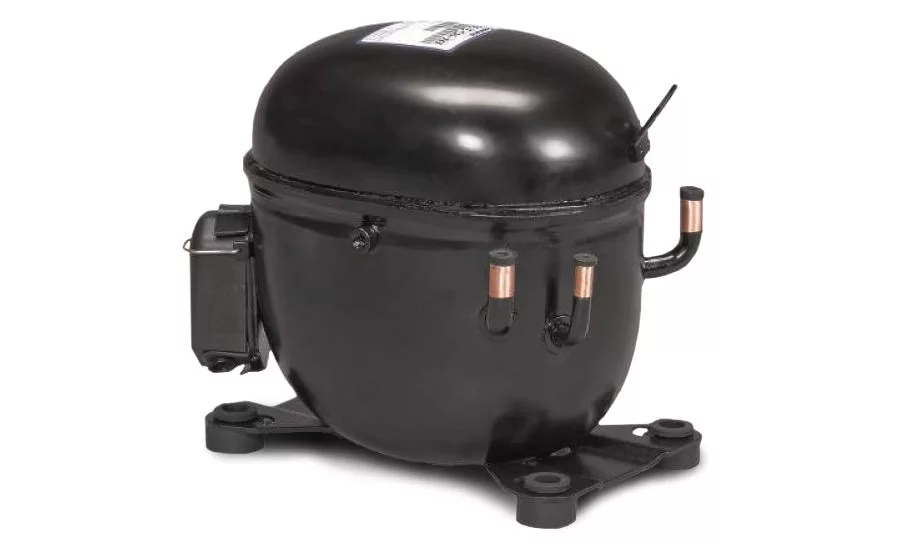
Ensuring application safety has always been a top priority at Emerson; our R-290 based compressors and condensing units are no exception. We believe it’s important for manufacturers to consider not only applicable UL or IEC standards but also to conduct their own thorough evaluation of potential safety issues.
Today, R-404A is still the most common HFC refrigerant used in commercial refrigeration applications. With a GWP of 3,922, it resides on the high end of the GWP scale and has been a frequent target of HFC phase-down regulations. By comparison, R-290 has a GWP value of 3. It’s important to evaluate R-290 — and any refrigerant selection for that matter — by considering the overall regulatory landscape.
The increase in R-290 adoption around the world can be attributed not only to the growing demand for energy-efficient and environmentally friendly commercial refrigeration but also the global, national, and regional HFC phase-down regulations. These include:
The Kigali Amendment to the Montreal Protocol
The Kigali Amendment to the Montreal Protocol was enacted in 2016 to limit global warming by phasing down short-lived climate pollutants, including HFCs. This amendment took effect Jan. 1, having been ratified by the required number of 20 member countries, including Canada and the United Kingdom among others. Today, member countries are utilizing a variety of lower-GWP refrigerants to achieve their HFC phase-down objectives.
U.S. Environmental Protection Agency (EPA)
In 2015, the EPA established its Significant New Alternative Policy (SNAP) Rules 20 and 21, which were designed to phase down HFCs in a variety of commercial refrigeration applications. However, in 2017, the U.S. Court of Appeals issued an opinion declaring that the EPA no longer has the authority to regulate HFC refrigerants based on their GWP. While the EPA is expected to clarify their future position on HFCs, the nullification of these rules has left uncertainty in the U.S. regulatory landscape, although many states have announced intentions to require phasing down of high GWP HFCs at a state and/or regional level.
California Air Resources Board (CARB)
California has taken a leadership position on HFC phase-down efforts within the U.S. and has adopted the originally proposed EPA SNAP framework into law. As of Jan. 1, R-404A and R-507A are no longer allowable in many new commercial refrigeration applications, including stand-alone units within the state of California.
U.S. Climate Alliance
Today, California is part of a growing coalition of 25 states and/or territories known as the U.S. Climate Alliance. These member states are making commitments to enforce similar climate protection initiatives by requiring use of lower GWP refrigerants, among other actions. In sum, this alliance represents 55 percent of the total U.S. population and more than half of the national gross domestic product (GDP).
Looking for a reprint of this article?
From high-res PDFs to custom plaques, order your copy today!