search
Ask ACHR NEWS AI
cart
facebook twitter instagram linkedin youtube
  • Sign In
  • Subscribe
  • Sign Out
  • My Account
  • NEWS
  • TECHNOLOGY
    • Heating & Boilers
    • Cooling & Chillers
    • Pumps & Flow Controls
  • SECTORS
    • Commercial
    • Health Care
    • Data Center
    • Educational Facilities
  • DESIGN | CONSTRUCTION
  • OTHER TOPICS
    • High-Performance Buildings & Automation
    • Ventilation and IAQ
    • Commissioning
    • HVAC Retrofits
  • TODAY’S BOILER
    • Today’s Boiler Archives
    • Today’s Boiler Digital Edition
  • MORE
    • Case Studies
    • Podcasts
    • Videos
    • Directory
    • Webinars
    • ES NEWS Store
    • White Papers
  • SIGN UP
  • Back to The NEWS
Engineered Systems NEWSHVAC Engineering SectorsVentilation and IAQHealth Care HVAC

Inject a Pulse Into Your Building Monitoring System

If we added living tissue models to existing building monitoring systems, we could potentially save many years of human suffering, lost lives, and health care dollars.
By Stephanie Taylor, M.D., M. Arch, CIC
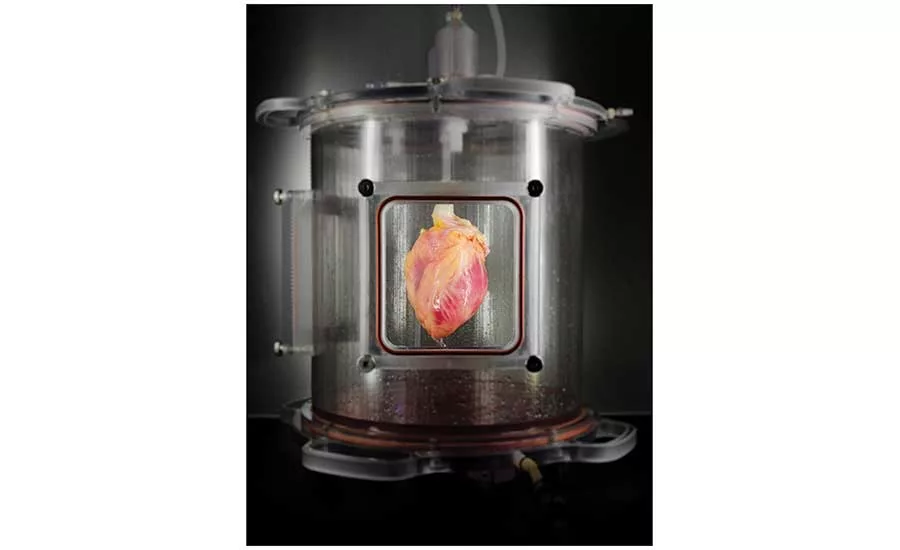
FIGURE 1. Futuristic bio-monitor

FIGURE 1. Futuristic bio-monitor.

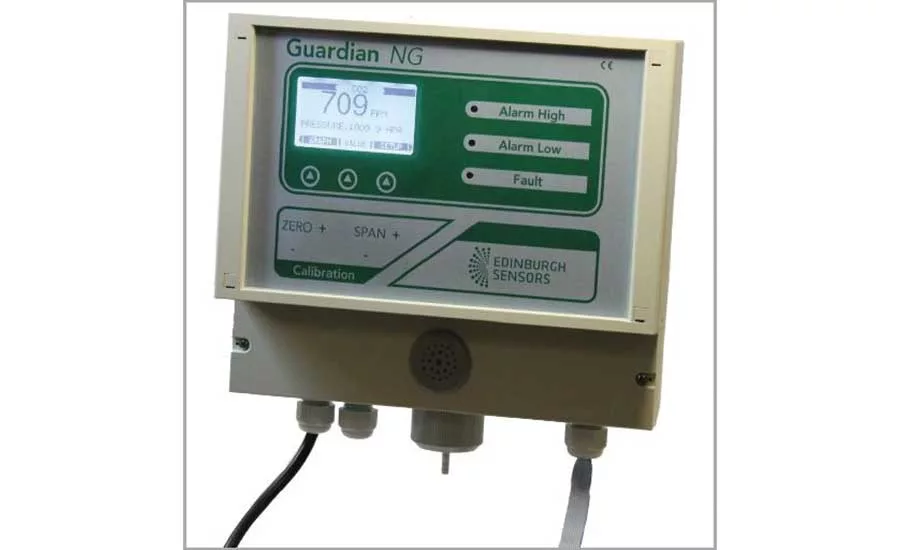
FIGURE 2. Existing technology

FIGURE 2. Existing technology.

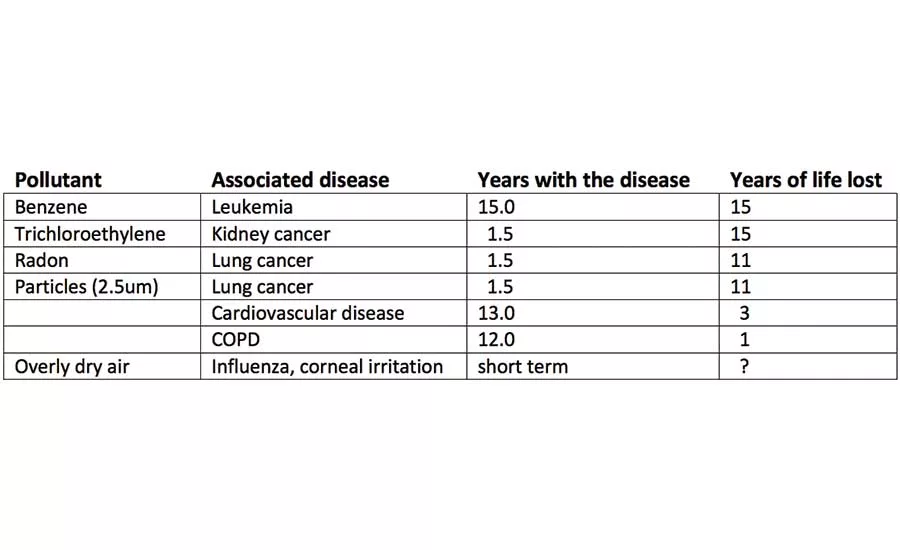
The relationship between illnesses and building components

FIGURE 3. The relationship between illnesses and building components.

FIGURE 1. Futuristic bio-monitor
FIGURE 2. Existing technology
The relationship between illnesses and building components
October 14, 2019

We are in a new era — a time of increased realization that the indoor environment has a powerful influence on human health. This means that decisions made by architects, engineers, builders, and facility managers impact us in areas that are outside of our current set of building metrics. Building codes mandate protection from instantaneous or catastrophic emergencies, such as earthquakes, fires, or building flooding. While we also monitor and manage energy consumption, emissions from carbon-containing fuel, and indoor temperatures, we are missing many other less obvious yet important considerations.

Surprising data from new building assessment tools are showing compelling connections between occupant illnesses, synthetic surface materials, and low indoor humidity. These associations are not due to off-gassing of volatile organic compounds (VOCs) but rather are due to direct effects of inadequate water vapor on living building occupants. This includes humans, of course, but also indoor communities of microbes known as building microbiome. Microbes are initially brought into a building by people, pets, outdoor air, plants, and soil. They then respond to indoor conditions and evolve, as needed, to survive, or they die. Surviving and morphed microbes, excessively low indoor humidity, and tiny airborne particles are some of the indoor factors that directly affect the health of people who spend more than around 15 minutes indoors. Clearly, building monitoring systems that focus on energy consumption will not adequately inform us about indoor factors that affect the building microbiome and human occupants.

Thankfully, there is a way to monitor the impact of the indoor environment on living beings. No, we do not have to wait for people to drop dead or for plants to shrivel up. Monitoring health-promoting conditions simply means that in addition to traditional electronic sensors, we need to use living cells as human surrogates. The reverse situation of using electronic sensors to aid living tissues has been done for decades. For example, artificial pacemakers and insulin pumps are invaluable in keeping people alive when their faltering cardiac or pancreatic tissues cannot respond adequately to whole-body changes.

It is now time for building professionals to add living cells to their armamentarium to help detect and manage indoor conditions that are harmful to health. In addition to detecting new categories of toxins, living biological sensors can quickly detect environmental factors that play a role in both immediate illnesses as well as in long-term harm that otherwise could take months or years to manifest in a human.

Figure 3 shows some known relationships between illnesses and building components. Most of these compounds claimed decades of human health before we learned that we needed to limit our exposure to them.

While I was at the 2019 Indoor Air and International Society of Exposure Science conference in Kaunas, Lithuania, I learned about fascinating research from the University of Eastern Finland. A presentation by Dr. Kati Huttunen, titled, “Human Lung Constructs as a Model to Study Exposure to Indoor Air Particulate Matter,” showed how human bronchial and lung cells could be grown in a petri dish, covered with normal respiratory fluid, and then exposed to particulate matter. When the concentration of particles reached a critical level, damage to the respiratory cells could clearly be seen within hours of exposure.

If we added living tissue models to existing building monitoring systems, we could potentially save many years of human suffering, lost lives, and health care dollars.

Share This Story

Looking for a reprint of this article?
From high-res PDFs to custom plaques, order your copy today!


Dr. Stephanie Taylor is the president and founder of Building4Health Inc. After working as a physician for many decades, Dr. Taylor obtained a Masters in Architecture as well as Infection Control certification. Her lifelong commitment to patient care includes focusing on improving the healthcare physical environment and clinical work processes to help patients heal quickly and save hospitals valuable dollars. Dr. Taylor is a graduate of Harvard Medical School (MD), and Norwich University (Masters Architecture). She has numerous research publications in Nature, Science, and other peer-reviewed journals. She can be contacted at stephanie@b4hinc.com or (860) 501-8950.

Recommended Content

JOIN TODAY
To unlock your recommendations.

Already have an account? Sign In

  • HVAC-enrollment

    The Trades Are Back: HVACR Programs See Nearly 30% Enrollment Spike

    A new wave of future technicians is entering the pipeline.  
    Training and Education
    By: Matt Jachman
  • 2025 Top 40 Under 40

    2025 Top 40 Under 40 HVACR Professionals List

    The 11th annual Top 40 Under 40 list highlights those...
    HVAC Residential Market
    By: Hannah Belloli-Oster
  • LG Ductless Mini-Split Systems

    The 9 Types of Heat Pumps

    As the U.S. moves toward electrification, heat pumps are...
    Ground Source Heat Pumps
    By: Joanna R. Turpin

More Videos

Today's Boiler

Spring 2026 Issue

Today's Boiler - Spring 2026 Cover

Read More from Today's Boiler

Case in Point Logo

Smarter Hydronic Design for Data Centers - Free Webinar - January 22, 2026

Related Articles

  • A Physical View IAQ

    Have You Vaccinated Your Building?

    See More
  • Honeywell International Inc., Home and Building Control: MONITORING SYSTEM

    See More
  • changes in surface/air partitioning

    Four Reasons to Turn Down Your Building Temperature

    See More

Related Products

See More Products
  • Converting Phone Calls Into More Sales - DVD

  • front cover only.jpg

    How to Market Your HVAC Business

  • Manual Q.jpg

    Manual Q - Low Pressure, Low Velocity Duct System Design

See More Products
×

Sign Up. Stay Informed.

The #1 trusted source for the HVACR industry since 1926

SUBSCRIBE
  • RESOURCES
    • Advertise
    • Contact Us
    • Advisory Board
    • Classifieds
    • Submit a Letter
    • Directories
    • Store
  • ACCOUNT CENTER
    • Create an Account
    • Start a Subscription
    • Manage My Account
    • Sign Up for Newsletters
    • Visit Customer Service
    • Update Preferences
  • SERVICES
    • Marketing Services
    • Reprints
    • Market Research
    • List Rental
    • Survey/Respondent Access
  • STAY CONNECTED
    • LinkedIn
    • Facebook
    • Instagram
    • YouTube
    • X (Twitter)
  • PRIVACY
    • PRIVACY POLICY
    • TERMS & CONDITIONS
    • DO NOT SELL MY PERSONAL INFORMATION
    • PRIVACY REQUEST
    • ACCESSIBILITY

Copyright ©2026. All Rights Reserved BNP Media, Inc. and BNP Media II, LLC.

Design, CMS, Hosting & Web Development :: ePublishing