Cold Rooms: Temperature Controls
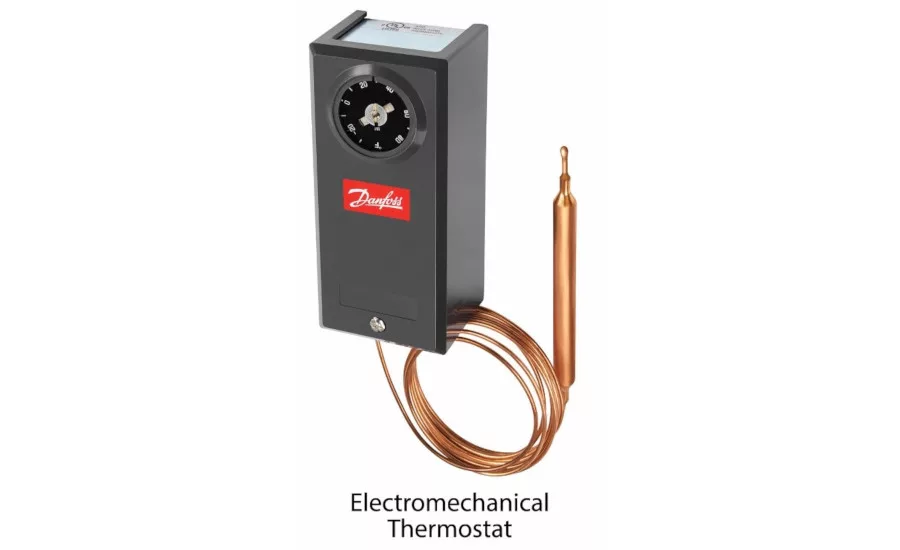
Electromechanical Thermostat
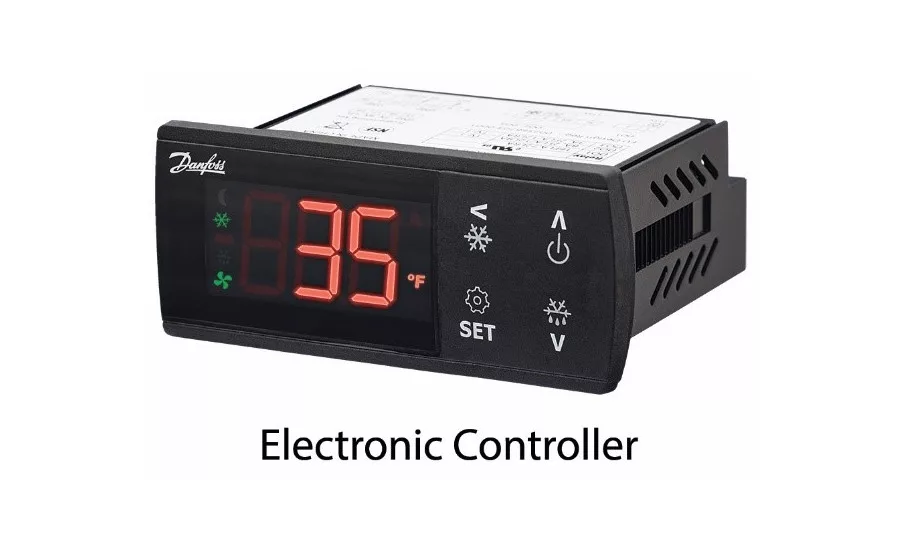
Electronic Controller
Editor’s Note: This is the sixth and final article in our series on cold rooms. Read Part 1 here: Part 1 —Cold Rooms: An Introduction.
As seen throughout this article series, cold rooms are only as good as the components that are included in them. An important piece of the puzzle is the thermostat. A cold room’s main job, not to put too fine a point on it, is to be cold. Maintaining the internal temperature is critical for meeting food safety standards and keeping product fresh for as long as possible. To do this, while also improving the energy efficiency of the system, a reliable thermostat is required.
Note: If a cold room is properly insulated, the internal temperature will be better stabilized while also lightening the load placed on the compressor, evaporator, and condenser. Adding a good thermostat will further improve the efficiency of the cold room.
Electromechanical thermostats
Most cold rooms use an electromechanical thermostat, which consists of a sensor and an electric contactor. These types of thermostats are switches in that they operate on an on-off basis. When the interior temperature climbs too high, the thermostat sends a signal to the compressor to turn on, activating the refrigeration cycle. Conversely, once the desired temperature has been reached, the thermostat will signal the compressor to shut off, interrupting the cycle.
Even though most thermostats only have one temperature setting, there is another factor at play: the temperature differential, or the difference between what are called “cut-out” and “cut-in” temperature settings. For example, if the cut-out temperature is set to 40°F with a differential of 5 °, the refrigeration system will stop running, or cut-out, when the temperature reaches 40°. Likewise, the system will start, or cut-in, when the temperature reaches 45°. Correctly adjusting the temperature differential is critical in order to achieve optimal energy efficiency. If the differential is too small, the tendency will be for the refrigeration cycle to run short, starting and stopping frequently, negatively impacting the working life of the equipment. If the differential is too large, the refrigeration cycles will be too long, resulting in exceptionally large fluctuations in temperature, risking product freshness.
When using an electromechanical thermostat, it is often a good idea to keep a thermometer inside the cold room to make sure that the internal temperature is always at an acceptable level.
Electronic controllers
Traditional electromechanical thermostats, while cost-effective and reliable, typically control only the compressor, so the potential additional energy savings offered by integrating control of the compressor, evaporator fan, and defrost heater cannot be fully realized. By using an electronic thermostat or controller, the entire system can better work together, offering better energy efficiency and a more stable internal temperature.
Working with a fan speed controller and a variable-speed compressor, an electronic controller can better maintain the internal temperature. Running the compressor at half power or running the fan without the compressor can save on energy costs while keeping the temperature stable.
Electronic controllers can be programmed to meet the specific needs of each cold room, depending on patterns of use, ambient temperatures, air humidity, and other factors. This way, the energy efficiency of each cold room can be adjusted if changes occur in any of the previously mentioned factors. Not only can electronic controllers reduce power consumption and save money, they can also collect usage data, like the number of times the door opens, fluctuations in temperature levels, and fan and compressor cycles during the day and night.
Whether you use an electromechanical thermostat or an electronic controller, having a reliable thermostat is vital to keep the temperature inside your cold room stable.
Looking for a reprint of this article?
From high-res PDFs to custom plaques, order your copy today!