Case in Point
Data Center Lowers Carbon Footprint with Flywheel Energy Storage
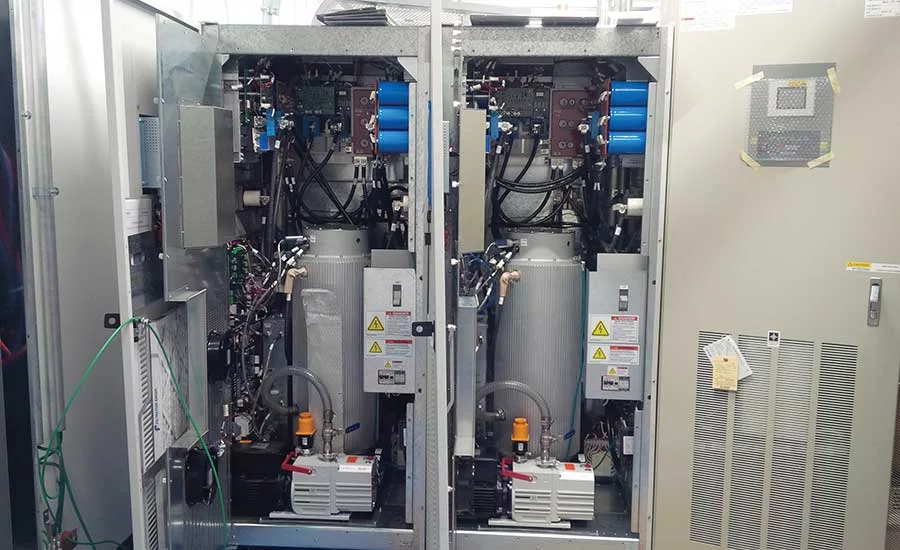
The TTC data center replaced its lead batteries with flywheel energy storage systems. The flywheels have proven to be more reliable and environmentally friendly.
The Travel Corp. (TTC) is a global vacation company operating 30 brands that travel to seven continents. Through its not-for-profit organization, The TreadRight Foundation, TTC has supported some 50-plus sustainable tourism projects worldwide to date, including planting a tree for every registered traveler that chooses e-documentation.
TTC’s sustainability goals are corporate-wide, including its dense, 1,200-square-foot data center that handles all the records coming in from its 30 worldwide travel brands, the company’s eight main offices, and 40 sales offices worldwide. The data center also supports the booking engine, financial transactions, website hosting, email, and VoIP communications. Ensuring that TTC’s data center is operating reliably and at peak efficiency is the job of Toronto-based facility manager Craig Lee.
With the data center located in the company’s Toronto office, weather-related power interruptions are frequent, so having highly reliable power protection systems protecting the data center is paramount.
“The weather has become unpredictable,” Lee said. “Here in Toronto, temperatures can range from minus 30°-40°C (minus 22°-104°F) with ice storms in the winter taking out power lines and rain storms in the summer causing their own disruptions. We can no longer make predictions based on past weather patterns.”
When the power load requirements of the data center increased, Lee took the opportunity to explore different approaches to reduce energy consumption without compromising reliability. Lee was using 3-phase UPS systems with lead-acid batteries that would switch to their two Caterpillar and Cummins diesel generators during a power outage.
“We were spending $50,000 every five years to replace the batteries, and we were not comfortable with the battery disposal cost and environmental impact,” Lee said. “We wanted to find a greener approach to power protection.”
TTC’s technical partner, Urbacon, recommended replacing the UPS systems’ dual strings of lead-acid batteries with four of VYCON’s energy-efficient VDC-XXE flywheel energy storage systems. The VDC flywheels are environmentally friendly and are 20-times higher in reliability compared to lead-acid batteries. With a 20-year operational life and no bearings to replace, the VYCON flywheels offer a cost-effective power solution for organizations wanting to improve reliability with a lower total cost of ownership.
The VDC flywheel holds kinetic energy in the form of a rotating mass and converts this energy to electric power through patented technology within the flywheel system. VYCON’s technology includes a high-speed motor generator, active magnetic bearings that are used to levitate and sustain the rotor during operation, and a control system that provides vital information on system performance. According to company officials, these technologies enable the VYCON flywheel to charge and discharge at high rates for countless cycles, making conventional technologies, like batteries, obsolete.
Now, the data center has two 150-kVA double-conversion UPSs each with 2 x 300-kW VDC-XXE flywheel systems connected in parallel with a maintenance bypass switch with transformers.
“When there’s a power outage, we’re on the flywheels and then transfer to the diesel generators,” Lee said. “We have two minutes per flywheel, so we have eight minutes before transferring to the generator. If the generators don’t turn on in that time, they’re not going to come online at all.”
The data center has a 2N redundant A/B configuration in place with one utility supply line that splits into two separate supplies, each protected by a diesel generator for backup power.
Each separate power supply line has a transfer switch connected to the two flywheels and a UPS to feed the servers. If one supply route has an issue, the other still maintains power to the data center.
For cooling the data center, Lee uses a Kyoto Wheel heat exchanger. Its large, slowly rotating honeycombed disc draws heat out of the data center room and cools it using less than a quarter of the energy needed to cool the data center with conventional air conditioning. One small electric motor is needed to turn the wheel, compared to the old air conditioning systems that continually pumped fluids.
In addition, for cooling and heating the offices, TTC eliminated its heat pumps and cooling tower and replaced them with a geothermal system.
“We have 19 bore holes, 500 feet down,” Lee said. “The water circulates in the closed pipe system, where the temperature is a constant 50°F. This provides cooling in the summer, and the water needs only to be boosted to room temperature in the winter. We have dropped our use of natural gas by 75 percent.”
For the data center, Lee has reduced energy usage from 1.4 million kW to 98,000 kW after incorporating the new power protection system bringing his power usage effectiveness (PUE) to 1.3 from 2.0.
“We are using less power but have added more resources and 2.5 times the amount of people in the offices,” said Lee. “The VYCON flywheels have added to our reliability and lower carbon goals. We have had many power failures and interruptions in the last few years, and the flywheels have worked perfectly every time. So far, the flywheels have been fantastic, and low maintenance requirements are always a bonus.”
Looking for a reprint of this article?
From high-res PDFs to custom plaques, order your copy today!


.webp?height=200&t=1712171910&width=200 "Amherst College in Massachusetts has embarked upon an ambitious plan to greatly reduce its carbon footprint by 2030.")