search
Ask ACHR NEWS AI
cart
facebook twitter instagram linkedin youtube
  • Sign In
  • Subscribe
  • Sign Out
  • My Account
  • NEWS
  • TECHNOLOGY
    • Heating & Boilers
    • Cooling & Chillers
    • Pumps & Flow Controls
  • SECTORS
    • Commercial
    • Health Care
    • Data Center
    • Educational Facilities
  • DESIGN | CONSTRUCTION
  • OTHER TOPICS
    • High-Performance Buildings & Automation
    • Ventilation and IAQ
    • Commissioning
    • HVAC Retrofits
  • TODAY’S BOILER
    • Today’s Boiler Archives
    • Today’s Boiler Digital Edition
  • MORE
    • Case Studies
    • Podcasts
    • Videos
    • Directory
    • Webinars
    • ES NEWS Store
    • White Papers
  • SIGN UP
  • Back to The NEWS
Engineered Systems NEWSHVAC Engineering SectorsVentilation and IAQHealth Care HVAC

How Indoor Air Quality Impacts Our Psychological Development

Mechanical Engineers Are Now Mental Health Professionals
By Stephanie Taylor, M.D., M. Arch, CIC
Mechanical Engineers Are Now Mental Health Professionals
May 10, 2019

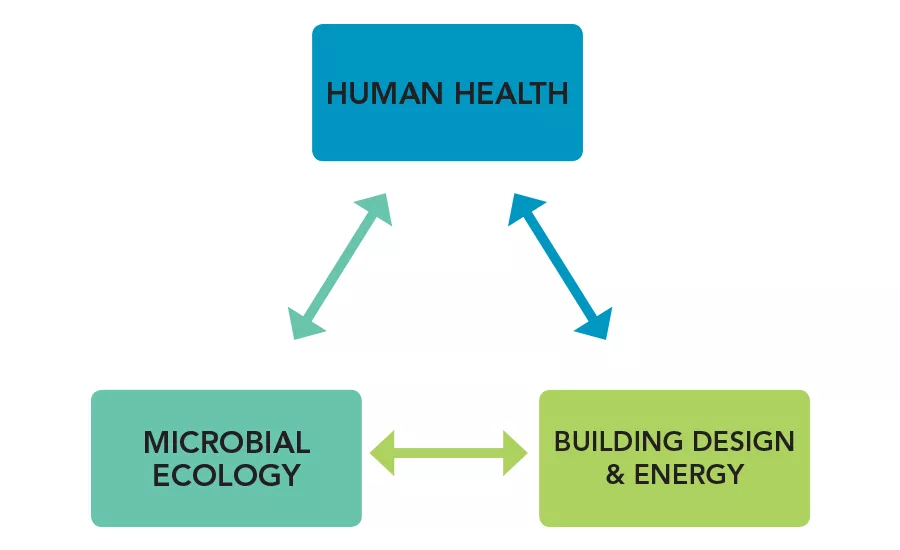
Once again, research has revealed an entire new dimension of the role of indoor air quality in determining human health. This new awareness dramatically expands the consequences of a mechanical engineer’s work. As you design and size HVAC systems for a building, think about this: The resulting indoor climate will shape the mental state of the occupants, influencing their moods, thinking abilities, and even their attraction to sexual partners. This means that your job description now includes mental health care. 

How can this be? Most of us will agree that our moods are influenced, to some degree, by how healthy and energetic our bodies feel. We now know that each of us are intimately connected to trillions of microorganisms in ecosystems called our microbiomes. In fact, the number of microbes in our individual microbiomes vastly exceed the number of our human cells. Our personal microbiome is a unique and changing population of bacteria, viruses, and fungi that live on our skin, in our orifices and digestive tracts, and even insert their genes into our sperm or eggs to be passed onto our children.

Research tools that continue to shed light on our relationship with microbes were widely used in sequencing the human genome. Generally known as metagenomics, the techniques have resulted in data that clearly indicates that most microbes are essential and beneficial to our normal, day-to-day functioning. What is additionally surprising is the awareness that bacteria in our microbiomes shapes our moods, thinking, relationships, and psychological development.

This connection between our microbes and our brains seems to be a result of chemical messengers released from bacteria residing in our digestive systems. These messengers travel to our brains, exerting powerful influences on almost every aspect of the human experience.

The human gut contains approximately 2 pounds of living bacteria, which produce chemicals that trigger neurologic activity in our brains, resulting in regulation of our feelings, ability to think and remember events, and even our fundamental patterns of social interactions. Gut microbes are even related to disorders of cognitive functioning and social interaction, such as autism. Most of us can relate to the power of our gut-brain connection when we think back to a time when our intestines where roiling just prior to taking an important exam.

Our exposure to microbes starts during the birth process when we are either colonized with bacteria from our mother or from the caesarian section room. These colonies are then shaped by our ingestion of microbes from food or probiotics; from unintentional exposure, such as through inhaling microbes in the airborne environment; and by the microbe deaths resulting from antibiotics or surface disinfection solutions. The unique community of microbes in each room of a building is determined by which microbes survive and flourish in each individual space. The elements that microbes respond to in indoor spaces are surface materials, indoor temperature and humidity, radiation from light, and other physical forces that continue to be revealed by ongoing research.

We now know that choices about ventilation unintentionally shape indoor microbial ecosystems. For example, mechanical ventilation leads to significantly different airborne bacterial communities in patient rooms and classrooms when compared to natural ventilation. Spaces with low water vapor (humidity) that are mechanically ventilated have less bacterial diversity and a greater number of pathogens.

IAQ shapes our moods far beyond the effects of daylighting, views of nature, and colors. Building microbes selected by indoor ventilation become part of our microbiomes, exerting powerful forces on our gut-brain axis and triggering feelings of happiness, sadness, or mental illnesses.

In this way, mechanical engineers have become mental health professionals for all those who occupy the buildings.

Share This Story

Looking for a reprint of this article?
From high-res PDFs to custom plaques, order your copy today!


Dr. Stephanie Taylor is the president and founder of Building4Health Inc. After working as a physician for many decades, Dr. Taylor obtained a Masters in Architecture as well as Infection Control certification. Her lifelong commitment to patient care includes focusing on improving the healthcare physical environment and clinical work processes to help patients heal quickly and save hospitals valuable dollars. Dr. Taylor is a graduate of Harvard Medical School (MD), and Norwich University (Masters Architecture). She has numerous research publications in Nature, Science, and other peer-reviewed journals. She can be contacted at stephanie@b4hinc.com or (860) 501-8950.

Recommended Content

JOIN TODAY
To unlock your recommendations.

Already have an account? Sign In

  • HVAC-enrollment

    The Trades Are Back: HVACR Programs See Nearly 30% Enrollment Spike

    A new wave of future technicians is entering the pipeline.  
    News
    By: Matt Jachman
  • 2025 Top 40 Under 40

    2025 Top 40 Under 40 HVACR Professionals List

    The 11th annual Top 40 Under 40 list highlights those...
    HVAC Commercial Market
    By: Hannah Belloli-Oster
  • LG Ductless Mini-Split Systems

    The 9 Types of Heat Pumps

    As the U.S. moves toward electrification, heat pumps are...
    Ground Source Heat Pumps
    By: Joanna R. Turpin

More Videos

Today's Boiler

Spring 2026 Issue

Today's Boiler - Spring 2026 Cover

Read More from Today's Boiler

Case in Point Logo

Smarter Hydronic Design for Data Centers - Free Webinar - January 22, 2026

Related Articles

  • A Physical View IAQ

    Can Indoor Air Quality Influence The Desire To Learn?

    See More
  • Furnace Utility Closet.

    How to Sell Indoor Air Quality to Homeowners

    See More
  • The ACHR NEWS Podcast

    How to Sell Indoor Air Quality to Homeowners

    See More

Events

View AllSubmit An Event
  • October 14, 2025

    Maximize Every Home Visit: Indoor Air Quality Strategies to Grow HVAC Revenues

    On Demand In this webinar, you’ll learn how top HVAC pros are integrating IAQ into everyday service and sales calls to increase average job size, boost customer satisfaction and stand out from the competition.
View AllSubmit An Event

Related Directories

  • Panasonic, Indoor Air Quality Div.

    Panasonic delivers premium, energy-efficient ventilation and indoor air quality solutions engineered for exceptional performance. Trusted by professionals and homeowners alike, our products set the standard for code compliance, reliability, and superior comfort -- elevating every home to a higher standard of living.
  • Indoor Air Quality Assn.

    IAQA is dedicated to bringing practitioners together to prevent and solve indoor environmental problems for the benefit of consumers and the public.
×

Sign Up. Stay Informed.

The #1 trusted source for the HVACR industry since 1926

SUBSCRIBE
  • RESOURCES
    • Advertise
    • Contact Us
    • Advisory Board
    • Classifieds
    • Submit a Letter
    • Directories
    • Store
  • ACCOUNT CENTER
    • Create an Account
    • Start a Subscription
    • Manage My Account
    • Sign Up for Newsletters
    • Visit Customer Service
    • Update Preferences
  • SERVICES
    • Marketing Services
    • Reprints
    • Market Research
    • List Rental
    • Survey/Respondent Access
  • STAY CONNECTED
    • LinkedIn
    • Facebook
    • Instagram
    • YouTube
    • X (Twitter)
  • PRIVACY
    • PRIVACY POLICY
    • TERMS & CONDITIONS
    • DO NOT SELL MY PERSONAL INFORMATION
    • PRIVACY REQUEST
    • ACCESSIBILITY

Copyright ©2026. All Rights Reserved BNP Media, Inc. and BNP Media II, LLC.

Design, CMS, Hosting & Web Development :: ePublishing