LA's Museum of Contemporary Art Seeks Relief in the Fog
Cost, efficiency, and control led the Museum of Contemporary Art to select a fog humidification system.
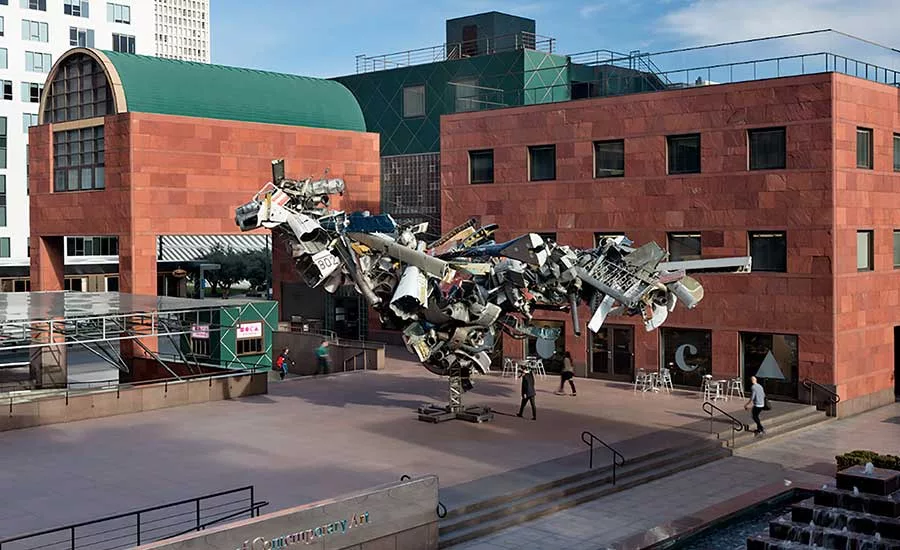
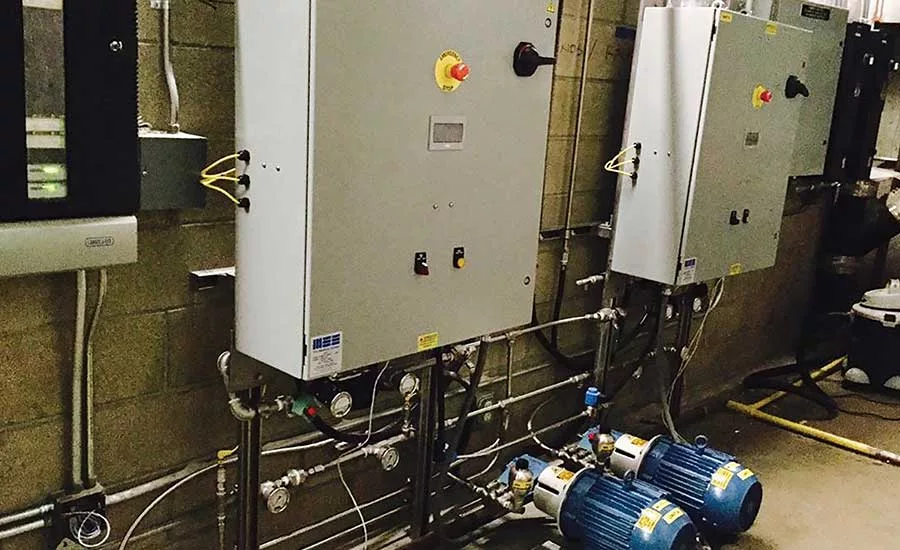
FIGURE 1.
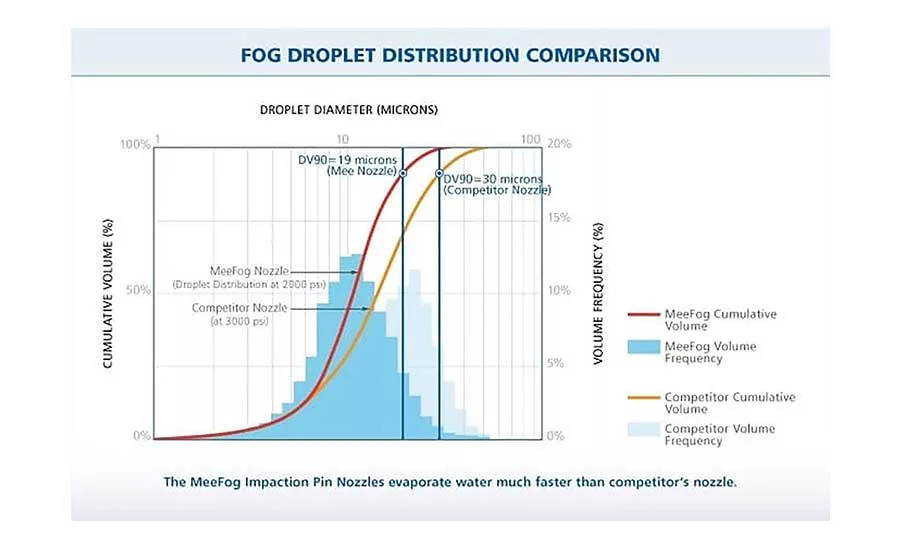
CHART 1. Fog droplet distribution comparison.
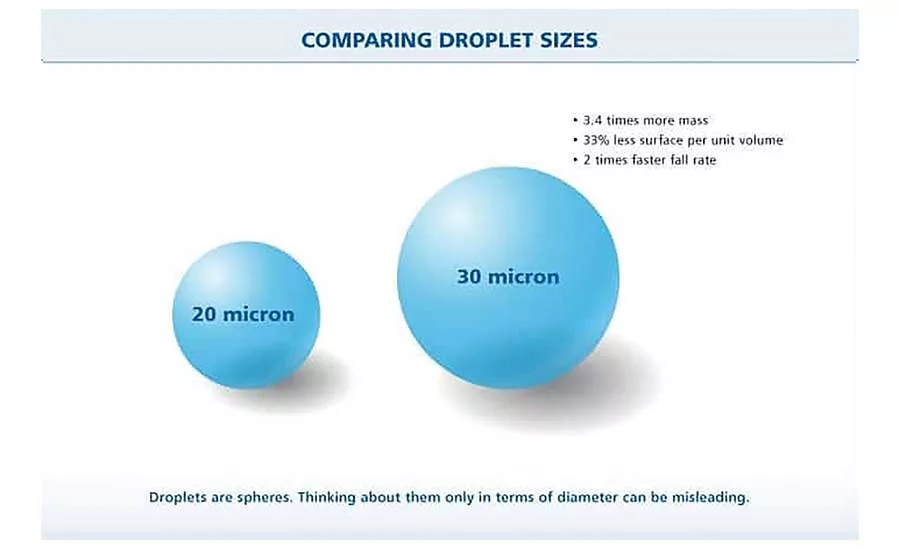
CHART 2. Comparing droplet sizes.
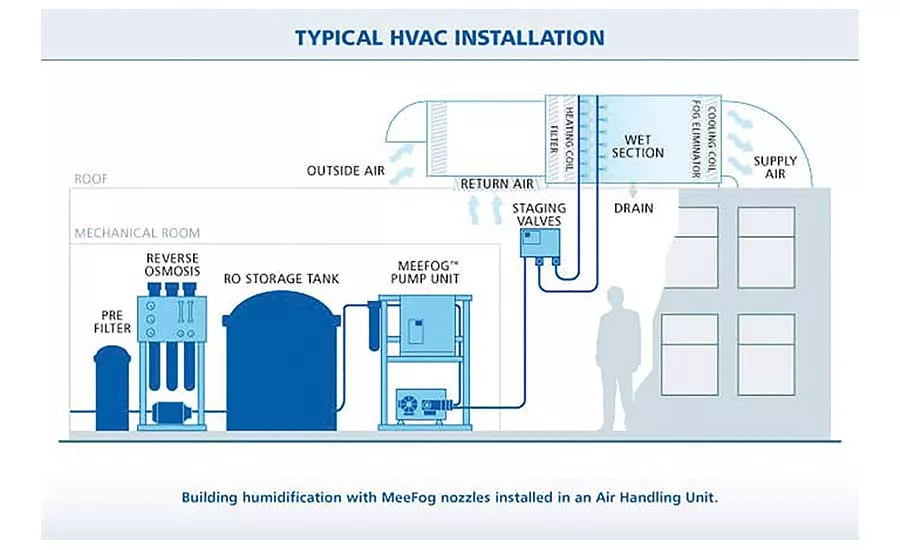
CHART 3. Typical HVAC installation.

FIGURE 2.
The Museum of Contemporary Art (MOCA) on downtown Los Angeles’ Grand Avenue required extensive mechanical upgrades to preserve its collection, maintain visitor comfort, and gain tighter control of humidification levels. The facility had to face an upgrade to its 30-year-old AHUs and humidification system. This had to be accomplished without having to close the building or engage in major demolition.
MOCA solved the dilemma by keeping the outer casings of the existing AHUs, replacing and upgrading all the internal equipment, removing the old evaporative media-type humidification system, and replacing it with a MeeFog humidification system.
Woodburn T. Schofield Jr., director of operations at MOCA, oversaw the retrofit of the new humidification system as part of an overall environmental upgrade program.
“Our old humidification system no longer met our stringent standards,” he said. “We feel like we have gone from the 20th to the 21st century as the MeeFog system gives us much tighter humidity control as well as far less maintenance and cleaner air.”
Premier Attraction
Established in 1979, MOCA is the only artist-founded museum in LA. More than 250,000 visitors pass through its doors each year to see its compelling collection of contemporary art that comprises roughly 7,000 objects created after 1940. These exhibits exist in a variety of media, all of which have to be preserved for future generations.
Museum environments must be strictly monitored and controlled to prevent the deterioration of historic artifacts and art collections. Temperature, relative humidity, and light levels all must be optimized. While temperature and light are typically well cared for, humidity can be a wild card. If left to drift out of the desired range, it can exert dramatic changes on paintings and other objects.
But it isn’t only the condition of the inside air that can impact art. Ambient air pulled in from the outside environment has its own level of humidity, which can change significantly. This is due to the fact that warm air can hold more moisture than cold air. When air is warm and too dry, moisture is absorbed from the items that make up the museum collection. When the temperature falls, relative humidity rises, and moisture is reabsorbed. These shifts can have an adverse effect on preservation.
Factors such as building heating, solar gain, and electric lights can raise temperature and drop the overall level of rh. On the other side of the coin, rh can rise when saturated outside air is brought in, water leaks are present, floors are being washed, wet coats and umbrellas enter the building, or a lack of ventilation is present.
If rh sinks below 40 percent, organic materials may contract and shrink; textiles can become brittle; wood may break; and veneers, glues, and adhesives can crack, lift, or break. If rh moves above 65 percent, organic materials swell, painting canvases may sag, mold can flourish, and chemical reactions, such as rusting, can accelerate.
Aging Humidification System
It is vital, therefore, to control humidity levels. This involves the reduction of sharp fluctuations and maintaining rh within acceptable limits; however, this must be done in such a way as to maximize energy efficiency. Standard practice is to hold rh between narrow limits, but achieving that goal proved far from easy at MOCA’s main site on Grand Avenue, one of the premier attractions of downtown LA.
The facility’s existing air handlers had reached the end of their lives. And after more than 30 years of operation, the evaporative media-type humidification system was no longer enough to provide the level of control required.
Closing the facility for structural renovations wasn’t an option, yet replacing the aging AHUs would have entailed the demolition of many walls, which was not practical and would have been cost prohibitive. One of the unique aspects of this project, therefore, is that the old AHUs were used.
“We decided to keep the AHU’s casings, which were in good shape, to maintain the integrity of the structure but had to replace or upgrade all the internal parts,” said Schofield.
Humidification IS THE Main Driver
A major upgrade to the humidification system was the primary driver for the retrofit. MOCA turned to ACCO Engineered Systems of Southern California as the contractor for the project. The contractor retained the shell of the AHUs but changed out the motors, cooling coils, heating coils, and installed a new MeeFog humidification system. A new building automation system by Sunbelt Controls was also installed, which made it possible to manage energy usage throughout MOCA.
“The software from Sunbelt Controls has environmental sensors and valves tied into it so we can maintain tight control of our environment,” said Schofield.
As part of the retrofit, the AHUs were switched from older pneumatic controls to digital distributed controls that interface with the BAS and the MeeFog humidification system.
Schofield reported that MOCA selected a fog humidification system from Mee Industries after seeing a demonstration of the technology. He said MOCA looked at other systems.
Ultrasonic humidification was considered too expensive and might introduce air quality issues. Steam humidification was found to use far too much energy and water. Schofield said the lower electrical and water usage of fog were key factors in its favor along with cost, efficiency, and control.
“The old system used too much water and led to the rusting of equipment,” Schofield said. “Being a museum, we needed to ensure air quality excellence and stringent humidification control.”
He likened the old system to a household swamp cooler. Water goes in at the top, drips down through a convoluted series of cardboard media, and enters a pond or basin at the bottom of the AHU. That water is then recirculated from the base to the top of the unit. This functioned acceptably for MOCA when the outside air was dry, but during periods of higher ambient humidity, this was a greater challenge for building management personnel.
For MOCA, that meant temperatures of 70°F and 50 percent rh — ideal conditions for the museum. The MeeFog system uses an adiabatic humidification (pure water) process. The system continuously monitors and controls the amount of humidity introduced into the air while helping maintain the overall temperature. High-pressure pumps, control systems, piping, water softening, and a reverse osmosis (RO) water system are located in MOCA’s mechanical room. Pure water is transmitted to the AHUs, where a series of fog nozzles atomize it into micro-fine droplets.
The Importance of Droplet Size
Mee Industries utilizes impaction-pin-type fog nozzles at droplet size, which is the single most important factor governing performance. Smaller droplets mean faster and more efficient humidification, minimal wetting of duct surfaces, and greatly reduced water usage.
Each MeeFog impaction-pin nozzle is made from high-grade stainless steel. It features a 0.006-inch (150 micrometer) diameter opening, which produces billions of ultra-fine droplets per second. At an operating pressure of 2,000 psi, the resulting average droplet size is far below 10 microns, or one-tenth the diameter of a single strand of human hair. The resulting fog cools and evaporates rapidly.
At MOCA, the nozzle arrays are arranged within the AHUs. The fog system can be controlled granularly from the building automation system to ensure conditions are optimized for the art objects. Schofield reports tighter control with the new system as well as lower maintenance, cleaner air, lower electricity costs, and water usage.
Looking for a reprint of this article?
From high-res PDFs to custom plaques, order your copy today!