Designing Dust Collectors with Expert Guidance
Consulting with a specialist can help MEs ensure compliance and safe performance.
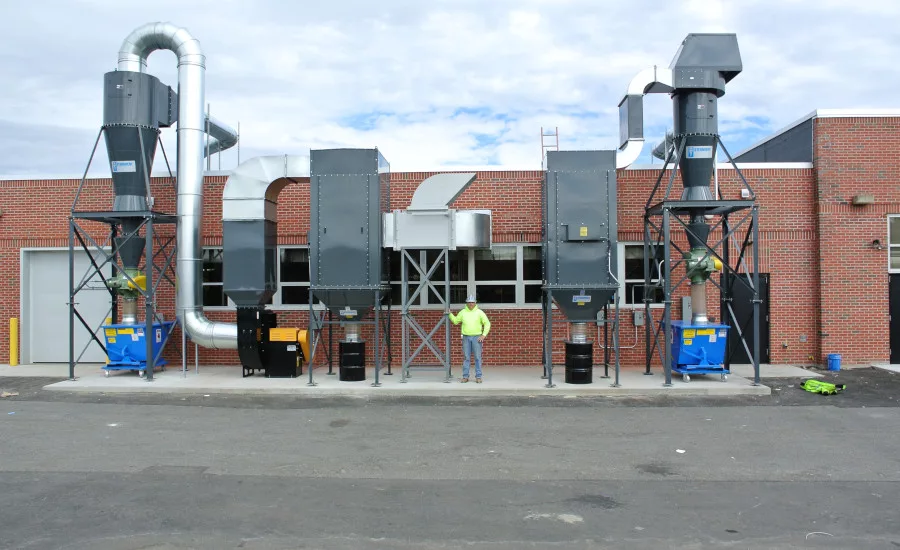
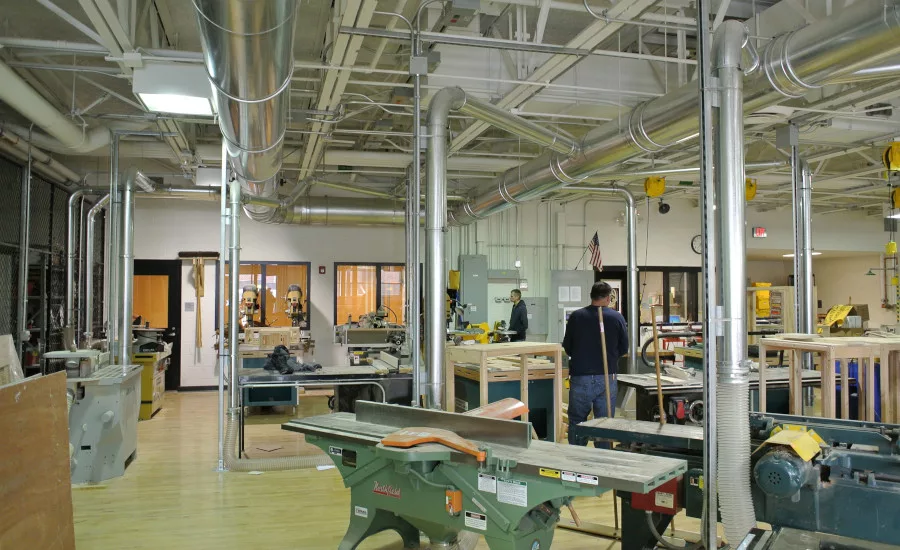
Dust collectors are used to capture, convey, and collect dust for a wide variety of manufacturing and industrial processes. Whether involving wood, plastic, metal, or chemical dust particles, this is done to improve safety by reducing fire, explosion, and dust inhalation hazards.
When it comes to dust collection, however, the challenge for mechanical engineers (MEs) is that, by definition, mechanical engineering is one of the broadest engineering disciplines. As such, they are often tasked with designing machinery or systems that provide a variety of functions, including generating power/electricity, conveying people/materials, and furnishing HVAC/refrigeration.
With such a broad focus, MEs are often unfamiliar with some of the technicalities of dust collection safety code compliance, since dust collection systems account for just a tiny fraction of their work.
When MEs have questions regarding dust collection on topics ranging from airflow to meeting NFPA and IMC codes, seeking guidance from an industry expert can help to achieve compliance, safe performance, and better indoor air quality.
Design Challenges
Since dust collection is so important for safety — and depends on factors such as the dust sources, air filtration, facility usage, and HVAC — it often has to be customized and not based on previous design plans.
Peter Levitt, an NFPA member, who for more than two decades has been a committee member of NFPA 664, which oversees revisions of the woodworking code, outlines the five main components of a dust collection system, which include a hood to confine the dust at its source, a duct system to convey the dust, a fan to provide hood suction and maintain transport velocity in the ducts, a collector to separate the dust from the air stream, and a device to store the collected dust.
“When dealing with dust collection, MEs often have questions about duct sizing, and how much air to allocate for suction at the hood and at each woodworking machine,” said Levitt. “They may not know what the velocity should be in the ducts, and often do not know what the code specifies for the dust collection system.”
Levitt notes that a properly designed and maintained dust collection system will dramatically enhance shop safety. This can not only reduce the risk of dust explosion and fire but also help to minimize any dust inhalation while improving IAQ.
“MEs are often not aware of the incompatibility of some machines, materials, and processes for a dust collection system,” said Levitt.
As an example, he cites a relatively common mistake.
“In a wood shop you might have a grinding wheel to sharpen tools,” he said. “However, you cannot have common suction at the grinder because any sparks produced could ignite the wood dust and trigger a fire or explosion. So the grinder cannot be part of the dust collection system.”
He adds that for a similar reason, PVC ducts should not be used with a dust collection system. The problem is that if static electricity is generated by the dust being conveyed in the duct, it can also cause a dust explosion.
Best Practice Dust Control
To help MEs learn best practice options for dust control, Levitt, who is also a product manager at Sternvent Inc., conducts lunch and learn presentations at engineering firms.
Union, New Jersey-based Sternvent has more than 50 years of experience in the design, manufacture, and application of dust collection systems. The company, which specializes in systems for the wood, metal finishing, and chemical industries, provides up-to-date guidance for compliance with NFPA, OSHA, and IMC.
In the presentations, Levitt covers topics such as determining the location of the dust collector, explosion venting, spark detection/suppression, and NFPA 664-recommended exhaust requirements. He also surveys the range of dust collection system equipment choices from indoor enclosureless positive pressure to outdoor shaker and pulse jet types.
While Levitt provides guidance, he defers sales to the Sternvent network of sales representatives.
One aspect of dust collection that needs more attention is the design of the ductwork, according to Levitt.
“For good airflow, good ductwork is essential. Even with a powerful dust collector, if the ductwork is not designed properly, you will have so much airflow resistance that you won’t have enough airflow or suction,” he said.
Another aspect that he says often needs consideration is whether the dust collector is located indoors or outdoors and how that affects filtered air.
“Typically, the dust collector is located outdoors for fire safety,” said Levitt. “However, in regards to filtered air, if you don’t return it properly, then in winter you will have a hard time heating the building. The result is like having a fan exhausting the warm indoor air outside.”
While many factors should be examined in designing a safe and effective dust collection system, it is also important to not over-specify it.
“If a dust collector is over-sized, it will not only cost more than required but also create excessive noise due to high-velocity airflow in the ducts,” said Levitt. “Knowing your options up front by collaborating with an expert can help MEs deliver the best equipment for the situation at the best price.”
Looking for a reprint of this article?
From high-res PDFs to custom plaques, order your copy today!