A Holistic Approach to Upgrading a Chilled Water Plant
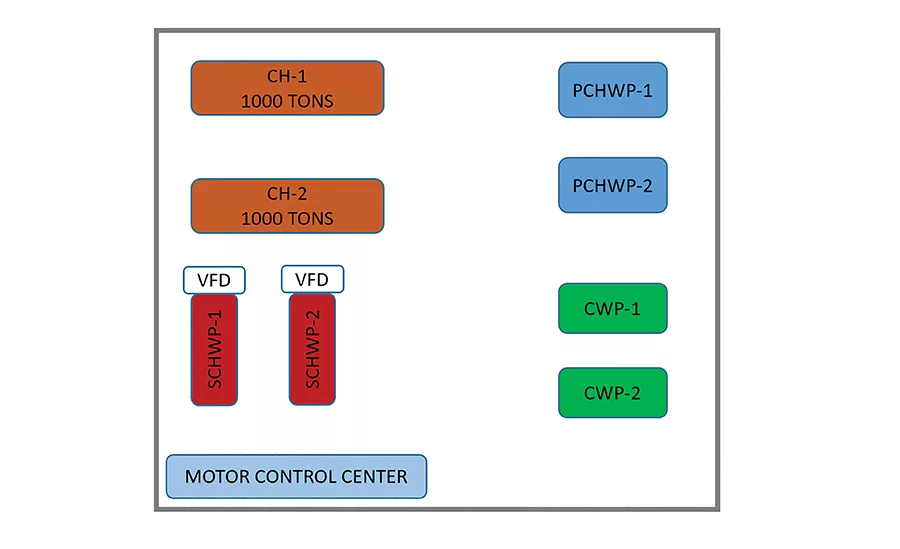
FIGURE 1. This layout depicts a mechanical room that houses a primary- secondary chilled water plant.
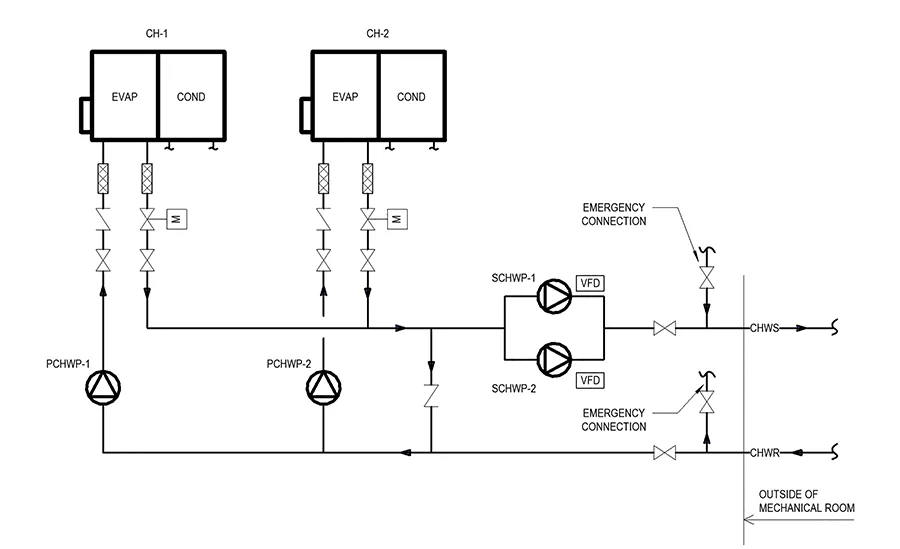
FIGURE 2. A chilled water system diagram that corresponds with the system shown in Figure 1.
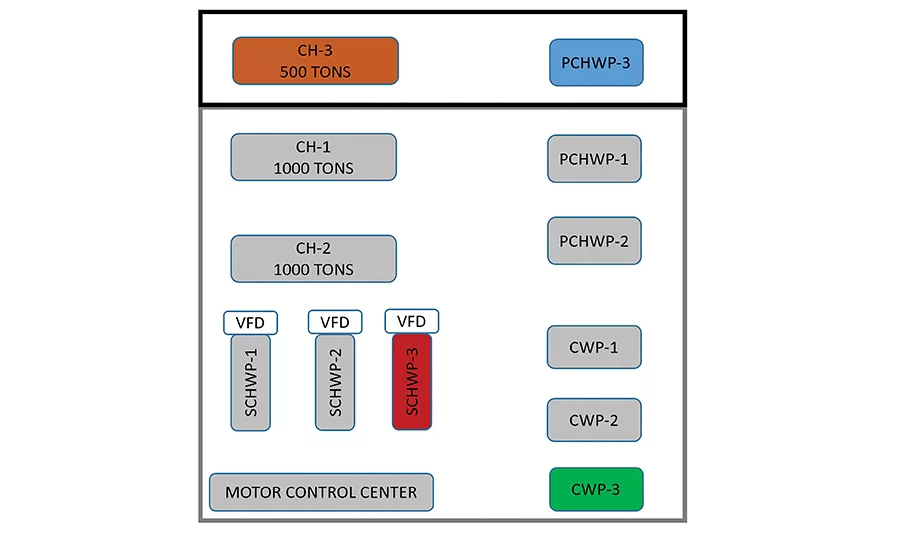
FIGURE 3. An attempt at expanding the footprint of the chilled water plant to support the installation of a new chiller and associated primary chilled water plant while staying on budget.
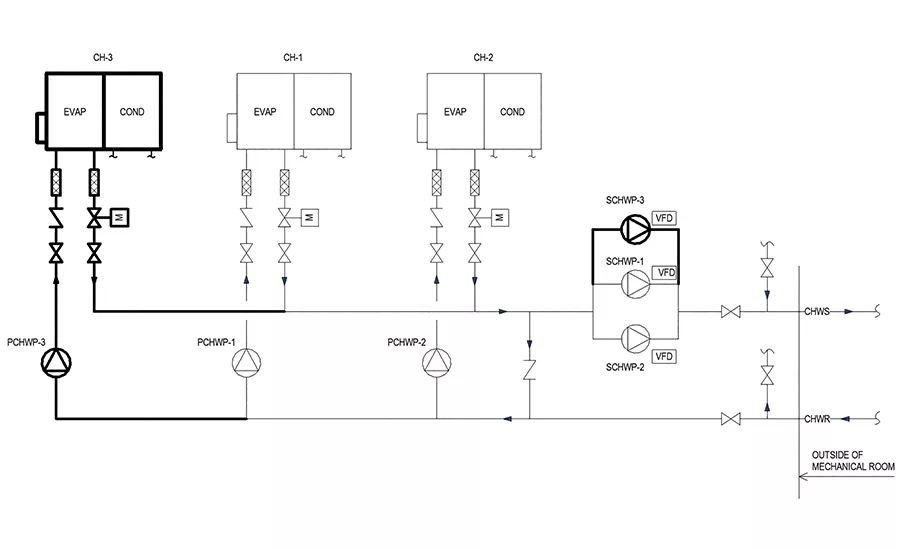
FIGURE 4. An associated chilled water system diagram for the system shown in Figure 3.
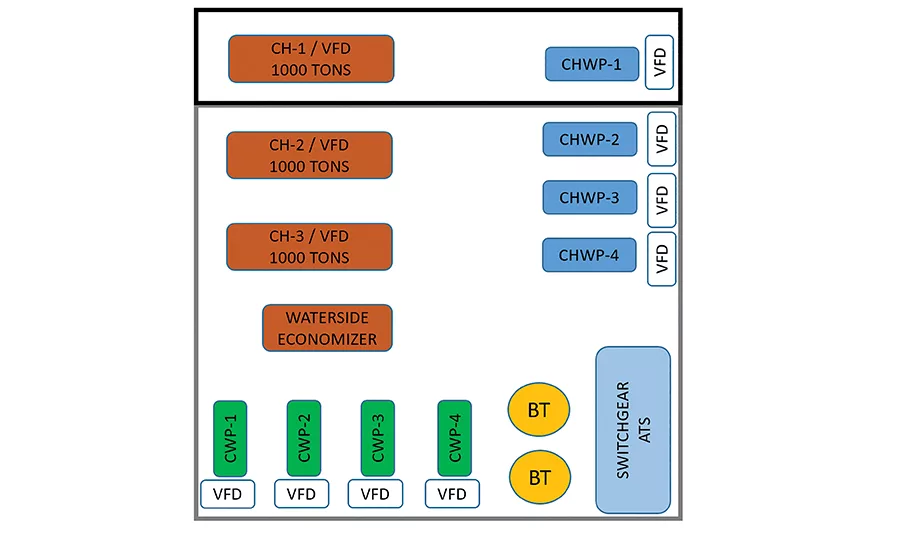
FIGURE 5. A variable-primary-only chilled water plant.
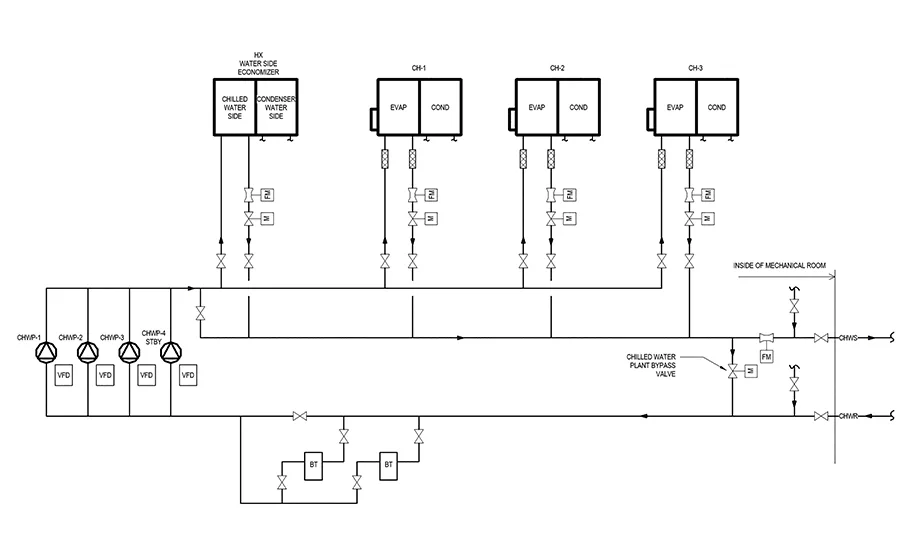
FIGURE 6. An associated chilled water system piping diagram for the variable-primary-only chilled water plant shown in Figure 5.
Due to chiller manufacturer constraints or just simple engineering habits (i.e proven-to-work, simple controls), back in the 20th century, and in particular towards the end of the 90s, it was industry standard to design a chilled water plant in a primary-secondary variable flow arrangement. In such an arrangement, the primary chilled water pumps are used to maintain a constant flow through the evaporator section of the chiller while the secondary chilled water pumps are sized to deliver chilled water to the building loads.
In some instances, these secondary pumps were originally designed and installed without VFDs; the control method employed in this scenario was to simply turn on the pump via a motor control center, and then let the pump “ride its curve” based on the variation of the building loads. In other instances, the secondary chilled water pumps were designed with VFDs or retrofitted (i.e change its motor) such that the pump speed can be controlled by a VFD. For a hospital, emergency backup for a chilled water plant is a need not a want; it’s not uncommon, even for plants that are getting close to the end of their useful lives, to see emergency chilled water piping connections extended to the outside wall of the mechanical room.
Figure 1 shows a layout of a mechanical room that houses a primary-secondary chilled water plant. Figure 2 shows the associated chilled water system diagram.
From an engineering perspective, upgrading a chilled water plant could represent an engineer’s dream, in particular when the plant serves an existing hospital that is planning a major addition. When one is faced with a project of this magnitude and complexity, attention to detail becomes extremely important. It’s no longer just about right sizing the plant or designing its new controls system; identifying the critical loads, available emergency power, size of the electrical system, load shedding, phasing, the need for temporary chiller(s) etc., are all factors that play a crucial role in the success of the project.
Let’s assume the existing primary-secondary chilled water plant has a total capacity of 2,000 tons and that its capacity is currently maxed out; there is no room to add additional loads on this plant. Let’s also assume the existing chillers are approximately 20 years old, that the new hospital addition will require the plant to provide 500 tons of additional capacity, and the owner allocated approximately $2 million for this portion of the project (i.e expand the chilled water plant).
Figure 3 shows what could be interpreted as the easy way out; an attempt at expanding the footprint of the chilled water plant such that it can support the installation of a new chiller and associated primary chilled water plant while staying within the project’s budget. As part of this exercise, the engineering team also managed to find room within the existing footprint of the chilled water plant for the new secondary chilled water pump and the new condenser water pump. After carefully analyzing the sizing and condition of the existing chilled water and condenser water piping systems, one might decide that the existing piping systems can adequately support the additional flow and no replacement is required, seeing that the increase in plant capacity is 25 percent. Figure 4 shows the associated chilled water system diagram.
Based on the above, one might assume that, from a design and cost management perspective, one has done enough; the team is now ready to finalize the design.
While it might be enough to make an owner happy, it is my opinion that design processes, such as the one described above, might deprive the owner from the option of making an informed decision. What other upgrade options are available such that the new chilled water plant can satisfy not just the immediate loads but also any future loads? Were the existing conditions analyzed in detail? Is there enough chilled water volume in the system? Is the plant suffering from “low delta T syndrome?” Is the plant capable of functioning as required during an emergency power situation?
As mentioned above, the existing chillers are assumed to be near the end of their useful lives; as such, one option might be to replace the existing 1,000-ton chillers and their associated pumps. Further, in order to simplify the design and control of the new plant, the engineer might decide to size the third chiller to also generate 1,000 tons of cooling capacity. Even though it might provide the owner with 500 tons of extra capacity, this approach will most likely require the replacement of the existing chilled water and condenser water piping systems located inside the mechanical room. A new condenser water piping system will also be required. The electrical system will also need to be significantly upgraded.
Depending on the location of the cooling towers, one might assume that this amount of work could add between $2 million and $4 million to the project, essentially tripling the original project budget. In order to justify this option to the owner, the engineer might attempt to perform an energy analysis of the new chilled water plant and show a payback of 10-15 years. It is this author’s experience that using such payback analysis to justify an investment to the C-Suite will hardly ever lead to a successful outcome. Realistically, when compared to the energy consumption of the existing plant, there is just not enough energy that can be saved in order to justify its complete replacement.
Another approach that could convince an owner to allocate additional funds to the project might be to perform a combined energy and financial analysis that attaches revenue to the project. Following a holistic approach similar to the one described in the “Turnover in the OR” article (February 2018 issue) might give one a greater chance of success.
The design and operation of a chilled water plant that serves a hospital is not just about delivering a certain amount of water at a certain temperature to the building loads. The complexity and duration of the latest medical procedures require AHU systems that provide the owner with the outmost flexibility; however, for such systems to be successful, there needs to be a chilled water plant that responds fast to the variation in the building loads and in the same time is as energy efficient as possible.
Should one decide to recommend to the owner the option described above, I believe “replicating” the primary-secondary chilled water plant with new chillers and pumps is not the optimal solution. If money is to be spent completely upgrading a chilled water plant, then it should be done “right.” I recommend seizing the opportunity and designing a new variable-primary-only chilled water plant. Figure 5 shows the proposed layout of the new chilled water plant. Figure 6 shows the associated chilled water system piping diagram.
In this scenario, a nonintegrated water-side economizer was added to take advantage of the cold temperatures during the winter months. Depending on the location (i.e close to the chilled water plant) of the new AHUs that will serve the new hospital addition, the new chilled water volume might not suffice in order to minimize the risk of short cycling the chillers; as such, two new chilled water buffer tanks were added.
Variable-primary-only chilled water systems require good control and monitoring of the water flow through each chiller. In order to prevent a chiller from tripping due to insufficient chilled water flow, high-quality inline flow meters or high-accuracy (i.e +/- 0.25 percent of full scale) differential pressure transducers are a must. Further, the design and selection of the chilled water bypass valve is extremely important. A bypass control valve with a 300:1 turndown ratio would be ideal in this scenario.
Lastly, but not less important, the engineering team can now design the emergency power system for the plant based on what is needed and not based on what can be done. One option is to have the entire chilled water plant “connected” to the emergency power system but not “supported” in its entirety by the emergency power system. For example, it may be determined that only one chiller, one tower, and their associated pumps are needed during emergency mode; the dedicated chilled water plant’s automatic transfer switch will be sized to handle only these loads. The BMS will then decide what chiller/tower/pump combination will be used to support the loads during an emergency mode of operation.
A hospital’s chilled water plant is the “heart” of the hospital’s HVAC system. If the chilled water plant fails or is not operating as intended, then the entire HVAC system is affected by it. This, in turn, could significantly disrupt the operation and income of a hospital. Once the chilled water plant fails, the individuals most affected by its failure are the patients. Implementing a holistic approach, attention to detail, effective team communication, and making informed decisions are all factors that contribute greatly to the success of a chilled water plant upgrade.
Looking for a reprint of this article?
From high-res PDFs to custom plaques, order your copy today!