Microscope's Environment Drives Creative Engineering Design
Transforming a Conference Room Into an Environment Capable of Housing a 15-foot-tall, 17,000-pound Electron Microscope
(Photograph by Rene Perez)
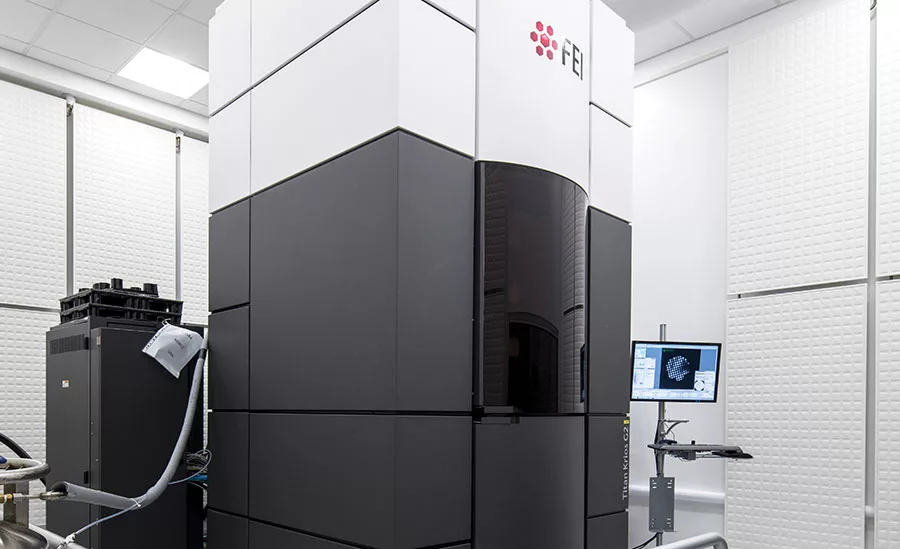
FIGURE 1. FEI electron microscope room. (Photograph by Rene Perez)
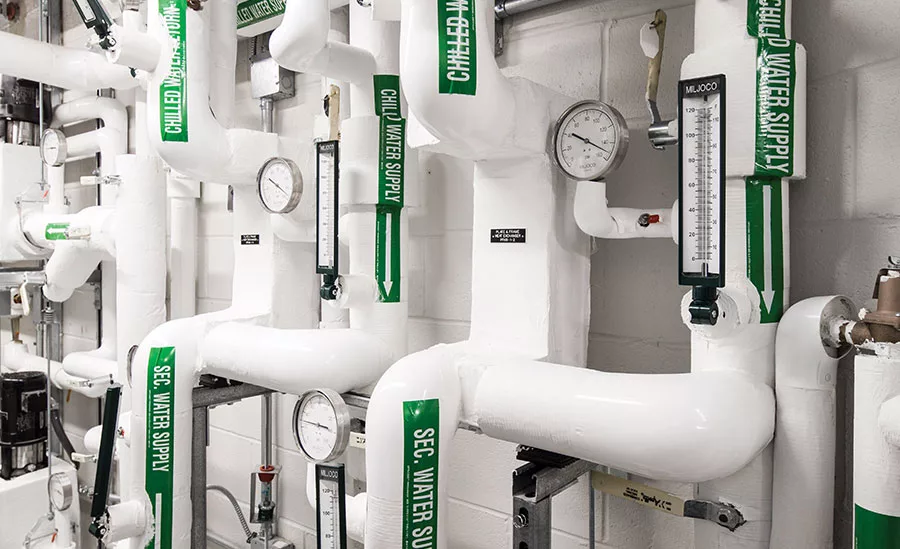
FIGURE 2. FEI electron microscope equipment room. (Photograph by Rene Perez)

FIGURE 3. FEI electron microscope control room. (Photograph by Rene Perez)
One of the most challenging issues that a building systems engineer confronts is the need to create an environment that meets stringent temperature and humidity requirements in a location that’s not specifically designed for the task. This was the challenge that Jaros, Baum & Bolles (JB&B) encountered — and solved — when the facilities management design and construction department at Memorial Sloan Kettering Cancer Center (MSK) asked the firm to convert a typical conference room into a meticulously controlled environment to house and accommodate its new transmission electron microscope (TEM).
Many commonly used techniques for heating, cooling, and ventilating a space were not compatible with the microscope’s need for a stable environment free of vibration, turbulent airflow, and excessive noise. As a result, the JB&B team needed to assess the situation with a clean slate, devising a collection of solutions that demanded creativity and originality.
Background
In 2016, MSK purchased an FEI Titan Krios cryo-electron microscope with a Gatan K2 Summit detector. This 15-foot-tall, 17,000-pound piece of equipment allows researchers to perform high-resolution imaging by focusing a series of electromagnetic lenses on cell samples. With this level of precision, scientists can better understand the structure of malfunctioning cancer cells with the goal of determining the cause.
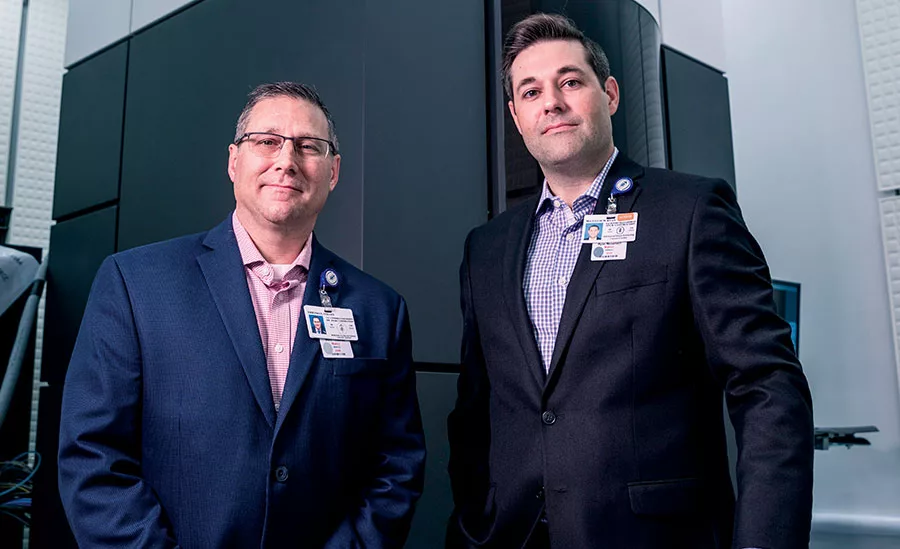
“For this highly sensitive project, we were tasked to design a space in our research laboratory building where the electron microscope could function without external error,” said Steven Friedman, P.E., the director of facilities engineering design and construction at MSK. “The only space available to accommodate this massive microscope was a large conference room that used a commercial-grade engineered system. The environmental requirements for the microscope required not only little to no turbulence and noise from the airstream but also tight operating tolerances of air temperature and humidity.”
The microscope, which features sophisticated electronics, is live and active 24/7 with MSK’s scientists and researchers typically working in the room. To ensure it produces the highest quality images for diagnostics and collection of data, it’s critical to maintain a stable environment throughout its operation. Optimal room temperature is between 17°-23°C (62.6°-73.4°F) and must not vary by more than 0.8°C (1.8°F) when the microscope is in use. This can be anywhere from a few hours to a few days, depending on the experiment.
The HVAC challenge was exacerbated by the fact that the microscope dissipates a substantial amount of heat, so the system’s cooling approach needs to maintain the specified ambient conditions while removing the heat generated by the equipment.
Radiant Cooling
An all-air solution, where filtered and cooled air is delivered to a space, is the most common engineering practice to remove heat from a space; however, the amount of air required to control the environment with the TEM in this space would have created turbulent airstreams and temperature fluctuations. Given the machine’s sensitivity to air velocities and temperature, an all-air solution was not a viable option.
This dilemma inspired an important creative design solution: radiant cooling to control room temperature and humidity. In this approach, sensible radiant cooling wall panels remove heat more uniformly, as the heat is pulled into the cooled mass of the space’s wall panels. It’s a slow process, almost atmospheric, that minimizes the fluctuations in temperature, basically eliminating noise and air turbulence.
Kigo Swiss supplied the radiant panels, and the JB&B team designed a secondary chilled water system that was then connected to the existing base building’s primary chilled water system. The secondary chilled water system consists of new plate-and-frame heat exchangers and a pumping system that provides the proper water flow through the radiant panels at the required pressure and temperature.
This approach offers the necessary system controls, verifying that the space remains above the dew point while maintaining a static temperature during the microscope’s operation.
“The need to get the machine operational as soon as possible meant that close coordination among project team members was crucial to ensure successful implementation of the system,” said John Gillham, project architect, AIA, of Environments for Health Architecture (E4H). “The conversion of the existing conference room presented myriad design challenges, including its physical location above an active parking garage and existing spatial limits. Due to stringent required acoustic isolation, which necessitated the installation of new sound transmission class (STC)–rated furred walls and radiant panels for the microscope cooling solution as well as the required equipment clearances around the TEM, the design team worked closely with the manufacturer to fit the components within the existing microscope and control rooms.”
To mitigate any noise or vibration impact from the garage, the team threaded new structural beams to the underside of the TEM room floor to stiffen the existing slab. Vibration isolation pads located under the TEM as well as HTC tanks added to eliminate vibration necessitated a new raised floor within the room with ramps and stairs included.
An exterior window in the conference room presented another obstacle, so the team designed a room within a room to better control the effects of the outside environment on the TEM’s operation. The design specified a film on the windows to reduce solar radiation and a physical cavity between the room’s exterior wall and the interior walls of the space housing the TEM. Additionally, the HVAC system includes displacement ventilation airflow with supply air brought in low and exhausted at the ceiling.
This provides continuous air circulation and temperature control within this cavity across the window fenestration. The design team also had to modify construction materials to reflect the uniqueness of the design. Typical operating instructions for items such as the wall panels and piping equipment were adapted to suit the requirements of the system’s design. This included the conversion of an existing adjacent storage area into an equipment room for the TEM, which also housed the dedicated chilled water system for the radiant panels, air compressors, electrical panels, and heat exchangers. Additionally, a dedicated UPS closet was created within an existing IDF room to house a new power conditioner, which was placed approximately 75 feet away from the TEM to avoid electrical interference.
Coordination of the components and site restrictions required clearances to be reviewed and confirmed down to 0.25 inch, a level of adaptability that required close attention to the construction work as it was being done. Designers altered shop drawings in meetings with contractors in the field meaning that quality control was paramount. The involvement of the design team during construction created an almost design-build feel to the project.
From JB&B’s perspective, one of the greatest engineering challenges was getting the team familiar with a system that it doesn’t design regularly. While the firm has successfully completed many radiant systems, none posed as stringent environmental requirements as MSK’s TEM. Good communication was critical to ensure that all involved parties were on board with the approach and pursuing the same goals.
Ventilation
To meet minimum code ventilation requirements for occupied spaces, which remain in place despite the use of a radiant cooling system, the design delivers air to the space via duct socks to mitigate turbulent air movement over the microscope. Duct socks are laminar-flow, low-velocity, fabric-face diffusers.
The team also designed a two-stage cooling coil to replace the chilled water cooling coil in the existing base building AHU serving this floor of the building. This system allows more moisture to be removed from the airstream before it reaches the space, thereby lowering and mitigating higher humidity levels through the overhead ventilation system. The second coil stage uses the chilled water leaving the first stage to reheat the air back to optimal supply air conditions.
The design team also had to consider the potential danger of an airborne leak of sulfur hexafluoride gas, which is used to insulate the equipment and can be lethal to humans due to its oxygen-displacing characteristics. While the space normally has minimum code ventilation air, an emergency will trigger a low-oxygen alarm and a specialized engineered exhaust system with increased make-up air to purge the threat from the space.
Equipment Complexity Requires Design Adaptability
The mechanical system design approach for the space to accommodate MSK’s TEM has no moving parts within the room, which was a critical aspect for the machine to function properly. Further, the use of this microscope could afford little to no downtime. By creating a system that requires minimal maintenance and designing the heat exchangers and pumping systems to be installed in a separate equipment room, the team ensured a high level of system reliability.
The TEM project is another reminder of how building systems engineers must assess and understand the requirements of a space and its equipment to successfully create a design that meets its needs.
“The challenges posed by the TEM demanded creative and innovative uses of existing technologies to deliver a unique solution,” said Friedman. “The design team took a space with a commercial-grade engineered system and converted it to a near-industrial-grade laboratory system suitable for the highly specialized research equipment it now houses. I believe we’ll see more of this in the future. As laboratory equipment becomes more sophisticated, the solutions that engineers provide will likely grow more complex as we must continue to seek viable solutions that are sound, reliable, and energy efficient.”
Looking for a reprint of this article?
From high-res PDFs to custom plaques, order your copy today!