Case in Point
Energy Software Keeps University's Scientific Research On Track
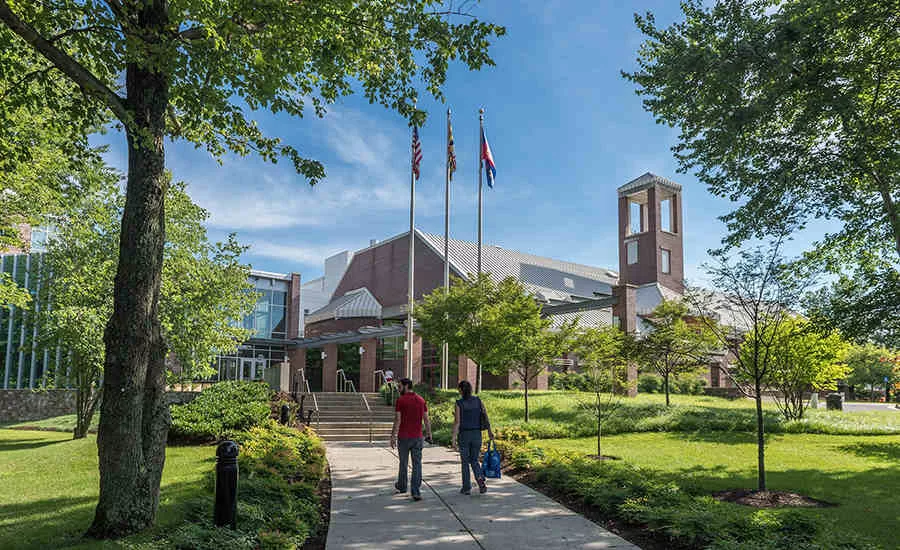
The Institute for Bioscience and Biotechnology Research (IBBR) on the University of Maryland campus significantly improved its chiller plant in part by deciding to optimize operational speeds of individual pieces of equipment.
The Institute for Bioscience and Biotechnology Research (IBBR) was one of the biggest energy hogs on the University of Maryland campus.
IBBR researchers have figured out the molecular structure of proteins, unraveled the protein interactions involved in autoimmune disorders, and more. Their infinitesimally precise experiments require around-the-clock lab access and a stable environment. A change in room temperature of just one or two degrees could twist the outcome of an experiment.
With this in mind, the IBBR facilities management team embarked on an aggressive energy reduction plan starting with chiller plant optimization. When the project began, the plant was consuming energy at 0.9 kW/ton and operating at just 50% output. Now the plant runs 27% to 37% more efficiently. IBBR has also reduced CO2 emissions by about 125 tons per year and improved plant reliability.
The IBBR campuses include over 200,000 sq ft of lab and office space. The original building opened in 1989, and a wing was added in 1995, for a building total of 75,000 sq ft. Each wing has separate chilled water plant and hot water systems and mechanical systems. The systems were connected when the new wing was built, but the components remain segregated. This allows the systems to operate as though they are a single plant with built-in redundancy. Building 2, built in 2007, is a 126,000-sq-ft facility that also has a chiller plant and a steam-heating plant.
Combined, the entire system maintains the lab environment by conditioning and controlling the temperature, humidity, and quantity of air flowing to and through the labs in each building with large, 100% ventilation AHUs and a combination of variable and constant volume terminal units.
Facilities staff knocked out easier projects first, such as water and lighting. Then the real work began. Because the HVAC system accounts for as much as 70% of the lab’s energy use, they first turned their attention to optimizing the 900-ton chiller plant in Building 2.
Although it was just five years old when IBBR launched its project, Building 2 turned out to be the better candidate for HVAC optimization. Its 900-ton plant has two 450-ton electric centrifugal water chillers, two condenser water pumps, two cooling tower cells, two primary pumps, and two secondary pumps.
It was originally outfitted with several variable speed pumps, but the primary chilled water and condensing pump ran at a constant volume, the cooler towers were configured to maintain a consistent speed, and water temperature was controlled with a cooling tower bypass valve — these were prime targets for efficiency measures.
The chillers were manufactured at the same time, but one of them had never run as efficiently as the other and had ongoing problems with surging. The plant has to provide 3,800 hours of cooling every year, so the facilities staff started their review of individual plant components with the chillers. They found that optimizing each component separately could significantly increase the plant’s overall efficiency.
IBBR chose Optimum Energy’s OptiCx™ HVAC optimization platform with OptimumLOOP™ control software for chilled water systems. From the VSDs and sensors installed on chillers, pumps, valves, and tower fans, the OptimumLOOP software collects data about the plant equipment. It compares the data to control algorithms, assesses plant conditions in real time, and then automatically changes pump and fan speeds, leaving chilled water temperature, equipment staging, and other operational changes to maximize efficiency.
IBBR began deploying the solution in 2013. The first step was installing some new variable drives to convert IBBR into an all-variable-flow plant, as well as the sensors on each plant component.
Next came connecting OptimumLOOP with the Siemens BAS and upgrading the BAS network in Building 2 to Ethernet to ensure the data flow wouldn’t challenge the local network capacity. When that was finished, IBBR had OptimumLOOP up and running across the chiller plant.
In the first year of full operation, the optimized plant cut the IBBR’s energy use by an average of 30%. Originally, each primary chilled water pump ran consistently at 60 Hz. Now they each run at an average of 55 Hz. That may not appear to deliver huge savings, but the change in speed provides about 20% savings for the pumps alone. And OptimumLOOP’s relational control algorithms maximize overall plant performance and meet the optimal parameters for current conditions. IBBR found that running individual pieces of equipment at more efficient speeds adds up to one big number.
2014 was a year of testing. In trying to protect itself from surging, the chiller control panel ended up hampering energy efficient operation. The chief problem was old data. Working with Optimum engineers, the facilities team urged chiller mechanics to update the data at the control panel, and Siemens engineers adjusted the chiller code in their system to address condensing water control issues.
Plant efficiency got progressively better over the course of the year. 2015 brought consistent energy reduction, and the plant was running in an optimized mode almost all the time, adapting and responding to real-time loads and changing ambient conditions. By the end of summer 2016, IBBR had wrung all possible efficiencies out of the environmental stabilization plant, and it is now fully optimized.
From the beginning, the IBBR facilities team took the long view of the optimization project, in part because Building 2 was only at about 50% capacity when the work began. Now the labs are nearly fully occupied with scientists running their experiments daily — and that has been the true test. The optimized plant has been able to operate just as efficiently with a full load. IBBR’s energy consumption has remained flat even as user occupancy has nearly doubled.
Looking for a reprint of this article?
From high-res PDFs to custom plaques, order your copy today!