Case In Point
Hospital Cures Efficiency Challenges With Updated Induction Units

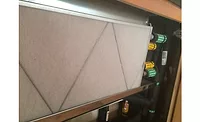
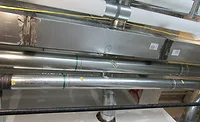
New induction units at the Greenville Memorial Hospital are already showing signs of success. The wall units are providing 300 to 400 cfm of air, 35% more than previous units installed at the hospital.
Many facilities built in the 1970s and ’80s continue to operate and maintain aging induction-based air conditioning units originally installed in each room or space. Not to be confused with fan-driven systems, these alternatives have no fans, blowers, or moving parts and can operate for decades.
However, as these units inevitably decline in efficiency, facility owners and managers are faced with a critical decision: upgrade to more modern induction units or embark on an extensive, costly renovation project to overhaul the entire HVAC system.
While both options have merit, many are opting for the lower capital costs and relative simplicity of replacing existing induction units with modernized versions that are quieter and more efficient.
Others have no choice, given the limitations of space within the existing structure that preclude installation of additional air handlers or extensive ductwork required with all-air systems.
Induction-based HVAC technology is seeing a renaissance that is largely attributed to the recent interest in “chilled beam” systems, which are induction-based. Although traditionally installed in ceilings, chilled beams can also be installed in walls, floors, and soffits.
Induction systems work by forcing primary (outside) air supplied by central air handlers through specialized nozzles in individual units located in each room or space. By doing so, a “free jet” flow of air is created that induces the secondary air inside the room to also be drawn into the unit, often around four times the volume of the primary air.
Now at a much higher combined cfm, the secondary air is mixed with the primary air. This is accomplished using hot or cold water, which is why these are often referred to as air-water systems.
Originally built in 1972, Greenville Memorial Hospital, the flagship hospital of the Greenville Health System (GHS), was still operating 322 induction units in 267 patient rooms and support spaces.
“Although the induction units had been well maintained, and had operated well for 45 years, they were operating at less than full capacity,” says Curt Hall, P.E. principal engineer for facilities development at Greenville Health System (GHS).
GHS has a footprint that stretches out over approximately 6 million square feet in over seven counties. According to Hall, the facilities development group oversees capital projects, new construction, renovations, moves, and acquisition of facilities.
For the Greenville Memorial Hospital project, Hall says the engineering group discussed several alternatives, including a central overhead air system and fan coil units. However, these would have required installing new AHUs, extensive ductwork changes, and other utility system alterations.
“We ended up deciding to stay with the induction units,” says Hall. “The decision was driven by the structure of the existing building and what it would allow us to do.”
Hall says the engineering group also wanted to take advantage of recent improvements in nozzle design, electronic damper controls (EDC), and other features in modern induction units that can reduce operating costs and provide better air flow distribution.
An additional motivation was to reduce energy costs associated with the building’s central air handlers, which were being run at higher pressures to deliver primary air to the aging induction units.
After consideration, the engineering group decided to embark on a project to replace the 322 existing units. The project is being completed in increments, with a priority placed on patient rooms, as rooms become available. On average, the conversion takes two days per room to complete.
The first step was to identify the source of the induction units. For this, Hall contacted the local Trane office. The original 1972 induction units were Trane models. However, the company no longer offers induction units, so the local rep recommended an alternative from LTG.
LTG has been marketing induction-based HVAC systems for more than 90 years. LTG’s induction units and chilled beams feature high cooling and heating capacities, low sound levels, and low maintenance requirements.
According to the company, LTG’s induction units are energy-efficient and can be operated in three different operating and flow modes using the company’s SmartFlow technology. This includes normal mixed/displacement air flow operation, pure displacement, and a variation for rooms with higher occupancy levels and a “boost mode” for rapid temperature adjustment after a long weekend, etc.
Having identified the correct units, Hall and his team began the project. To date, over 90 of the new induction units have been installed, and already there are noticeable benefits.
To start, the new wall units provide 300 to 400 cfm of air, up approximately 35% from the previous units. In addition, the more efficient units reduced the workload on the two relatively new primary air handlers that had been installed in 2013. Although both were capable of a fairly high discharge pressure, operating at 7 to 8 in of pressure, they also consume more energy at the higher pressures.
“We won’t see the full benefits until we replace them all, but with a third of the units installed, we have been able to reduce the pressure on each of our air handler units by 1 to 2 inches of pressure,” says Hall. “The new units deliver a higher air change rate, and they do it quietly. We have found that a quieter environment helps patients recover quicker.”
Looking for a reprint of this article?
From high-res PDFs to custom plaques, order your copy today!