Beyond The Hard Hat: IAQ On The Job Site
Tight schedules can short-circuit safety, but the data urges better IAQ.
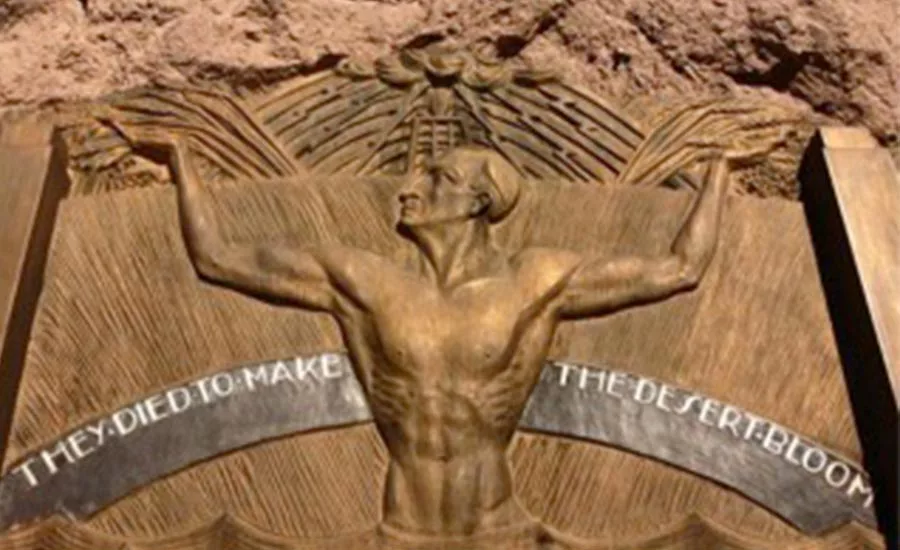
FIGURE 1. Monument at the Hoover Dam site in Nevada.
While in Las Vegas at the ASHRAE conference and AHR Expo, I visited the colossal Hoover Dam built over a remarkably short time of five years (1931 to 1936). The dam was needed to harness the Colorado River and supply hydroelectric power and water to seven Western states.
In the midst of the Great Depression, scorching desert temperatures, volatile river currents, and never-ending rock canyon walls were not enough to discourage men, desperate for paid jobs, from signing on as dam workers. To make this hazardous situation even worse, the construction and engineering team was awarded the job after a competitive bid process during which they agreed to a contract with the stiff penalty of $3,000 per day if behind schedule. The on-site conditions resulting from the confluence of time pressure, workers desperate for jobs, and almost unsurmountable topographical forces were so deadly that the Hoover Dam is known not only as an extraordinary engineering and construction accomplishment, but also as one of the 10 most deadly building projects in U.S. history.
During the first summer of the dam site excavation, men died daily from heat stroke, falls from high cliffs, and crushing rock slides. Soon, workers organized to try to improve conditions. Highly publicized struggles between workers and executives were unsuccessful in creating a union; however, it did increase safety measures to reduce heat stroke and horrible injuries. By 1932, workers were required to wear hats made from canvas and hardened tar to protect them from falling stones and tools. In fact, the Hoover Dam was the first project in history which required on-site workers to wear these “hard hats”.
While causes of dramatic and gory accidents were addressed, less visible dangers were ignored. For example, a U.S. law prohibited the use of gasoline powered vehicles in closed tunnels, but Hoover Dam construction executives amended this law so vehicles could be used to hasten the completion of the project. Consequently, numerous tunnel workers died from acute and chronic carbon monoxide poisoning.
Today, 85 years after completion of the Hoover Dam, safety interventions have reduced accidents from falls, fires, and tumbling boulders. However, less visible respiratory hazards continue to harm workers on new construction and retrofit jobs. Despite OSHA regulations mandating respiratory protection when needed, current morbidity and mortality tables show that deaths from lung cancer and other pulmonary diseases are 50% higher among construction workers than the general U.S. population, even when adjusted for smoking.
In addition, a disproportionally high percentage of these workers suffer from musculoskeletal disorders, chronic pain, and noise-induced hearing loss. Even less quantified are the number of workers suffering from long-term effects of absorbed neurotoxins such as lead and manganese. In acute poisonings, these chemicals are known to damage the nervous system, kidneys, and can cause infertility and miscarriages.
Why are diseases from respiratory hazards still underestimated? We cannot claim that this is new information! Over 300 years ago, Bernardino Ramazzini wrote in “De Morbis Artificum Diatriba” (Diseases of Workers) that dust, “would gradually prove fatal to stonecutters who took no precautions.”
The answer to this puzzle may be that diseases from inhaled gases, dusts, mists, and fumes have very different time frames. Some respiratory toxins act quickly to cause unconsciousness or death in minutes, while others can take years to manifest their damage. The long-range diseases from the smallest, invisible airborne particulates are the worst. While larger, heavier particles settle out of the air, smaller solids are inhaled and can penetrate deeply into our respiratory system by evading the natural defense mechanisms of cilia and mucous membrane cleaning.
"Current morbidity and mortality tables show that deaths from lung cancer and other pulmonary diseases are 50% higher among construction workers than the general U.S. population, even when adjusted for smoking."
As the aging infrastructure in Europe and the United States requires renovations, demolition, and new buildings, industry regulations must protect people on and near construction sites. The pressures of tight schedules and limited budgets are unlikely to go away. Nevertheless, safety codes must expand their focus to better prevent long-term diseases, in addition to harm from accidents. To understand the most effective safety measures, we must collect more health data on chronic diseases in workers exposed to inhalable gases and particles. As disease patterns are better understood, effective protective strategies must be put in place, turned on, and properly maintained. Hard hats are a great start, but clearly more is needed. ES
Looking for a reprint of this article?
From high-res PDFs to custom plaques, order your copy today!


