Even Cooler: Rebates Boost Thermal Storage Retrofit
Two towers of office space were overdue for an efficiency overhaul. A creative and responsive project team cleared some placement and design hurdles for its new central plant, all while remaining qualified for nearly $1 million in utility rebates.
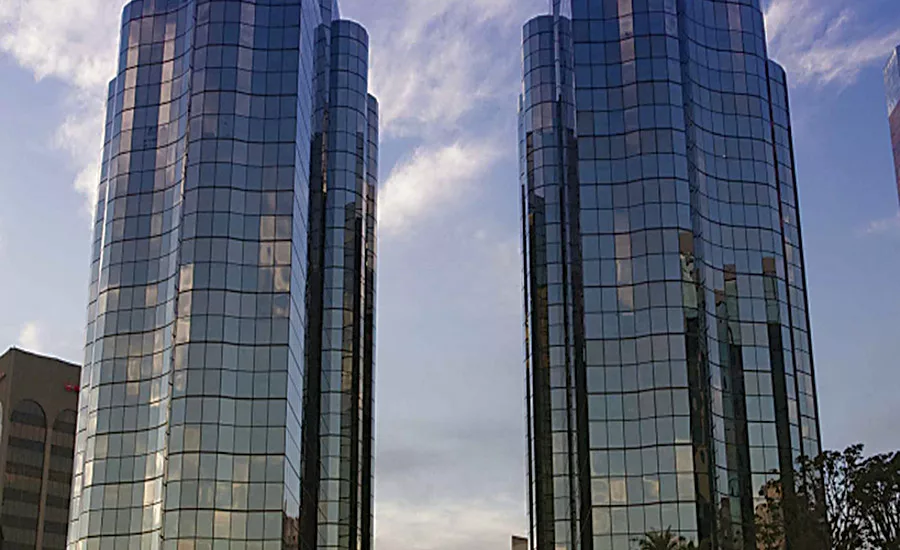
FIGURE 1. EMCOR Services Mesa Energy Systems completed a major mechanical retrofit at the Molina Center towers in Long Beach, CA, reducing annual energy consumption by 755,775 kWh.
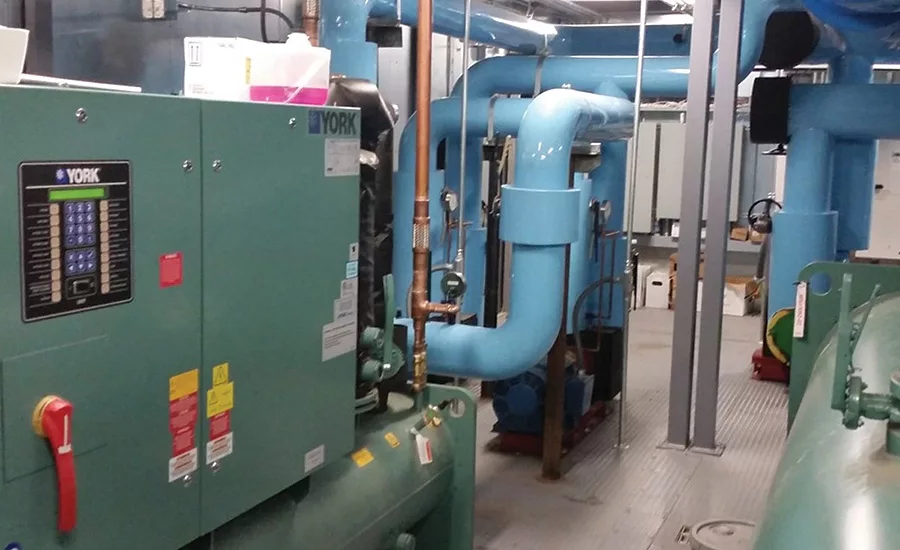
FIGURE 2. Working in extremely tight quarters, EMCOR Services Mesa Energy Systems engineers designed and built an area between two parking structures to install 10 new thermal energy storage units.

FIGURE 3. Due to city space restrictions, EMCOR Services Mesa Energy Systems came up with a solution to construct a brand new modular central plant (MCP) to house the chillers, pumps, VFDs, and DDC system in Molina Center’s loading dock area.
Back in 1983 — over three decades ago — a built-up DX cooling system was a good alternative to a chilled water-based system for the Molina Center (Long Beach, CA). The 460,000-sq-ft office complex is composed of twin 14-story towers connected by a glass atrium lobby. The DX system avoided the need for a fan room and AHU on every floor.
Fast forward to 2015, where incorporating the latest advancements in technology and the higher standards for Class A office space was made possible as the result of the completion of a major retrofit of the Molina Center central plant. The retrofit significantly increased the facility’s energy efficiency, reduced its operating costs, and improved the quality of the tenant experience.
Designed, engineered, and implemented by EMCOR Services Mesa Energy Systems (Mesa), this major retrofit project completed in 2015 involved installation of new cooling towers between two parking structures, construction of a new modular chiller plant near the building’s loading dock area, and installation of a new energy-efficient, 6,000-ton-hour ice-based thermal energy storage (TES) system.
As a result of the project, Molina Healthcare, Inc. was able to obtain a $997,500 rebate through Southern California Edison’s Permanent Load Shift (PLS) program, which significantly offset the capital cost of the project.
The TES system redistributes energy used for cooling during on-peak hours — when building load, utility demand, and energy charges costs are highest — to off-peak hours. Mesa engineered the TES system to shift 950 tons of energy off the on-peak period, reducing the overall utility demand by 1,140 kW, and reducing annual energy consumption by 755,775 kWh. In addition to the rebate, Molina Healthcare anticipates that the retrofit will enable the Molina Center to realize nearly $250,000 in annual energy savings.
Molina Healthcare, a Fortune 500® healthcare organization comprising health plans, medical clinics, and a health-information management solution, provides health services to families and individuals covered by government programs. In addition to serving as the corporate headquarters of Molina Healthcare, Inc., the Molina Center also provides Class A office space for a number of public institutions and private enterprises.
A Closer Look at the Cooling Systems, Old and New
The original mechanical cooling system comprised an identical built-up DX system in the penthouse of each tower with four floor-mounted 135-ton reciprocating technology compressors and a roof-mounted heat rejection system, which is highly inefficient by today’s design standards. The distribution system comprised central core supply and return air shafts. Not only was the operation of the cooling system audible to tenants on the upper floors despite a spring isolation system, but replacement parts were increasingly hard to obtain.
The Molina Center’s property manager issued an RFP seeking an alternative to replace the existing system, which included alternatives of retrofit of the DX system with an upgrade to Turbocor compressor technology; replacement of the DX system with Turbocor chillers in each penthouse; or construction of a common chilled water-based central plant system to serve both towers.
Mesa proposed a common chilled-water based central plant solution involving the following.
• A 40- by 30-ft modular central chiller plant housing two 450-ton centrifgual chillers with a capacity of 330 tons under ice duty, and a 200-ton variable-speed screw chiller with dual refrigeration circuit for redundancy serving the after-hours and overnight loads
• A two-cell, four-fan, VFD-driven, cross-flow cooling tower system with 1,100 tons of heat rejection capacity
• A modular-based TES system using a 22˚F glycol solution with up to 6,000-ton-hrs of capacity
• Retrofit of the DX system to a penthouse built-up chilled water system, including replacement of the existing 4-ft-high, four-section stacked DX coils with chilled water coils; replacement of the drain pans; and refurbishment of the AHUs
The owners initially decided to implement the TES system as a future development of the project, which influenced the specific selection and capacity of the chillers.
An Ingenious Solution to Siting the New Central Plant
The P3 level of the Molina Center’s parking garage was initially considered as the site for the modular chiller plant. However, meetings between the Mesa team’s project architect and the City of Long Beach revealed that zoning for the building’s occupancy did not permit the loss of 20 parking spaces.
A suitable L-shaped site was identified on Molina Center’s property for the modular chiller plant, TES tanks, heat exchangers, and cooling towers. The unused north end of the large concrete loading dock (base of the L) easily accommodated the 1,200-sq-ft modular chiller plant; the junction of the loading dock and a contiguous, previously unpaved lot measuring 20 ft by 120 ft (the vertical section of the L) was identified for the TES and condenser system. The project architect’s drawings were approved by the City of Long Beach Planning Department and also passed the Coastal Commission hearing.
The plans called for routing a 10-in diameter common supply/return chilled water pipe from the chiller plant through the parking structure at ground level, where it is split into two 8-in diameter supply/return pipes to serve each tower. The piping penetrates the towers at the existing return air shafts and is run up to the penthouses.
Gaining Approval for California Edison’s Full PLS Rebate
While these challenges were being solved, the Mesa team researched grant and rebate opportunities for energy savings and alerted Molina Healthcare about California Edison’s PLS program, which offers $875 for every kilowatt of load that can be permanently shifted off peak demand. Based on the team’s calculation of the cost to implement thermal storage at the same time as the central plant, the owner determined that the full PLS rebate would tip the balance sheet in favor of proceeding with a TES system.
The team laid out the thermal storage farm and modified the design of the central plant with additional pumps for the glycol solution, heat exchangers, chilled water and condenser water loops, and additional instrumentation and controls. Appropriate space was identified on the L-shaped lot to house the heat exchangers. A foundation was designed to handle the load of the lower thermal storage tanks, along with caissons, columns, and decking to support the upper tanks.
A new set of plans, structural and MEP drawings, geotechnical drawings, soil test reports, and other pertinent documentation were submitted to the city and the project design was approved.
Simultaneously, the Mesa team submitted the Permanent Load Shift program applications and met with Southern California Edison to qualify the project for the rebate. Initially, the utility was only going to authorize half the amount of the rebate. Mesa led the follow-up meetings with the utility’s program manager and third-party engineer, and the team provided engineering documents proving that the built-up DX system falls under the air cooled criteria rather than the chilled water criteria of the PLS program guidelines, qualifying the project for the full rebate of $997,500.
Construction/Installation/Testing Strategy Avoids Service Interruptions
The construction, installation, and testing/pre-commissioning strategy was predicated on completing as much of the process as possible while the existing built-up DX system continued to operate in order to avoid service interruptions. Phase one entailed completion of site work, installations of concrete foundations, caisson work; steel erection, crane delivery, and installation of the three-section prefabricated modular plant, as well as installation of the cooling towers and condenser pumping system, installation of controls and instrumentation, installation of piping, and DX retrofit. Phase two entailed installation of the TES system.
It’s always challenging to schedule and coordinate construction, installation, and testing/pre-commissioning in occupied buildings. For example, the installation team had to route and insulate the supply/return piping through the operational parking structure. Electrical shut-downs were scheduled with the city because the main building electrical room was located on P1, near the modular chiller plant, but the team wanted to ensure that there would be electrical diversity given that there are four BUS ducts coming out of the main electrical room, two of which provide power to the mechanical equipment in the penthouses. The power generated out of these BUS ducts and associated switchgear was redirected to the chiller module, cooling towers, and condenser pumps. Electrical BUS-Tap modifications were completed in the main electrical room and two new sets of switchgear were installed to power the two 450-ton chillers, providing redundancy, and a separate power feed was provided for the 200-ton chiller.
The Critical Transition from DX to Chilled Water
The critical challenge was how to continue to power the DX equipment in the penthouses while providing power for the new central plant so that it could be tested and brought online. Use of an on-site diesel generator and a heat load was considered to power the new equipment on the ground before the transfer to satisfy cooling the building. This cost was avoided by developing a strategy that took advantage of the fact that the DX system had been built with multiple refrigerant circuits, so every two compressors were connected to 50% of the DX coils.
The transfer was scheduled during the months of November and December 2014. During the transfer phase, the team staggered the retrofit of the DX coils in each tower, performing 50% of the retrofit in one tower, followed by 50% of the retrofit in the second tower, and so on, over consecutive weekends — while using the new 200-ton chiller to serve additional load via the chilled water distribution in the tower that was undergoing the retrofit. This strategy maintained cooling capacity during the transition from the DX system to the chilled water system.
Building Ice and Confidence
During testing and pre-commissioning, the team ran the system exclusively as a chilled water system for up to four weeks in January 2015, so that the owner and building operators could gain confidence that the new chillers were capable of handling the total cooling load. Next, testing began of the TES ice regeneration and depletion modes and associated equipment on designated evenings. While building ice under TES regeneration mode, the 200-ton chilled water system served the tower’s after-hours loads, and the process was repeated for the second tower. Ice was built for a few hours and burned off, working up slowly to using all 10 storage tanks at full capacity. Testing was performed at various times of the day — during theoretical peak and depletion hours — without rate penalties.
In February 2015, the Mesa team, internal building operations team, and owners were confident and prepared for the third-party commissioning agent to perform commissioning, after which the plant was put into operation with TES serving the on-peak loads.
The construction and installation process was completed in approximately nine months. The fact that this complex central plant project was successfully completed without any interruption of service to the Molina Center’s building operations and tenants is a result of effective, continual communication between the Mesa project management team and the Molina Center’s internal project team, Mesa’s highly skilled workforce, and its local mechanical piping, electrical, steel, and concrete partners — all sharing a commitment to quality and service.
Subsequently, Molina Healthcare sought Mesa’s expertise for a solution to reduce heat load and sun glare in its corporate event center on the 14th floor without obscuring the spectacular view of Long Beach Harbor. The team introduced the owners to Smart Glass technology, which had been successfully used in the “green” transformation of the Hilton Los Angeles Universal City Hotel (see Sept. 1, 2014 issue of ES). A pilot project was completed to re-glaze the 14th floor with the four-layer dynamic in-fill glass, which automatically adjusts its tint in response to exterior lighting conditions.
As energy technology and Class A office space standards continue to advance, the Molina Center is keeping pace, saving on the cost of energy every year along the way. To this end, EMCOR Services Mesa Energy Systems was additionally awarded a multi-year annual preventive maintenance for Molina Center in order to help ensure that all the systems that were installed continue to run smoothly and at peak efficiency, as planned, and that all standards are maintained. ES
Looking for a reprint of this article?
From high-res PDFs to custom plaques, order your copy today!