The Next Generation Of Building Automation
What is the difference between a typical BAS scenario and one that involves building analytics? And why did one library start to see its utility costs and trouble calls start to spiral upward? As you might imagine, the answers to these questions are related …

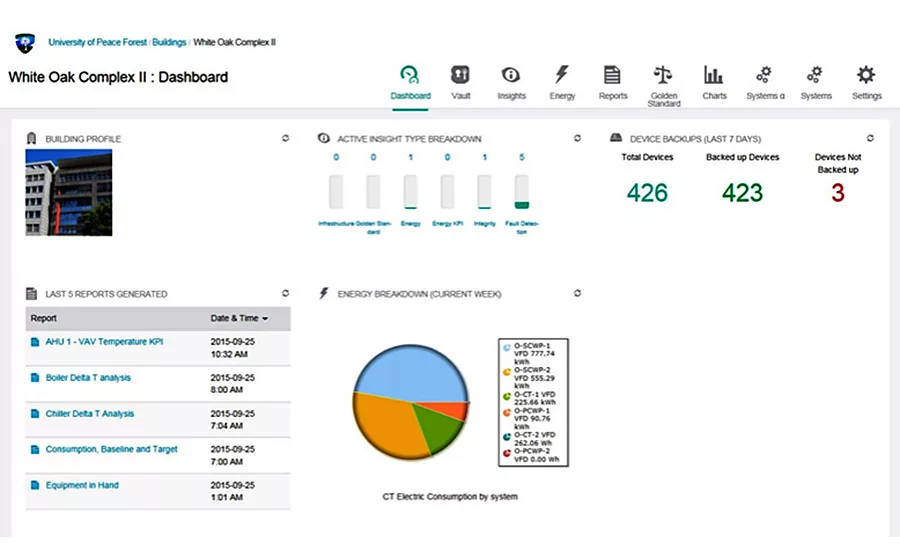
FIGURE 1. Typical analytic dashboard.
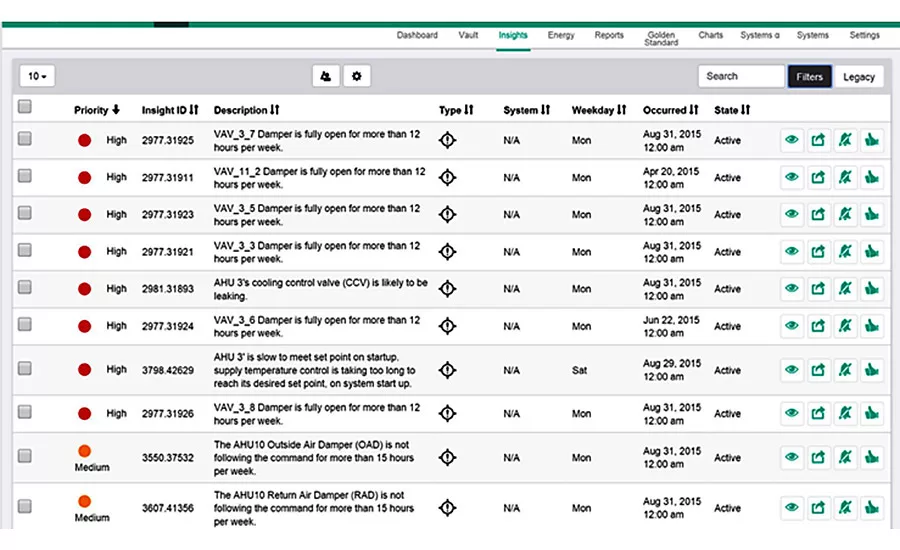
FIGURE 2. Example of Fault Detection and Diagnostics (FDD).
Since the early ’80s, building automation technology (BAS) have played an integral role in engineers’ ability to aid facility owners and operators in achieving operational efficiency, dependable comfort, and lower energy costs. However, despite significant capital investments, often times the full potential of these systems is not realized, resulting in less than optimal building performance. Enter the emergence of the latest technological trend in the industry: building analytics.
The integration of a building analytics platform alongside a BAS provides a powerful combination of technologies that helps customers fully leverage the capital investment they have already made into their BAS. Furthermore, it provides a window into opportunities for facility improvement measures that enable further optimization of a building’s performance.
Traditional BAS
We think of BAS as the centralized and automated microprocessor-based control system installed in a building, controlling the HVACR and associated equipment such as lighting, power systems, fire systems, and security systems.
A BAS consists of both hardware and software. The hardware is typically arranged in a multilevel network configuration. While early-generation systems were operated utilizing proprietary software protocols, market demands and technology advancements have driven the industry toward non-proprietary, open protocol systems. Third-party equipment manufacturers routinely offer products with “off the shelf” integration capabilities utilizing BACNET as well as other open protocol standards such as Lon Works, Device Net, SOAP, XML, and Modbus.
The BAS is a collection of devices that resides on a single network or several integrated networks. Through a variety of strategies, a BAS can also integrate or take on monitoring or control functionality from a vast array of building systems, such as fire and life safety systems. Other building systems sometimes integrated to a BAS can include less traditional systems such as elevators, window shading systems, fuel storage, utility consumption, battery backup, and even third-party vending systems.
The data that a BAS gathers from any integrated equipment or system is pulled remotely and then transmitted to a central database, where it can be utilized to generate alarms and reports. It can include a wide variety of building information, from room temperature trends to runtimes of equipment such as pumps and chillers, on to energy data from meters within a facility. Facility data can also be compared against external information such as weather data or comparative facility data. Meaningful reports can then be generated that support the efficient operation and management of a facility. Alarms or event notifications can be generated for users of a BAS when data collected falls outside predetermined parameters, helping to detect equipment faults or issues that may cause occupant discomfort. These alarms and events are displayed prominently for users and can also be sent via email or mobile applications.
What are Building Analytics?
As compared to BAS, analytics represents a more recent technological advancement within the industry. Analytics can be generally described as the perpetual search and notification of significant abnormal or undesired patterns in data. Analytics are applied in a variety of industries, and the HVACR industry is no exception. While a BAS provides information on temperature, air flow, energy usage etc., building analytics provides additional insight necessary to fully understand what is truly going on within a building. Analytics is a tool used for anti-degradation, continuous improvement, prioritization of maintenance and repairs, fault detection, normalized reporting, and categorized and prioritized notifications. Analytics also assists in troubleshooting and creating repeatable procedures.
An effective building analytics tool should include fault detection, fault categorization, and root cause determination. In order to leverage the fault detection functionality, the analytics system must also include reporting capabilities that are normalized, prioritized, and monetized.
Analytic applications are based upon “rules” of how building systems should optimally operate, generally obtained from the original design documents and monitoring of key data points in near-real time. Essentially, the analytics platform compares the real-time data with the rules. Put in simple terms, if the data adheres to the rules, the system is fine; if not, the system is not running optimally and a fault is detected.
A typical building analytics system includes several layers of activity, including:
- Identify conflicting systems that consume excess energy
- Forecast and monitor energy loads and set up strategies to minimize demand charges
- Pull additional business-critical variables into an analytics tool for analysis — anything needed to measure or monitor from weather forecasts to enterprise data and more
- Query large amounts of raw and historical trend log data — previously a prohibitively time-consuming task
- Identify specific equipment and systems that require servicing, repair, or replacement
- Model the effects and ROI of potential commissioning, renovations, repairs, and retrofits
- Move away from scheduled, rotational maintenance toward a predictive maintenance approach
- Predict, monitor, and verify energy efficiency improvements
- Notify building system faults to catch and proactively resolve issues
Once an analytics platform is connected to a BAS, a new window into building operation is opened and an abundance of practically and logically organized, real-time data becomes readily available. While this data in and of itself is valuable, looking into the rearview mirror and observing what’s already happened is only part of the equation. It is the translation of this information into actions that truly matters.
Putting Data into Action
It is necessary to develop an effective strategy to move from data collection and analysis toward action and results in order to achieve optimized building operation, improved occupant comfort, and lower energy costs. The coupling of building analytics with strategic engineering and economic analysis is the catalyst that drives the actions necessary to achieve outstanding results.
The key macro elements of this process include:
- Identifying building deficiencies, system optimization, and operational savings opportunities utilizing the analytic systems’ Fault Detection & Diagnostics (FDD) capabilities
- Prioritizing those opportunities based on facility operational needs and strategic goals
-
Identifying the optimal mechanism for getting the work done, whether it is through existing repair and replacement funds, future capital investment, or a bundled ROI projects
Figures 1 and 2 show typical building analytics Dashboard and Example Fault Detection and Diagnostic (FDD) “insights” that can be used to easily follow key building metrics and identify and prioritize system issues and opportunities. The FDD interface provides a prioritized list of insights built on identified data abnormalities. This allows a building operator to easily review and proactively react to what is happening in the building. These insights can be configured to reflect problematic operation, excessive use, or inefficiency.
The data that underlies the operation of modern buildings is vast. Additionally, the Internet of Things (IoT) is bringing an immense quantity of fresh data forward at an even faster pace and at a lower acquisition cost. Needless to say, the sheer volume of building data now available to owners and operators is rapidly rising. BAS containing more than 50,000 data points are now commonplace. This can be overwhelming and, at times, counterproductive.
Building analytics provides facility owners, building engineers, and operations staff the “power tool” required to automatically and efficiently distill this data into actionable information. As discussed earlier, this is accomplished by applying specific logic or rules to components, equipment, and entire systems. These rules track the health of a building’s components and the efficiency of its systems, and provide the user with the information necessary to identify operational deficiencies and sub-optimized systems.
Optimization is the process of automatically controlling a complex system to maximize energy efficiency without compromising operational performance. Before a system can be optimized, it must be capable of stable operation and control. Accurately and efficiently identifying deficiencies can be extremely complex and time consuming. Building analytics provides a streamlined mechanism for identifying and assigning priority to deficiencies while also discovering optimization opportunities that are often not recognized by a simple review of BAS trends.
By using building analytics to develop a comprehensive list of system deficiencies and optimization opportunities, operations staff can then focus on development of an action plan that maximizes the operational and financial benefits of building analytics. The plan should include a long-term perspective that considers system life-cycle replacement, future capital planning, and anticipated changes in operations and maintenance funds.
With a clear plan in place, management and ownership have a clear and substantiated roadmap, and staff can focus on executing the work. Critical operation issues can be addressed through available emergency repair and replacement funds, and less critical operational upgrades and optimization opportunities can be included in future capital planning. Projects can also be bundled in ROI projects. Using this project implementation mechanism enables staff to leverage O&M and capital funds by using the project’s savings to pay for the project. This approach creates a revolving fund that can be used year after year to continue implementing new improvements.
Case Study
A recently completed project for a large municipal customer in the southwestern U.S. provides an excellent example of how utilizing building analytics to proactively identify and address system deficiencies can result in significant energy and operational savings, as well as in improved occupant comfort and productivity.
Over a period of 12 months, the client noticed that energy costs at the 130,000-sq-ft library facility were steadily increasing while temperature related trouble calls and emergency O&M repairs were also on the rise. These issues were significantly affecting the library’s daily operations and putting a strain on the client’s utility and operations budget.
Since the library’s BAS was fairly new and supposedly commissioned during original installation, the client was perplexed at what might have caused these issues to manifest themselves over the past year. With only a small facilities staff available to maintain hundreds of buildings, the facility manager did not have the time or resources to investigate what might be driving the performance issues.
To help solve this dilemma, the client decided to install a Building Analytics system that would integrate with the existing BAS. Using a customized FDD strategy, this would automatically identify system and operational issues to provide continuous commissioning analysis and ensure that that the building’s systems were always optimized. This strategic approach applied across the portfolio leveraged facilities staff, enabling them to function more proactively and to focus on preventative rather than reactive maintenance.
After installing the Building Analytics system, the FDD analysis quickly detected a variety of system operational issues that explained the building’s excessive energy usage and O&M issues. The initial report revealed the following key findings.
- The master BAS system operating schedule was overridden for continuous operation (24 hrs/day, seven days a week) resulting in excessive energy usage.
- Sixty percent of the occupied building spaces (VAV zones) were unable to maintain temperature set points, and 40% of the occupied spaces did not maintain accurate airflow, resulting in occupant comfort issues.
- Five AHUs were not maintaining supply air setpoint during cooling mode, resulting in excessive fan and pumping energy usage.
- The CHW system was operating during periods with no cooling demand and at a very low-chilled water temperature differential (“Delta-T”), resulting in excessive chiller and pumping energy consumption.
- The redundant chillers and boilers were not alternating properly, resulting in excessive operation of the lead chiller/boiler.
Library CHW System Operational Profile
Further investigation of the Building Analytics FDD analysis, coupled with targeted field investigations, revealed the system deficiencies and identified a variety of energy and operational efficiency upgrades. The upgrades were then prioritized by urgency, funding source, and ROI, and implemented over a five-year period.
Low- to no-cost upgrades implemented through existing repair and replacement funds and utility incentives included:
- On-demand scheduling system via the BMS
- Lead-lag scheduling for chilled water and hot water plant equipment
- Economizer dampers and linkage repair and replacement
- VAV zone damper actuators repair and replacement
- Relocation of thermostats installed in the wrong location
Medium- to high-cost upgrades executed as Future Capital Funds and utility incentives included:
-
Retrofitting the constant volume chilled water pumping system to variable flow operation
- Replaced 3-way chilled water valves with 2-way valves
- Converted existing primary/secondary chilled water pumping system to variable primary flow operation
- Installed new VFD on chilled water pumps
- Converted condenser water pumping system to variable flow operation and install VFD on pumps
- Implementing a CHW system optimization program and integrating with the BAS
- Implementing a VAV AHU optimization program and integrating with the BAS
- Replacing aging CHW coils in two AHUs
As the client implemented the upgrades, they were able to utilize the building analytics system to fine tune and commission the upgrades and to perform measurement and verification (M&V) to quantify total energy savings. After implementing all of the measures, the client saved more than $60,000 per year, resulting in a six-year simple payback.
Significant investments have been and will continue to be made into BAS. As BAS technology advances and the quantity of BAS input data continues to increase, the sheer volume of information can be overwhelming. The benefits of these systems may often times not be fully realized. The overlay of an analytics platform atop a BAS addresses this challenge by providing a complex and powerful lens into a building’s operating characteristics that were previously unavailable.
From an investment perspective, the first cost of a building analytics platform is significantly lower than that of a BAS and can provide significant benefits, including excellent ROI. It is becoming increasingly important for engineers to consider building analytics as a tool to assist building owners and operators in optimizing their buildings’ performance. The end result helps achieve the desired improved operational efficiency, dependable comfort, and lower energy costs. ES
Looking for a reprint of this article?
From high-res PDFs to custom plaques, order your copy today!